Driving Licence in Germany: Everything You Need to Know A driving licence is an important...
Weiterlesen


Driving Licence in Germany: Everything You Need to Know A driving licence is an important...
Weiterlesen
Rijbewijs kosten in Duitsland: een compleet overzicht Wie in Duitsland zijn rijbewijs wil halen, vraagt...
WeiterlesenMoving to Germany with a non-EU driving licence can raise several important questions. Can you continue driving? How long is your foreign licence valid? Do you need to take a German driving test? How much does it cost to convert your licence?
These questions are especially important if you plan to live in Germany permanently.
A non-EU driving licence Germany generally refers to a driving licence issued by a country outside the European Union and European Economic Area (EEA). If you establish normal residence in Germany, your foreign driving licence is generally recognised for six months. After that period, you normally need a German driving licence to continue driving legally.
However, the conversion process depends heavily on the country that issued your licence and the licence category you hold. Some countries benefit from special arrangements that can reduce or eliminate examination requirements.
This guide explains everything you need to know about a non-EU driving licence Germany, including recognition, the six-month rule, conversion, documents, tests, costs and common mistakes.
For more German driving licence information, visit FahrenExperten.
A non-EU driving licence is a licence issued by a country that is not part of the European Union.
In German driving-law terminology, you will often see the term Drittstaat, meaning a third country outside the EU/EEA.
Examples can include driving licences issued by countries in:
The important issue is not simply where you are from. It is where your driving licence was issued and whether Germany has special recognition or conversion rules for that country.
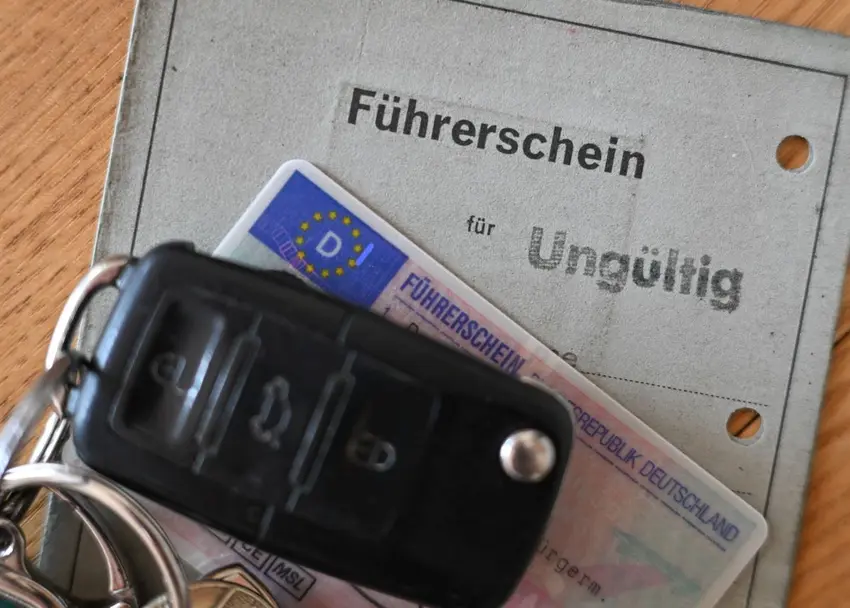
Yes, but if you establish normal residence in Germany, the recognition period is generally limited.
A valid driving licence from a country outside the EU/EEA can generally be used for six months after establishing normal residence in Germany. After that, you need a German driving licence if you want to continue driving.
This is one of the most important rules for anyone searching for non EU driving licence Germany.
Suppose you move permanently to Germany and establish your normal residence there.
You may generally use your valid non-EU driving licence during the six-month recognition period.
After six months, however, you cannot simply continue using the foreign licence indefinitely. You generally need to have it converted into a German driving licence.
The six-month rule means that a non-EU/EEA driving licence is generally recognised for six months after normal residence is established in Germany.
The Federal Portal explains that normal residence generally means living in Germany for at least 185 days per year because of personal and/or professional connections.
The process can therefore be summarised as:
Establish normal residence → Six-month recognition period → German driving licence required
This deadline is particularly important if you intend to remain in Germany permanently.
The relevant issue is generally when you establish your normal residence in Germany, rather than simply when you receive a particular residence document.
German administrative guidance describes normal residence using the 185-day concept.
If you are uncertain about when your normal residence began, contact your local Fahrerlaubnisbehörde before relying on a particular calculation.
This is especially important because driving after the recognition period without the required German licence can create serious legal problems.
In certain circumstances, yes.
The competent driving licence authority can extend the period by up to another six months where the applicant can credibly demonstrate that their normal residence in Germany will not last longer than twelve months.
However, an extension is not automatic.
If you are moving to Germany permanently, you should not plan around receiving an extension. Instead, begin the conversion process as early as possible.
For people who establish normal residence in Germany and want to continue driving after the six-month recognition period, a German driving licence is generally required.
The process is usually called:
Umschreibung einer ausländischen Fahrerlaubnis
or, in English:
Conversion/exchange of a foreign driving licence.
The procedure and examination requirements can differ depending on your country of issue.
This is one of the most important questions.
Not necessarily.
Germany has special arrangements for certain countries under Annex 11 (Anlage 11) of the Driving Licence Regulation (FeV).
Depending on your country and licence category, you may have:
The official Annex 11 table specifies the applicable requirements for individual countries and categories.
Therefore, you should never assume that every person with a non-EU licence must start the entire German driving process from the beginning.
Annex 11 of the German Driving Licence Regulation is a key reference for people converting certain foreign licences.
It lists countries whose driving licences are subject to special conversion provisions.
The requirements can vary by licence category.
This means that two people from the same country may have different requirements if they hold different licence categories.
Before booking driving lessons or examinations, check the applicable country and category.
For more information about German examination requirements, see our German Driving Test guide.
Germany maintains a list of countries whose licences receive special treatment under Annex 11.
The current official table includes countries such as:
The exact examination exemption depends on the country and licence category, so the list should not be interpreted as meaning that every licence from every listed country can be exchanged without tests.
Not necessarily.
There are several possibilities.
Some foreign licences covered by special arrangements can be converted without a theory or practical examination.
Some licence categories may be exempt from the practical examination but still require a theory test.
Certain categories may require a practical examination without requiring a theory test.
If your licence does not qualify for the relevant examination exemptions, you may have to pass both the German theory and practical examinations.
The official Annex 11 provisions should be checked for your specific situation.
This depends on your conversion requirements.
If your licence can be converted without examinations, you may not need conventional German driver training.
If you need to pass a theory or practical examination, however, preparation through a German Fahrschule can be highly beneficial.
A German driving school can help you understand:
For more information, read our Driving School Germany guide.
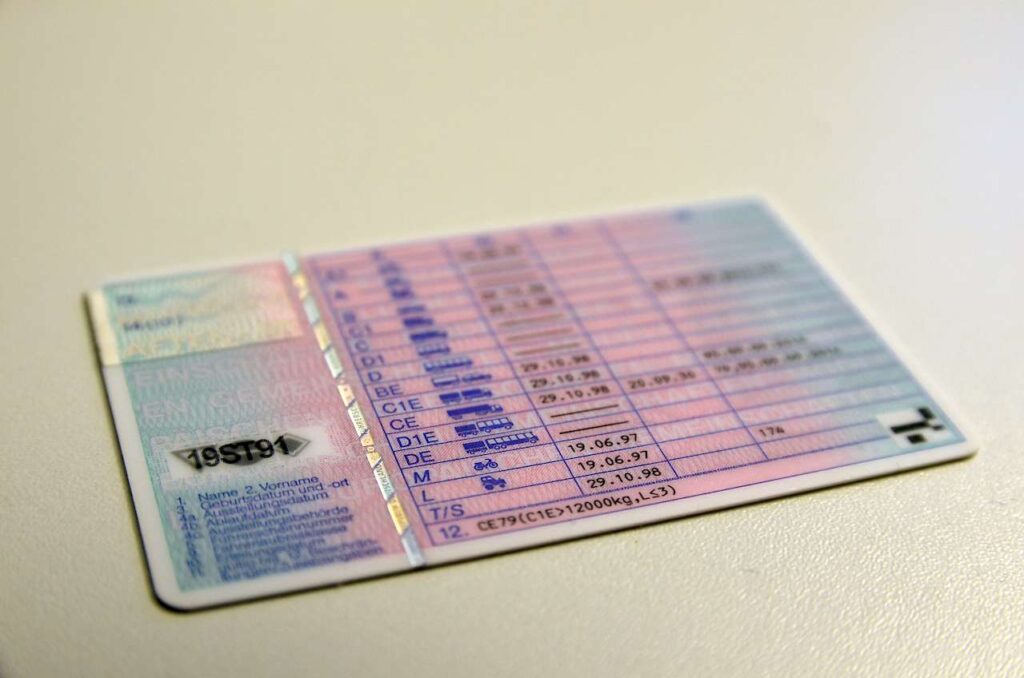
The exact documents vary according to your country, licence category and local authority.
Commonly required documents include:
The Federal Portal lists an official identity document, registration certificate, current photograph and original foreign licence among the relevant documentation.
For a non-EU/EEA licence, an official German translation may also be required unless the licensing authority makes an exception.
Because requirements can vary, always confirm the exact document list with your local Fahrerlaubnisbehörde.
No.
An International Driving Permit is not a substitute for your original foreign driving licence when applying for a German licence.
The Federal Portal specifically states that an international driving licence is not sufficient for the conversion procedure. The original foreign driving licence is required, with a German translation where applicable.
If you are researching international permits, see our International Driving Licence guide.
In certain cases, yes.
This depends primarily on the country of issue and licence category.
If the relevant licence is covered by an examination exemption under Annex 11, the applicant may be able to exchange the licence without taking the corresponding German examination.
However, you should verify the current rules before assuming that your licence qualifies.
This is particularly important because exemptions can differ between categories.
The process can be divided into several practical steps.
Determine exactly which country issued your driving licence.
This information is essential for determining the applicable German conversion rules.
Determine whether you hold:
Requirements can differ depending on the category.
If your country appears in Annex 11, check the exact requirements for your licence category.
Do not stop at checking the country name.
The category matters too.
If you have established normal residence in Germany, calculate when your six-month recognition period expires.
The Federal Portal states that a non-EU/EEA licence is generally recognised for six months after moving to Germany.
Your local driving licence authority can tell you:
This step is particularly important for licences from countries without straightforward conversion arrangements.
Gather all required documentation before your appointment.
Missing documents can delay the procedure.
In many jurisdictions, the application must be made personally.
For example, Bremen currently states that applications for non-EU/EEA licence conversion must be submitted in person.
The exact procedure depends on the municipality.
If you need examinations, consider registering with a German driving school.
Training requirements are determined by the applicable conversion procedure.
Depending on your licence, you may need:
For theory preparation, visit our German Theory Test guide.
For practical examination preparation, see our German Driving Exam guide.
Once all requirements have been satisfied, the German authority can issue your licence.
The foreign licence is generally retained and returned to the competent authority in the issuing country or handled according to the applicable procedure.
The total cost varies considerably.
Potential expenses include:
For example, Bavaria currently lists an approximate administrative fee of €45 for conversion of a third-country driving licence, although additional expenses can apply.
Bremen currently lists a conversion fee range of approximately €37.50 to €65, while the processing time is stated as approximately four to six weeks.
These are administrative examples, not a universal nationwide total.
If examinations or driving-school lessons are required, the final cost can be considerably higher.
For a broader guide to German licence expenses, visit our Driving Licence Cost Germany article.
Germany does not treat every foreign driving licence identically.
There are different recognition arrangements depending on the country.
For some countries, Germany has arrangements that make conversion relatively straightforward.
For others, applicants may need to demonstrate their driving knowledge through German examinations.
This is why a search such as „Can I use my Nigerian driving licence in Germany?“, „Can I convert a US driving licence in Germany?“, or „Can I exchange an Indian driving licence in Germany?“ can produce different answers.
The answer depends on the specific country’s status under German law and the licence category.
This is an important issue.
You cannot necessarily obtain a foreign licence during a short trip abroad and then automatically convert it into a German licence.
For certain conversion arrangements, German authorities require evidence that you actually had normal residence in the issuing country when the licence was obtained.
For example, Hamburg states that conversion under its listed-country procedure requires the applicant to have lived in the issuing country for at least 185 days when the licence was obtained. A licence obtained during a four-week holiday cannot simply be converted under that procedure.
This requirement helps prevent so-called licence tourism.
This can be a more complicated situation.
Suppose you originally obtained a licence outside the EU and later exchanged it for an EU licence in another Member State.
You should not automatically assume that Germany will treat the licence exactly like an EU licence obtained through normal driver training in that EU country.
German rules contain specific provisions concerning EU/EEA licences that originated from certain third-country licences.
If this applies to you, contact the German driving licence authority and provide documentation showing the history of your licence.
Once the recognition period ends, a non-EU/EEA licence holder who has established normal residence generally needs a German driving licence to continue driving in Germany.
You should not assume that simply submitting an application automatically extends your right to drive.
If your six-month deadline is approaching, contact the responsible authority and clarify your legal position.
The six-month rule should not automatically be applied to every foreign national who spends time in Germany.
Certain people, including some students, pupils and cross-border commuters, can be subject to different rules when Germany is not their normal place of residence.
If you live between Germany and another country or are studying in Germany temporarily, your situation may require individual assessment.
A non-EU/EEA licence is generally only recognised for six months after establishing normal residence.
The conversion process may involve appointments, translations and examinations.
Start early.
Some countries and categories have examination exemptions.
Not every non-EU licence qualifies for an exemption.
Annex 11 can determine whether examinations are required.
An International Driving Permit alone is not sufficient for conversion.
Certain non-EU/EEA licences require an official German translation.
If an EU licence was originally obtained by exchanging a third-country licence, additional rules may apply.
| Feature | Non-EU/EEA Licence | EU/EEA Licence |
|---|---|---|
| Recognition after establishing German residence | Generally six months | Generally broader recognition |
| Exchange immediately required | Generally no, but required for continued driving after six months | Usually not for ordinary harmonised categories |
| Theory test | Depends on country/category | Generally not required for ordinary recognition |
| Practical test | Depends on country/category | Generally not required for ordinary recognition |
| Annex 11 | Important | Generally not the main mechanism |
| Translation | May be required | Generally not |
| German licence eventually required | Generally yes for long-term residents | Depends on category and validity |
EU/EEA licences generally have a different recognition framework, while third-country licences are subject to the six-month rule after establishing normal residence.
Before beginning your conversion, use this checklist:
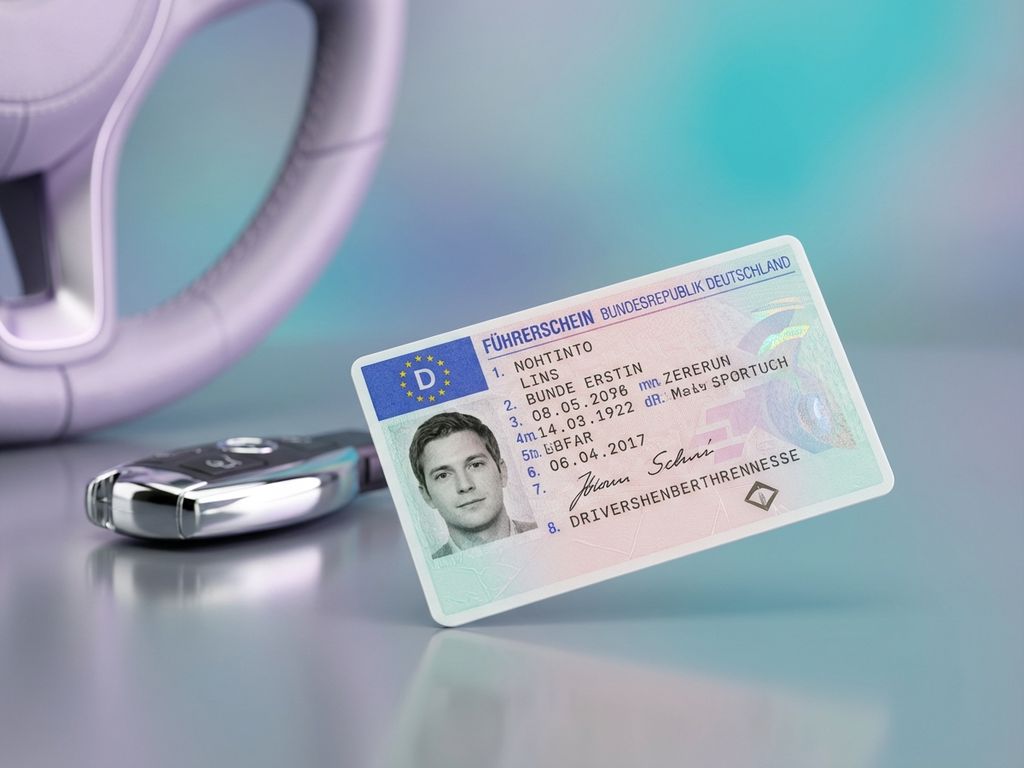
If you establish normal residence in Germany, your non-EU/EEA licence is generally recognised for six months.
Yes, provided the licence and circumstances meet the applicable German requirements. The procedure is generally called Umschreibung.
Not necessarily. Examination requirements depend on the issuing country and licence category. Annex 11 provides special arrangements for certain countries.
Some applicants do, while others are exempt from one or both. Check the specific requirements for your country and licence category.
No. The original foreign driving licence is required for the conversion process; an international driving licence alone is not sufficient.
The administrative fee varies. For example, Bavaria currently lists approximately €45 for a third-country licence conversion, while other authorities publish different ranges. Additional examination, translation and training costs can apply.
You may. German authorities can require a translation of a non-EU/EEA licence unless an applicable exception applies.
In certain circumstances, the authority can extend the period by up to six months if you can demonstrate that your normal residence in Germany will not last more than twelve months.
You normally apply to the Fahrerlaubnisbehörde responsible for your place of residence.
Understanding the rules for a non EU driving licence Germany is essential if you are planning to live in Germany.
The most important points to remember are:
If you are moving to Germany with a foreign licence, do not wait until your six-month period is almost over. Check your country’s specific requirements, gather your documents and contact the appropriate Fahrerlaubnisbehörde.
For more useful information about German driving licences, conversion, examinations and costs, explore FahrenExperten.
Driving Licence in Germany: Everything You Need to Know A driving licence is an important...
Weiterlesen
Rijbewijs kosten in Duitsland: een compleet overzicht Wie in Duitsland zijn rijbewijs wil halen, vraagt...
Weiterlesen