Driving Licence in Germany: Everything You Need to Know A driving licence is an important...
Weiterlesen

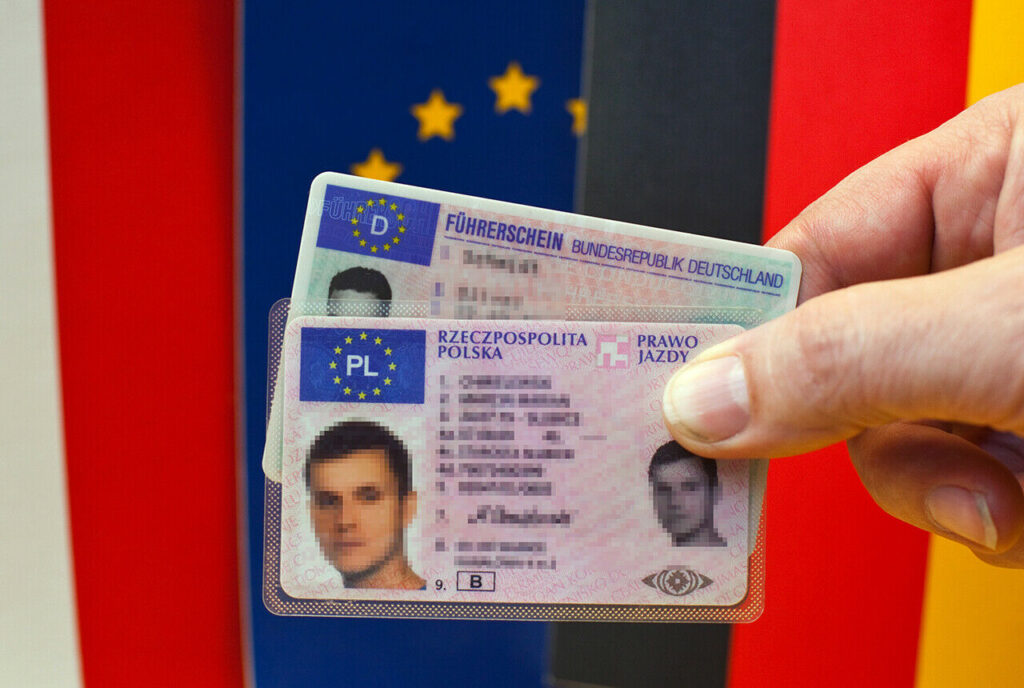

Driving Licence in Germany: Everything You Need to Know A driving licence is an important...
Weiterlesen
Rijbewijs kosten in Duitsland: een compleet overzicht Wie in Duitsland zijn rijbewijs wil halen, vraagt...
WeiterlesenAn international driving licence can be an important document for motorists who plan to drive outside the country where their national driving licence was issued. Whether you are travelling for a holiday, renting a car abroad, working internationally or planning a longer stay in another country, understanding the difference between your national driving licence and an International Driving Permit can help you avoid unnecessary problems.
One important point should be clarified from the beginning: the term international driving licence is commonly used online, but the internationally recognised document is generally referred to as an International Driving Permit (IDP). An IDP is not a replacement for your national driving licence. In countries where it is required or useful, it normally works alongside the original national licence.
The rules also vary significantly between countries. Within the EU, for example, valid EU/EEA driving licences are generally mutually recognised, meaning an IDP is not normally required simply to drive in another EU country.
In this guide, we explain what an international driving licence means, when you may need an IDP, how it differs from a European driving licence, how it works in Germany, and what you should check before driving abroad.
For more information about driving licences and international driving, visit FahrenExperten.
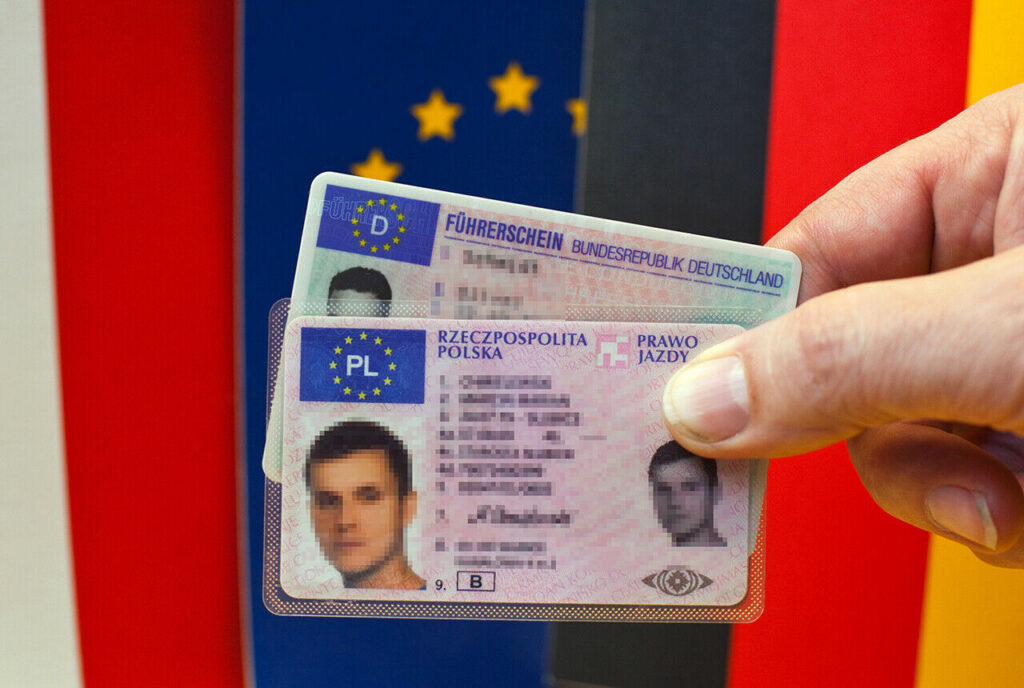
An international driving licence usually refers to an International Driving Permit (IDP).
An IDP is a document designed to help authorities and organisations in participating countries interpret information contained in your national driving licence.
It is particularly useful when:
The most important rule is that an IDP generally does not replace your national driving licence.
For example, if you have a German driving licence and obtain an IDP before travelling outside Germany, you should normally carry both documents.
These terms are often confused.
This is a common informal term used by motorists and websites.
This is the recognised international document issued under applicable international road-traffic conventions.
An IDP is essentially a supplementary document associated with your domestic driving licence.
This distinction matters because you may encounter websites advertising an „international driving licence“ as though it were a completely independent licence.
Be cautious.
A legitimate IDP does not give you a new driving entitlement independently of your national licence.
Whether you need an IDP depends primarily on:
There is no single worldwide rule.
For example, travelling from Germany to France is very different from travelling from Germany to a country outside Europe.
Before travelling, check the requirements of your destination country.
The European Union’s official guidance recommends checking driving-licence and insurance requirements before driving in another EU country.
In most situations, you do not need an IDP simply to drive in another EU country if you have a valid EU driving licence.
Valid driving licences issued by EU/EEA countries are generally mutually recognised. The European Commission confirms that all valid driving licences in use in the EEA are fully mutually recognised.
For example, a valid:
can generally be used when driving in other EU/EEA countries.
However, national traffic laws still apply.
An international driving licence should not be confused with a European driving licence.
A European driving licence is a national driving licence issued by an EU/EEA country under the European licensing framework.
An IDP, by contrast, is a supplementary international document intended for use in countries where it is required or recognised.
For example:
German driving licence → European/national driving licence
International Driving Permit → supplementary international document
The European Commission explains that EU/EEA driving licences are mutually recognised, while international driving permits are not regulated at EU level and may not be recognised in every EU country.
For more information, read our European Driver’s License guide.
Germany has specific rules concerning foreign driving licences and International Driving Permits.
If you are visiting Germany temporarily and hold a valid foreign domestic driving licence or an International Driving Permit, you may generally drive the vehicle categories covered by your licence, subject to the applicable conditions and restrictions.
Germany’s Federal Ministry of Transport also states that if you hold an International Driving Permit, you generally do not need to have it translated.
However, an IDP does not replace the underlying national licence.
This is particularly important for travellers who believe that carrying an IDP alone is sufficient.
It is not.
If you are visiting Germany temporarily, the answer can generally be yes, provided your international documentation and underlying national driving entitlement satisfy the applicable requirements.
Germany’s Federal Ministry of Transport explains that holders of valid domestic driving licences or International Driving Permits can drive the relevant vehicle categories during a temporary stay, subject to the applicable rules.
However, if you establish normal residence in Germany, different rules apply.
For example, a driving licence from outside the EU/EEA is generally recognised in Germany for six months after normal residence is established. After that period, the foreign licence is generally no longer recognised for driving in Germany, subject to specific exceptions.
If you are moving to Germany, see our guide to the German Driver’s License.
Tourists are among the most common users of International Driving Permits.
Suppose you are travelling from Germany to a country outside the EU.
Before renting a car, check:
Even when an IDP is not legally mandatory, a rental company may have its own documentation requirements.
Always check before travelling.
Car-rental companies can have documentation requirements that differ from the minimum legal requirements.
When booking a vehicle abroad, the company may ask for:
This is why it is a good idea to check the rental company’s terms before leaving home.
A traveller who arrives at the rental counter without the required documents may find that the vehicle cannot be released.
Yes, a valid German driving licence is generally recognised throughout the EU and EEA.
Germany’s Federal Ministry of Transport confirms that valid German driving licences are recognised in EU and EEA member states.
However, if you plan to drive outside the EU/EEA, recognition depends on the destination country’s laws.
An IDP may be required or recommended.
The correct approach is therefore:
Check the destination country’s requirements before travelling.
For Germany-specific information, read our Driving Licence Germany guide.
Outside Europe, the requirements can be considerably different.
Some countries recognise foreign national driving licences directly.
Others may require an International Driving Permit.
Some may require both:
An IDP may also be required by car-rental companies even where local law does not clearly require one.
This is why travellers should never assume that the rules are identical from one country to another.

An IDP essentially provides standardised information based on your national driving licence.
It can make it easier for authorities to understand:
The exact appearance and validity of an IDP depend on the convention under which it is issued.
This is another reason to obtain the correct document through an authorised issuing organisation rather than an unofficial website.
An IDP is not an independent replacement for your domestic driving licence.
This is one of the most important facts to understand.
Germany’s official guidance states that an International Driving Permit is not sufficient by itself in relevant circumstances; the underlying domestic driving licence must also be carried.
Therefore, when travelling internationally:
Carry your national driving licence + your IDP when an IDP is required.
Do not rely on the IDP alone.
The exact requirements depend on the country issuing the IDP.
Generally, applicants need to have:
Some issuing authorities may have additional requirements.
The safest approach is to obtain your IDP from the authorised organisation in the country that issued your driving licence.
The process depends on your country of residence and the organisation responsible for issuing the permit.
A typical process looks like this:
Research your destination country’s requirements.
Different international conventions can apply.
Avoid unofficial websites selling documents that may not be recognised.
Your domestic licence is the foundation of the IDP.
Provide the required documents and pay the applicable fee.
Keep it together with your national driving licence when travelling.
The validity of an International Driving Permit depends on the applicable international convention and the issuing authority.
This means you should not assume that every IDP is valid for the same period.
Before travelling, check:
An IDP that has expired may not be accepted by local authorities or rental companies.
Your national driving licence remains fundamental.
An IDP does not normally create new driving categories.
For example, if your national licence permits you to drive certain categories of cars but not motorcycles, obtaining an IDP does not automatically grant you a motorcycle entitlement.
Your international document reflects the underlying licence.
This is why you should carefully check the vehicle categories listed on both documents before renting a vehicle.
A foreign driving licence and an International Driving Permit are not the same thing.
A foreign driving licence is a national driving licence issued by another country.
An International Driving Permit is a supplementary international document associated with that licence.
For example:
A French driving licence is a national driving licence.
An International Driving Permit may accompany that licence when driving in a country where an IDP is required.
This distinction becomes especially important when moving permanently between countries.
If you are moving to Germany with a foreign licence, read our Foreign Driving Licence Germany guide.
If your national licence was issued outside the EU/EEA, you should check the rules of your destination country carefully.
The requirements may depend on:
Germany, for example, has specific rules concerning licences issued outside the EU/EEA. During a temporary stay, a valid domestic licence or appropriate International Driving Permit can permit driving subject to German requirements.
For longer stays, different rules apply.
Moving abroad is different from taking a short holiday.
If you establish normal residence in another country, your foreign driving licence may eventually need to be exchanged or renewed according to local rules.
Within the EU, if your driving licence expires while another EU country is your normal residence, you generally renew it there.
An International Driving Permit does not eliminate these residence-based requirements.
Therefore, an IDP should not be viewed as a method for avoiding local licensing laws.
If you move to Germany permanently, you should investigate the rules that apply to your national driving licence.
For licences from outside the EU/EEA, Germany generally recognises the licence for six months after normal residence is established. After this period, a German licence is generally required if you wish to continue driving.
The requirements for obtaining or exchanging a German licence can depend on the country that originally issued your driving licence.
Read our Führerschein Umschreiben Deutschland guide for more information.
These two documents serve different purposes.
| Feature | European Driving Licence | International Driving Permit |
|---|---|---|
| Issued by | National EU/EEA authority | Authorised issuing organisation |
| Main purpose | Legal driving entitlement | Supplementary international document |
| Used in EU/EEA | Generally recognised | Not normally necessary for EU-to-EU driving |
| Replaces national licence? | Yes, as the national licence | No |
| Used with national licence? | It is the national licence | Yes |
| Validity | Depends on national/category rules | Depends on applicable convention/issuer |
| Main use | Driving within European framework | Driving in countries where IDP is required/recognised |
The European Commission specifically notes that international driving permits are not regulated at EU level and may not be recognised in other EU countries.
A German driving licence is your actual national driving entitlement.
An International Driving Permit is supplementary.
If you live in Germany and want to drive abroad:
German driving licence = primary document
International Driving Permit = supplementary document when required
Do not treat an IDP as an alternative way of obtaining a German driver’s licence.
If you need information about obtaining a German licence, read our German Driver’s License guide.
Having an IDP does not mean you can ignore local traffic regulations.
Every country can have different rules concerning:
The EU itself does not have completely uniform road-traffic rules. European countries retain different national requirements in areas such as speed limits, alcohol limits and vehicle equipment.
Therefore, always research the traffic laws of your destination.
Your driving documents are only one part of the requirements for driving abroad.
You also need appropriate insurance.
Before travelling, verify:
The European Commission recommends checking both driving-licence validity and insurance coverage when driving abroad.
If you are planning an international road trip through several countries, preparation becomes even more important.
Your checklist should include:
Check the mandatory equipment for each country.
Research:
Make sure your insurance and vehicle documentation permit travel through every country on your route.
It generally does not.
Germany’s Federal Ministry of Transport explicitly states that an International Driving Permit is not sufficient on its own in relevant circumstances.
Use an authorised issuer.
Within the EU/EEA, valid EU/EEA driving licences are generally mutually recognised.
A rental company can impose documentation requirements.
Make sure both your national licence and IDP are valid for the entire trip.
It does not. If you move permanently to another country, local licensing rules can apply.
An IDP does not give you permission to disregard local road regulations.
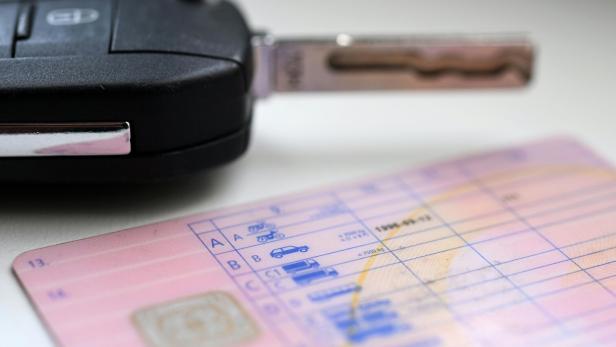
The term generally refers to an International Driving Permit (IDP), a supplementary document that can help motorists drive in countries where an IDP is required or recognised.
In everyday usage, the terms are often used interchangeably. The more precise official term is generally International Driving Permit.
No. You should normally carry your valid national driving licence with your IDP.
If you have a valid EU/EEA driving licence, an IDP is generally not necessary simply for driving in another EU/EEA country.
During a temporary stay, a valid domestic driving licence or appropriate International Driving Permit can allow driving in Germany subject to the applicable rules.
You should not assume that you can. Germany’s official guidance states that an International Driving Permit is not sufficient by itself in relevant cases.
It depends on the destination country and rental company. Always check the rental company’s documentation requirements before travelling.
The validity depends on the applicable international convention and issuing authority.
An IDP is based on your national driving licence. It is not a substitute for obtaining a valid driving entitlement.
No. Recognition depends on the destination country’s laws and the applicable international convention.
No. An IDP is not a substitute for a German driving licence.
An international driving licence, more precisely an International Driving Permit, can be extremely useful when travelling by car outside your home country. However, it is important to understand exactly what the document does.
An IDP is generally a supplementary document, not an independent driving licence. Your national driving licence remains the foundation of your driving entitlement.
Within the EU and EEA, valid national driving licences are generally mutually recognised, so an IDP is usually unnecessary simply for travelling between EU/EEA countries.
For international travel outside Europe, requirements can vary considerably. Some countries require an IDP, some recognise national licences directly, and some may have additional requirements from rental companies.
If Germany is your destination, remember that Germany has separate rules for EU/EEA and non-EU/EEA licences. The German Federal Ministry of Transport states that non-EU/EEA licences are generally recognised for six months after normal residence is established, subject to the applicable exceptions and conditions.
The safest approach is simple: check the rules before you travel, carry your original driving licence, obtain an IDP when required, and make sure your insurance and vehicle documents are valid.
For more information, visit FahrenExperten and explore our related resources on European Driver’s License, German Driver’s License, Driving Licence Germany, Foreign Driving Licence, Führerschein Umschreiben Deutschland, Führerschein Gültigkeit and Führerschein Klasse B.
Driving Licence in Germany: Everything You Need to Know A driving licence is an important...
Weiterlesen
Rijbewijs kosten in Duitsland: een compleet overzicht Wie in Duitsland zijn rijbewijs wil halen, vraagt...
Weiterlesen