Driving Licence in Germany: Everything You Need to Know A driving licence is an important...
Weiterlesen


Driving Licence in Germany: Everything You Need to Know A driving licence is an important...
Weiterlesen
Rijbewijs kosten in Duitsland: een compleet overzicht Wie in Duitsland zijn rijbewijs wil halen, vraagt...
WeiterlesenMoving to Germany with a foreign driving licence can raise several important questions. Is my foreign driving licence recognised in Germany? How long can I drive with it? Do I need to exchange it? Will I need to take a German theory or practical test?
The answers depend primarily on where your driving licence was issued and whether you have established your normal residence in Germany.
The German rules distinguish between licences issued by EU/EEA countries and those issued by countries outside the EU and European Economic Area. Under Section 29 of the German Driving Licence Regulation (FeV), a foreign licence can entitle its holder to drive in Germany, but the duration and conditions of recognition differ depending on the circumstances.
Understanding recognition of foreign driving licence Germany rules before driving is essential, particularly if you have recently moved to Germany.
For more information about German driving licences and related requirements, visit FahrenExperten.
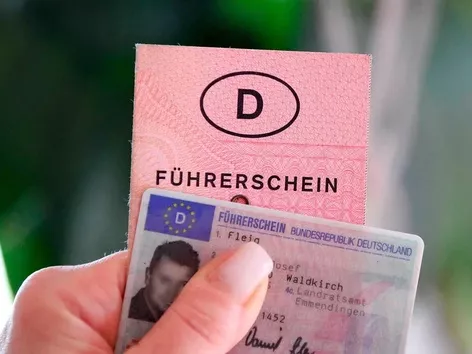
Recognition means that Germany accepts a valid driving licence issued by another country as evidence that you are authorised to drive the relevant vehicle categories.
However, recognition does not necessarily mean that the foreign licence can be used permanently in Germany.
The rules depend on factors including:
This distinction is particularly important for people relocating to Germany.
In many cases, yes.
However, the period of validity depends on the licence’s country of issue.
Valid licences issued by EU or EEA countries are generally recognised in Germany for their authorised categories, subject to the restrictions in German law. Section 28 FeV specifically provides for recognition of valid EU/EEA driving licences for people whose normal residence is in Germany.
A valid licence issued outside the EU/EEA is generally recognised for six months after establishing normal residence in Germany. After that period, the driver generally needs a German licence to continue driving.
Therefore, determining whether your licence is an EU/EEA or third-country licence should be one of the first steps you take.
EU driving licences benefit from the European system of mutual recognition.
If you have a valid driving licence issued by an EU member state, you can generally use it in Germany without immediately applying for a German licence.
The same basic recognition principle applies to licences issued by EEA countries:
German legislation provides that valid EU/EEA driving licences can generally be used in Germany within the scope of the licence entitlement.
For ordinary harmonised categories, an immediate exchange is generally not required.
For more information, see our guide to EU Driving Licence Exchange Germany.
For harmonised EU/EEA categories, recognition generally continues while the licence remains valid.
The Federal Portal states that EU/EEA driving licences for harmonised categories generally do not require conversion and can be used without a time limit, subject to the applicable rules.
There is an important distinction, however, between the validity of the physical licence document and the underlying driving entitlement.
Modern card licences issued from 19 January 2013 generally have a 15-year administrative validity period for the document. Renewing the document does not, by itself, mean that the driver has to retake a driving test.
Some older EU driving licences were issued without an expiry date.
If you have an EU licence with lifetime validity and your normal residence has changed to Germany, there are specific exchange rules.
The Federal Portal currently states that an EU driving licence with lifelong validity must be exchanged by 19 January 2033 at the latest if the holder has changed their normal residence.
Because European driving licence rules can change, it is sensible to verify the current requirements with your local German driving licence authority.
The rules become more restrictive for licences issued outside the EU and EEA.
If you move to Germany and establish your normal residence there, a valid third-country driving licence is generally recognised for six months.
After those six months, you normally need to have the foreign licence converted into a German driving licence to continue driving legally.
This six-month period is established under Section 29 FeV and is also explained by the German Federal Portal.
The six-month rule is one of the most important things to understand about recognition of foreign driving licence Germany.
Suppose you move from Canada, the United States, Australia, India, South Africa or another non-EU/EEA country to Germany.
Once you establish normal residence in Germany, your foreign driving licence is generally recognised for six months.
After the six-month period:
You generally cannot continue driving in Germany using only the foreign licence.
You need to obtain a German driving licence through the applicable conversion procedure.
Imagine you establish normal residence in Germany on 1 September.
Your non-EU/EEA licence would generally be recognised for six months from the establishment of normal residence.
Rather than waiting until the deadline, it is advisable to begin the conversion process well in advance.
Normal residence is important because it determines when the six-month recognition period begins for many non-EU/EEA licences.
German rules generally use the concept of ordinary or normal residence, which is linked to where you ordinarily live.
The Federal Portal describes residence for this purpose in terms of living in Germany for at least 185 days per year because of personal and/or professional connections.
Special situations can apply to students and people who maintain substantial connections with more than one country.
If your residence circumstances are unusual, contact the responsible Fahrerlaubnisbehörde rather than assuming that the six-month period applies from a particular date.
The rules for visitors are different from those for people who establish normal residence.
Under Section 29 FeV, a person holding a foreign driving licence who does not have normal residence in Germany can generally drive in Germany within the scope of their foreign authorisation.
This means a tourist visiting Germany should not automatically be treated in the same way as someone who has moved permanently to Germany.
However, the driver must have appropriate documentation proving their driving entitlement.
An International Driving Permit (IDP) can be relevant when using a foreign driving licence in Germany, depending on the country of issue and the format of the original licence.
Importantly, an IDP is not a replacement for the underlying national driving licence.
German law provides for the driving entitlement to be demonstrated by a valid national or international driving licence in accordance with the applicable international conventions, together with the underlying national licence where required.
For foreign licence conversion, the original national licence remains particularly important.
The Federal Portal explicitly states that an international driving licence alone is not sufficient for the conversion of a non-EU/EEA licence.
Read our guide on International Driving Licence for more information.
Sometimes.
German law provides translation requirements for certain foreign national driving licences that are not issued in German, EU/EEA countries or Switzerland and do not conform to the relevant international standards, unless Germany has waived the translation requirement.
The exact requirement depends on the licence.
You may need an approved translation from an appropriate recognised organisation or translator.
Before paying for a translation, check the requirements with your local driving licence authority.
Yes.
For non-EU/EEA licences, conversion is generally the route to continued driving after the six-month recognition period.
The process is known in German as:
Umschreibung einer ausländischen Fahrerlaubnis
The requirements vary according to the issuing country.
For some countries, German law provides simplified conversion arrangements. For others, applicants may need to complete German theory and/or practical examinations.
For more information, see our Convert Foreign Driving Licence Germany guide.
Not necessarily.
The answer depends heavily on the country that issued your original licence.
Germany has special arrangements for certain countries under Annex 11 (Anlage 11) of the FeV.
Depending on the issuing country and licence category, conversion may be possible:
The Federal Portal specifically directs applicants to Annex 11 when determining special conversion rules for licences from certain countries.
Therefore, it is incorrect to say that every non-EU foreign driver must automatically take the complete German driving test.
Annex 11 to the German Driving Licence Regulation identifies countries whose driving licences can benefit from specific conversion arrangements.
This can significantly simplify the process.
If your country is included, the applicable exemption depends on the country and potentially the licence category.
If your country is not covered by the relevant simplified arrangements, you may have to meet more extensive German licensing requirements.
This is one of the most important checks to make before starting the conversion process.
If you need to convert a foreign licence, typical documentation can include:
The Federal Portal lists the original foreign driving licence, identity document, registration certificate and biometric photograph among the relevant documentation. It also states that an international driving licence alone is not sufficient.
For most private motorists, Category B is the most relevant category.
Category B generally covers ordinary passenger cars.
If your Category B licence was issued by an EU/EEA country, it will generally be recognised in Germany while valid.
If it was issued by a non-EU/EEA country, the six-month rule generally applies after establishing normal residence.
After that period, conversion becomes necessary if you want to continue driving in Germany.
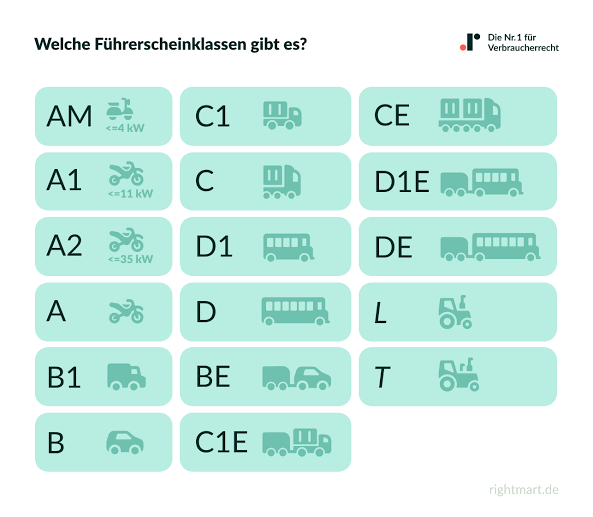
Heavy vehicle and passenger transport categories can be subject to additional requirements.
These include categories such as:
Medical examinations and additional validity requirements can apply to these categories.
The Federal Portal notes that applicants for heavy vehicle and bus categories may need medical and visual-acuity certificates.
If you hold a professional driving licence, do not rely solely on the rules for Category B.
The cost depends on the type of licence, the issuing country, the local authority and whether examinations or additional documentation are required.
For example, Bavaria currently lists approximate administrative fees of:
Additional costs may apply.
Possible additional expenses include:
For a broader overview of expenses, visit our Driving Licence Cost Germany guide.
The exact process varies between local authorities, but the general process is straightforward.
Determine:
Ask whether you are:
This distinction can determine how long your foreign licence remains recognised.
This is one of the most important steps.
EU/EEA: generally recognised while valid.
Non-EU/EEA: generally recognised for six months after establishing normal residence.
Determine whether your national licence needs an official German translation.
Do not assume that an International Driving Permit automatically satisfies every translation requirement.
If your licence comes from a non-EU/EEA country, determine whether the issuing country appears in Annex 11.
This can tell you whether examinations are required.
Your local driving licence authority can confirm:
Follow the local authority’s application process.
Some authorities require applicants to appear personally.
For example, Bremen currently specifies personal application for the relevant non-EU/EEA conversion service.
If applicable, complete the German theory and/or practical driving examination.
You can prepare using our German Theory Test and German Driving Test resources.
For a non-EU/EEA licence holder who has established normal residence in Germany, the foreign driving entitlement generally ends after six months.
The Federal Portal confirms that after this period, a German driving licence is required for continued driving in Germany.
This does not mean your foreign licence necessarily becomes physically invalid in the country that issued it.
Instead, the important issue is your right to use that foreign licence for driving in Germany.
That distinction is critical.
In certain circumstances, yes.
Section 29 FeV allows the competent driving licence authority to extend the period by up to six months if the applicant can demonstrate that their normal residence in Germany will not last longer than twelve months.
An extension is not automatic.
You should apply to the relevant authority and provide the required evidence.
A foreign driving licence must generally be valid for the recognition rules to apply.
Section 29 FeV refers to foreign driving licences and their underlying authorisation, while German authorities can require evidence that the foreign licence remains valid during conversion.
If your licence has expired, contact the Fahrerlaubnisbehörde before driving.
Do not assume that an International Driving Permit makes an expired national licence valid.
There is another important situation.
Suppose you originally obtained a driving licence in a non-EU country and later exchanged it for an EU driving licence in another EU country.
Germany may examine the history of that licence.
The Federal Portal notes that an EU/EEA licence can raise additional issues if it was issued on the basis of a non-EU/EEA licence and that original licence was not from a country listed in Annex 11 and no driving test was taken for the EU/EEA licence.
Therefore, simply having an EU-format licence does not necessarily answer every recognition question.
This is one of the most common mistakes.
Non-EU/EEA licences are generally subject to the six-month rule after establishing normal residence.
An International Driving Permit does not replace the original national driving licence.
Begin the conversion process early.
Depending on the country and examination requirements, obtaining a German licence can take time.
Germany applies different conversion requirements depending on the issuing country.
Rules for Category B are not necessarily the same as rules for C, CE, D or other professional categories.
Some foreign licences benefit from simplified conversion rules.
Check Annex 11 before assuming that you must complete both examinations.
If you have recently moved to Germany, use this checklist:
Yes, foreign licences can be recognised in Germany, but the conditions depend on where the licence was issued and whether the holder has normal residence in Germany.
Generally, six months after establishing normal residence in Germany.
Generally yes. Valid EU/EEA driving licences are recognised in Germany within the scope of their entitlement, subject to applicable restrictions.
Not necessarily immediately. Modern EU/EEA licences are generally recognised, although specific exchange requirements can apply to older licences and when documents or categories expire.
It depends on the issuing country and applicable conversion rules. Annex 11 provides simplified arrangements for certain countries.
No. For foreign licence conversion, the original national driving licence is required; an international driving licence alone is not sufficient.
Some foreign licences require a German translation. The exact requirements depend on the licence and issuing country.
Fees vary by authority and circumstances. For example, Bavaria currently lists approximately €38 for an EU/EEA or Annex 11 conversion and approximately €45 for a third-country conversion, before possible additional expenses.
In certain circumstances, the authority can extend it by up to six months if you can demonstrate that your normal residence in Germany will not last more than twelve months.
Understanding recognition of foreign driving licence Germany rules is essential for anyone planning to drive after moving to Germany.
The most important distinction is between EU/EEA licences and non-EU/EEA licences.
A valid EU/EEA driving licence is generally recognised in Germany, although specific rules can apply to older licences, expiry dates and certain categories.
For a non-EU/EEA driving licence, the general rule is more restrictive: once you establish normal residence in Germany, your foreign driving entitlement is generally recognised for six months. After that, you normally need to obtain a German driving licence to continue driving.
The exact conversion process depends on the issuing country. Some countries benefit from simplified arrangements under Annex 11, while others may require theory and practical examinations.
If you are unsure about your particular situation, contact the responsible Fahrerlaubnisbehörde before driving beyond the applicable recognition period.
For more guides covering German licences, foreign licence conversion, examinations and costs, explore FahrenExperten.
Driving Licence in Germany: Everything You Need to Know A driving licence is an important...
Weiterlesen
Rijbewijs kosten in Duitsland: een compleet overzicht Wie in Duitsland zijn rijbewijs wil halen, vraagt...
Weiterlesen