Driving Licence in Germany: Everything You Need to Know A driving licence is an important...
Weiterlesen

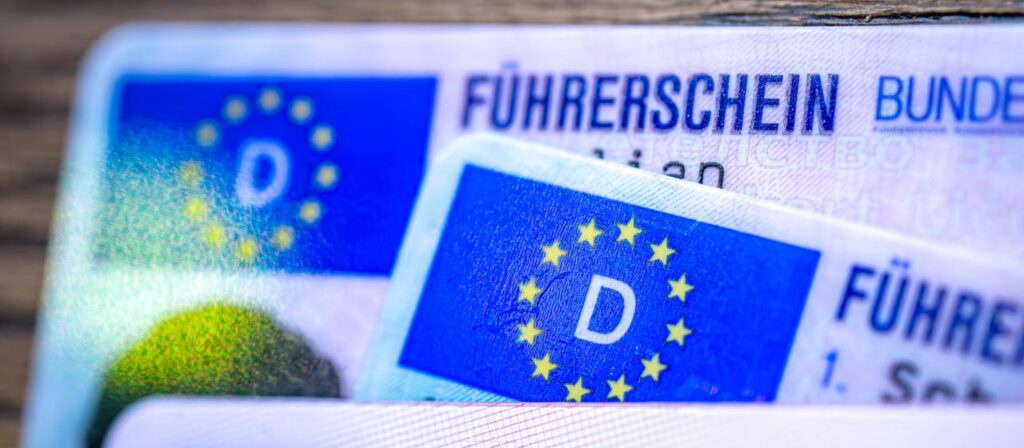

Driving Licence in Germany: Everything You Need to Know A driving licence is an important...
Weiterlesen
Rijbewijs kosten in Duitsland: een compleet overzicht Wie in Duitsland zijn rijbewijs wil halen, vraagt...
WeiterlesenIf you are planning to live, work, study or build a life in Germany, learning how to get a German driving licence can be an important step toward independence and mobility.
Germany has a structured licensing system designed to ensure that new drivers understand traffic regulations and can operate a vehicle safely. Obtaining a German driving licence normally involves an administrative application, driver training, a theoretical examination and a practical driving examination.
For international residents, the process can be slightly more complicated because you first need to determine whether you actually need a new German licence. If you already hold a foreign driving licence, you may be able to use it for a limited period or exchange it under applicable German rules.
This comprehensive guide explains how to get a German driving licence, from determining your eligibility and choosing a driving school to passing the theory and practical tests.
For more information about German and European driving licences, visit FahrenExperten.
A German driving licence, commonly called a German driver’s license in American English, is the official document that confirms your entitlement to drive particular categories of motor vehicles in Germany.
Germany uses the European driving-licence category system. Depending on the licence you obtain, you may be authorised to drive cars, motorcycles, trucks, buses or other vehicles.
For most people looking to drive a normal passenger car, Category B is the relevant licence category.
German driving licences are also part of the European Union’s driving-licence framework, which means a valid German licence is generally recognised throughout the EU.

Before learning how to get a German driving licence, it is important to determine whether you meet the basic requirements.
For a first licence, applicants generally need to satisfy requirements concerning:
German law contains specific requirements concerning ordinary residence, eligibility and driving examinations. The German driving-licence regulations are set out in the Fahrerlaubnis-Verordnung (FeV).
One of the most important requirements is residence.
Generally, yes.
German and EU driving-licence rules are based on the concept of ordinary residence. In general terms, this means that Germany should be your normal place of residence rather than simply a country you visit temporarily to obtain a licence.
The ordinary-residence principle is particularly important for people considering obtaining a licence in Germany while actually living in another country.
If you are an international resident, student or expatriate, check your individual residence situation before beginning the process.
For more information about European licensing requirements, explore the EU Driver’s License resources on FahrenExperten.
Germany offers several driving-licence categories.
Some of the most common include:
| Category | General purpose |
|---|---|
| AM | Mopeds and certain light vehicles |
| A1 | Light motorcycles |
| A2 | Medium motorcycles |
| A | Motorcycles |
| B | Cars and certain light vehicles |
| BE | Cars with certain trailers |
| C1 | Medium goods vehicles |
| C | Heavy goods vehicles |
| D1 | Certain smaller passenger vehicles |
| D | Buses |
If your goal is to drive an ordinary passenger car, Category B is generally the category you should investigate.
Read our related Führerschein Klasse B content for more information.
One of the most important stages in understanding how to get a German driving licence is choosing the right driving school.
In Germany, driving schools are known as Fahrschulen.
Your driving school will provide the required theoretical instruction and practical driver training appropriate to your licence category.
When comparing driving schools, consider:
Do not choose a school solely because it advertises the cheapest individual driving lesson.
The total cost depends heavily on how many practical lessons you need.
For more information, visit our Driving School Germany resources.
Applicants for a German driving licence generally need to complete the required first-aid training.
The purpose is to ensure that new drivers know how to respond appropriately after an accident or during a medical emergency.
Depending on the applicable requirements, the training can cover subjects such as:
German driving-licence regulations contain specific provisions concerning first-aid training.
Keep your certificate because it forms part of the documentation associated with your licence application.
Good vision is essential for safe driving.
As part of the German licensing process, applicants generally need to demonstrate that their eyesight meets the applicable requirements.
If you require glasses or contact lenses, make sure you comply with any restrictions recorded on your future licence.
The exact requirements can depend on the licence category.
German driving-licence regulations contain specific provisions concerning eyesight and medical fitness.
Before submitting your application, make sure you have the required documentation.
Depending on your circumstances and licence category, you may need documents such as:
Requirements can vary depending on the local licensing authority and your individual circumstances.
Therefore, verify the current requirements with your responsible Fahrerlaubnisbehörde before submitting your application.
The formal application is submitted to the competent driving-licence authority.
This is an important distinction:
Registering with a driving school is not the same thing as receiving your driving licence.
The driving school provides training, while the licensing authority handles the official administrative process.
Your driving school will generally be familiar with the local process and can explain what you need to do.
The theoretical part of German driver training is essential.
You need to understand German road traffic rules before you can become a safe driver.
Theory training can cover subjects including:
German law requires the theory examination to assess knowledge of traffic regulations, environmentally conscious and energy-efficient driving, traffic hazards and basic technical relationships relevant to road safety.
This means that studying for the German theory test is about more than memorising random answers.
You should understand the principles behind the questions.
The theory test is a major part of obtaining a German driving licence.
For a first Category B licence, the official examination contains 30 questions. The regulations specify the points assigned to questions and the permitted number of error points. A candidate normally fails if the permitted error-point limit is exceeded or if two five-point questions are answered incorrectly.
This makes it important to practise consistently.
Study regularly:
Short daily sessions can be more effective than last-minute cramming.
Practise questions:
Use current theory-test materials and identify recurring mistakes.
Understand traffic signs:
German road signs are fundamental to the theory examination and real-world driving.
Learn right-of-way rules:
Many difficult questions involve intersections and priority.
Review incorrect answers:
Do not simply memorise the correct option. Understand why your original answer was wrong.
For more information, visit our Führerschein Theorie Lernen resources.
This is an important question for international residents.
German regulations permit the theory examination to be taken in several languages in addition to German, including English. The current list also includes French, Greek, Italian, Polish, Portuguese, Romanian, Russian, Croatian, Spanish, Turkish and Standard Arabic.
This can be particularly helpful if you are still learning German.
However, you should still learn important German traffic terminology because you will encounter German signs, road markings and instructions when driving in Germany.
The German theory examination tests whether you have sufficient knowledge to drive safely.
For Category B first-time applicants, the official examination framework specifies 30 questions, with a total of 110 possible points and normally a maximum of 10 error points, subject to the special rule concerning two five-point questions.
If you do not pass, the theory examination must be repeated in full.
Therefore, it is sensible to take the examination only when your practice results show that you are consistently ready.
Once your theory training is underway, you will begin practical driving instruction.
Your instructor will teach you how to control the vehicle safely in different traffic environments.
Practical lessons can involve:
The objective is not simply to learn how to operate a car.
You must learn to observe, anticipate and make safe decisions.
German driver training for Category B includes specific mandatory special training drives.
These are designed to expose learners to different driving environments and situations.
Depending on the required training, this can include driving:
These experiences are important because new drivers need to be prepared for more than ordinary city traffic.
Your instructor will decide when you are sufficiently prepared for these parts of the training.
The practical test is where you must demonstrate that you can drive safely and independently.
German law requires applicants taking the practical examination to demonstrate the technical knowledge and practical ability necessary for safe vehicle operation.
Focus your preparation on:
Develop consistent mirror-checking and scanning habits.
Choose a safe speed based on road conditions rather than simply following the maximum permitted speed.
Position the vehicle correctly and safely.
Recognise priority rules early and respond correctly.
Approach intersections carefully and anticipate other road users.
Practise parallel parking, reversing and other required manoeuvres.
Look ahead and anticipate potential hazards.
Learn to make safe decisions without constant instructor assistance.
The practical examination can only be taken after successfully completing the theory examination and, under the applicable rules, not before the relevant minimum-age timing.
During the examination, you will need to demonstrate that you can safely control the vehicle and interact appropriately with other road users.
The examination can assess areas such as:
The exact examination procedure depends on the licence category and applicable regulations.
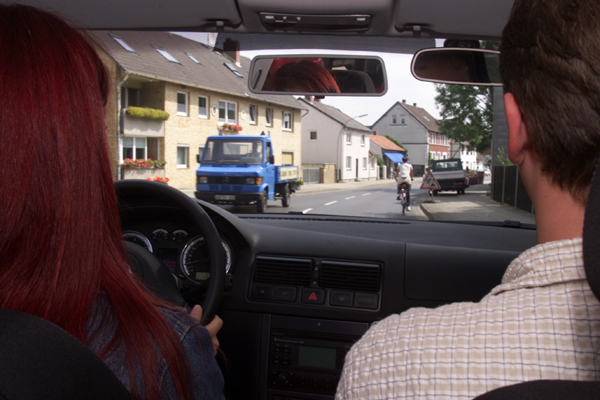
This is an important detail that many learners overlook.
Under the current German driving-licence regulations, the practical examination must generally be completed within 12 months after passing the theory examination. Otherwise, the theory examination loses its validity.
This means you should not pass the theory test and then leave the practical training indefinitely.
A well-organised training schedule can help you progress efficiently from theory to practical examination.
Failing an examination does not mean that you cannot obtain a German driving licence.
You can prepare again and repeat the relevant examination according to the applicable rules.
German regulations generally provide a minimum waiting period before a failed examination can be repeated. In ordinary cases, this is at least two weeks.
Instead of treating failure as a disaster, identify exactly why you failed.
Common areas requiring additional preparation include:
Additional driving lessons can help address specific weaknesses before your next attempt.
The cost of obtaining a German driving licence varies significantly.
There is no single nationwide price that applies to every learner.
Your total cost can include:
The biggest variable is usually the number of practical lessons required.
Someone who becomes test-ready quickly may spend considerably less than someone who requires many additional lessons.
For a detailed discussion of costs, see our Führerschein Kosten and Führerschein Kosten 2026 resources.
There is no universal number of ordinary practical lessons that every learner needs.
People learn at different speeds.
Your required number of lessons can depend on:
Germany does, however, prescribe certain special training drives for particular licence categories.
The important objective is not to reach a particular lesson count.
The objective is to become safe and examination-ready.
Yes.
Foreign nationals can obtain a German driving licence if they meet the applicable requirements.
However, foreigners should first determine whether they need a completely new licence.
There are three broad situations:
You may need to follow the normal German first-licence process.
Your existing licence may already be recognised in Germany.
Your licence may be recognised for a limited period or may qualify for an exchange depending on the issuing country and other circumstances.
This distinction can make a major difference in terms of time and cost.
If you already have a foreign licence, do not automatically assume that you must start from zero.
The correct procedure depends on:
For more information, read our guides about Foreign Driving Licence and Führerschein Umschreiben Deutschland.
A German driving licence is itself an EU driving licence because Germany is a member of the European Union.
If you already hold a valid EU/EEA driving licence, you generally do not need to obtain a second licence simply because you move to Germany.
This is different from holding a licence issued by a country outside the EU/EEA.
If you are unsure whether your licence qualifies for recognition, see our EU Driver’s License guide.
The answer depends on the country that issued the licence and your residence status.
EU/EEA licences generally receive broad recognition.
For non-EU/EEA licences, Germany has specific rules concerning temporary use after establishing residence.
Therefore, someone moving to Germany should determine:
For detailed information, visit our Foreign Driving Licence Germany resources.
International students should pay particular attention to the residence rules.
Studying in Germany does not automatically mean that every student must immediately obtain a German driving licence.
Your individual residence circumstances matter.
If you already have a valid EU licence, it may be recognised.
If you have a non-EU licence, different rules may apply.
If you want to obtain a first German licence, check whether your residence situation satisfies the normal-residence requirements before beginning the process.
For expatriates, obtaining a German driving licence can be an important part of settling into Germany.
Before enrolling in a driving school, however, determine whether your existing licence can be recognised or exchanged.
This can potentially save:
If an exchange is not available, you may need to complete some or all of the German licensing process.
Generally, yes.
A valid German driving licence is an EU driving licence and is generally recognised throughout the European Union.
However, recognition of the licence does not mean that traffic regulations are identical everywhere.
When driving outside Germany, check local rules concerning:
For international driving information, explore our International Driving Permit guide.
You can complete many aspects of the process as an international resident, but you should distinguish between administrative communication, driving-school instruction and the examination language.
The German theory examination can be taken in English under the current examination rules. The list of permitted foreign languages includes English and several other languages.
However, practical driving still takes place in Germany, so learning basic German traffic terminology can be extremely useful.
Understanding terms such as:
can make everyday driving considerably easier.
Learning to drive safely takes time.
Consistency is more effective than last-minute preparation.
Keep track of questions and driving situations you repeatedly get wrong.
Parking and manoeuvres should become routine rather than stressful.
You need to recognise them quickly while driving.
Good drivers anticipate rather than react at the last second.
Appropriate speed is one of the foundations of safe driving.
Your instructor sees mistakes you may not notice yourself.
Driving in different environments helps build confidence.
The examiner wants to see whether you can drive safely.
The cheapest lesson does not necessarily produce the lowest total cost.
You may already have a licence that can be recognised or exchanged.
The theory test requires genuine knowledge of traffic rules.
Being nervous is normal; being unprepared is avoidable.
German intersections can be challenging for new drivers.
Mirror checks and visual observation are critical.
The posted maximum is not always the appropriate speed.
Remember that the practical examination generally needs to be passed within 12 months after the theory test.
Before beginning the process, use this simple checklist:

Generally, you need to meet Germany’s residence and eligibility requirements, apply through the competent authority, complete the required driver training and pass the theory and practical examinations. German law expressly requires applicants for most driving licences to demonstrate competence through theoretical and practical testing.
The minimum age depends on the licence category. Category B has a standard minimum age of 18, with Germany also offering accompanied driving from 17 under applicable conditions.
Yes. Foreign nationals who satisfy the relevant residence, eligibility, training and examination requirements can obtain a German driving licence.
If you are obtaining your first German driving licence, you generally need to pass the required examinations. However, people who already hold foreign licences may be subject to different exchange or recognition rules.
Potentially, yes. The rules depend on where your licence was issued and whether you are visiting or have established normal residence in Germany.
Generally yes. Valid EU/EEA driving licences are broadly recognised in Germany.
Yes. English is one of the foreign languages permitted for the German theory examination under the current rules.
For a first Category B licence, the examination framework specifies 30 questions.
For a first Category B examination, the framework generally allows up to 10 error points, but two incorrectly answered questions worth five points each result in failure.
The practical test generally needs to be completed within 12 months after the theory examination is passed.
The cost varies depending on the driving school, number of practical lessons, examination fees, administrative fees and whether examinations need to be repeated.
There is no universal timeframe. Your timeline depends on your application, driving-school availability, training progress and examination appointments.
Learning how to get a German driving licence is much easier when you understand the process before you begin.
For a first-time applicant, the journey normally involves:
Residence → Application → Driving School → Theory Training → Practical Training → Theory Test → Practical Test → Licence
The process is designed to make sure new drivers have both the theoretical knowledge and practical competence necessary to drive safely.
The German Fahrerlaubnis-Verordnung explicitly requires applicants for a standard driving licence to demonstrate their ability through theoretical and practical examinations.
For international residents, however, there is one additional question that should always come first:
Do you actually need a new German driving licence?
If you already hold a foreign licence, your situation may be different. EU/EEA licences are generally recognised, while non-EU/EEA licences are subject to specific German rules concerning recognition, temporary use and exchange.
Understanding this before paying for driving lessons can potentially save you substantial time and money.
For more information about German driving licences, European licences, foreign licence exchange, driving tests, theory preparation and licence costs, visit FahrenExperten.
Driving Licence in Germany: Everything You Need to Know A driving licence is an important...
Weiterlesen
Rijbewijs kosten in Duitsland: een compleet overzicht Wie in Duitsland zijn rijbewijs wil halen, vraagt...
Weiterlesen