Driving Licence in Germany: Everything You Need to Know A driving licence is an important...
Weiterlesen



Driving Licence in Germany: Everything You Need to Know A driving licence is an important...
Weiterlesen
Rijbewijs kosten in Duitsland: een compleet overzicht Wie in Duitsland zijn rijbewijs wil halen, vraagt...
WeiterlesenThe German theory test is one of the most important stages of obtaining a German driving licence. Before you can demonstrate your practical driving skills on German roads, you must normally prove that you understand the rules, hazards and technical principles associated with safe driving.
Whether you are a first-time driver, an international student, an expatriate or a foreign resident applying for a German driving licence, preparing properly for the theory examination can save you time, money and unnecessary retakes.
The German Fahrerlaubnis-Verordnung (FeV) establishes the requirements for the theoretical examination. The test assesses knowledge of traffic regulations, environmentally conscious and energy-efficient driving, road hazards and basic technical principles relevant to road safety.
In this comprehensive guide, you will learn how the German theory test works, how it is scored, what subjects you should study, which languages are available, how to prepare and what happens if you fail.
For more information about obtaining a German driving licence, visit FahrenExperten.
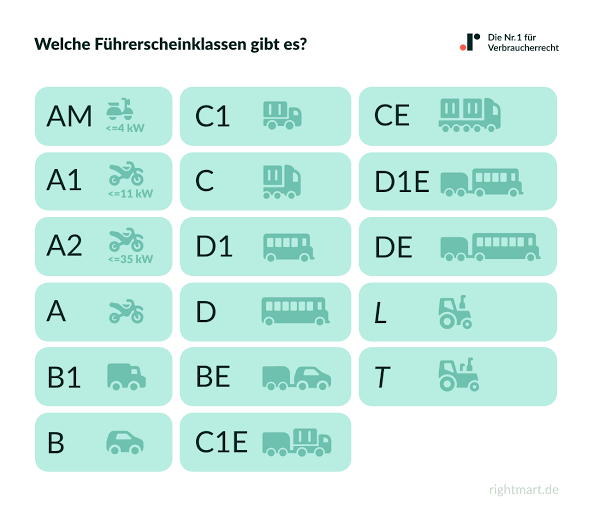
The German theory test is the knowledge-based examination that forms part of the German driving licence process.
For most first-time driving-licence applicants, obtaining a licence involves both:
German law requires applicants generally to demonstrate their driving competence through these two examinations. There are exceptions for certain licence categories and extensions. For example, a Class L licence requires only a theory examination, while some licence extensions require only a practical examination.
The theory examination is designed to determine whether you understand the knowledge required to participate safely in German road traffic.
The examination is much broader than simply memorising road signs.
Under Section 16 of the FeV, applicants must demonstrate knowledge of:
This means that effective preparation requires an understanding of how German traffic works, not just memorisation of individual answers.
The theory examination is based on questions presented in different formats and through different media. The examination content, structure, question selection and scoring are governed by the applicable German regulations and examination guidelines.
Questions can address subjects such as:
You should be able to recognise and interpret:
Understanding priority rules is fundamental to safe driving in Germany.
You should know how to respond at:
The test can assess your understanding of:
You should understand when overtaking is permitted, prohibited or unsafe.
German traffic regulations contain detailed rules governing where vehicles may stop or park.
You should understand German motorway rules, including lane use, safe following distances and situations where stopping is prohibited.
The examination also includes basic technical knowledge relevant to safe vehicle operation.
Energy-efficient and environmentally conscious driving is expressly included in the theory examination requirements.
For a first-time Class B applicant, the standard theory examination consists of:
However, there is an important rule that candidates need to understand.
If you incorrectly answer two questions worth five points each, you fail the examination even though the total error points would otherwise equal the permitted limit.
The same table in Annex 7 FeV lists 30 questions and 110 total points for first-time applicants in several categories, including AM, A1, A2, A, B, L and T.
Questions are assigned different point values based on their content and importance for:
The official rules state that questions can be worth between two and five points.
This is why you should pay particular attention to questions that carry five points.
A candidate who makes several mistakes on lower-value questions may still pass, whereas two incorrect five-point questions can result in failure.
Yes.
This is an important advantage for international applicants.
The official rules state that the theory examination can be taken in several foreign languages. These include:
Therefore, you do not necessarily need to take the German theory test in German.
However, learning basic German driving terminology remains useful because you will encounter German road signs, markings and traffic instructions during your practical training and examination.
For more information for international drivers, explore our German Driving Licence resources.
This is an important distinction.
You can prepare for the German theory test online using practice materials and digital learning resources. However, the official driving-licence examination itself is conducted through the authorised examination process rather than simply being an ordinary online quiz that you can take from home.
FahrenExperten can provide useful educational information about Führerscheinprüfung Online and theory preparation.
When preparing online, make sure your learning resources reflect the current German examination rules and question catalogue.
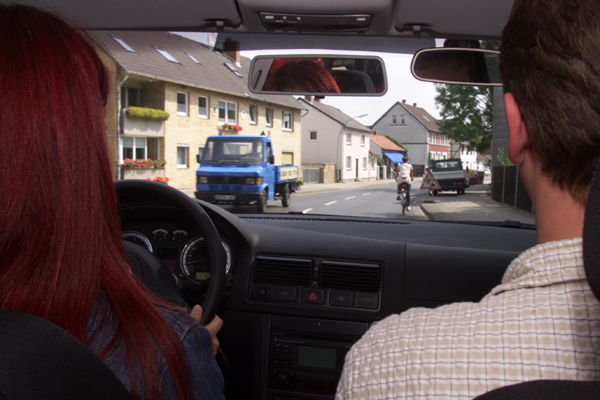
Successful candidates usually combine structured learning with repeated practice.
Start by understanding the basic rules governing German roads.
Do not attempt to memorise thousands of answers without understanding the principles behind them.
Road signs should become instantly recognisable.
Practise identifying:
Right-of-way questions are particularly important.
Pay attention to:
A good understanding of priority rules will also help during the practical driving test.
German theory questions often require you to understand potential hazards rather than simply identify a traffic sign.
Consider how risks change with:
Do not ignore vehicle-technology questions.
You should understand basic concepts relating to:
Consistent practice is better than attempting hundreds of questions in one day.
Create a study routine that includes:
Learn → Practise → Identify mistakes → Review → Repeat
Once you understand the individual topics, begin taking complete practice examinations.
Your goal should be to achieve passing results consistently rather than passing one practice test by chance.
You can also explore our Führerschein Test resources.
Many applicants fail because they underestimate the examination.
Here are some common mistakes to avoid.
Knowing the correct answer to one question does not necessarily mean you understand the underlying traffic rule.
Two incorrect five-point questions can result in failure.
The examination covers traffic regulations, hazards, environmental driving and technical principles as well.
Read each question carefully and examine all available information before selecting your answer.
Every mistake is an opportunity to identify a knowledge gap.
A strong practice routine should include difficult scenarios and questions from every relevant subject area.
The German theory examination can be challenging for foreign residents who are unfamiliar with German traffic regulations.
However, the availability of foreign-language examinations can make the process easier.
International applicants should focus on:
If you already hold a foreign driving licence, however, do not automatically assume that you need to take the complete German examination.
Depending on the issuing country and applicable rules, your licence may qualify for recognition or exchange.
Read our Foreign Driving Licence Germany guide before starting the full application process.
If you hold a valid driving licence from an EU or EEA country, different rules may apply.
EU/EEA licences generally benefit from European recognition rules, meaning that moving to Germany does not automatically mean that you must take the German theory test again.
However, specific circumstances can affect the rules.
If you already have an EU driving licence, check the applicable recognition requirements before registering for a new German driving course.
You can learn more in our EU Driving Licence guide.
The situation can be different if your licence was issued outside the EU/EEA.
Germany has specific rules governing the exchange of foreign driving licences. The requirements can vary according to the issuing country and licence category.
Germany’s Annex 11 FeV contains a country-specific table showing whether theory and practical examinations are required for licences from listed countries.
Therefore, some foreign licence holders may be able to exchange their licence without taking a German theory test, while others may have to pass the theory examination, the practical examination or both.
For more information, read our Führerschein Umschreiben Deutschland guide.
Passing the theory examination allows you to move forward to the practical examination stage, subject to the applicable requirements.
The practical examination generally cannot be taken before the theory examination has been passed. German law requires the theory examination to be passed before the practical examination.
This means your preparation should progress from:
Theory learning → German theory test → Practical driving training → Practical driving test
For practical preparation, see our German Driving Test guide.
Failing the theory examination does not permanently prevent you from obtaining a German driving licence.
However, the examination must be repeated in full if you fail.
Instead of immediately booking another attempt, identify your weaknesses.
For example:
| Problem | Better Approach |
|---|---|
| Too many road-sign mistakes | Study signs by category |
| Right-of-way errors | Practise intersection scenarios |
| Technical questions | Review vehicle basics |
| High-value question mistakes | Focus on five-point questions |
| Reading errors | Slow down and read carefully |
| Hazard questions | Study scenarios rather than memorising answers |
A failed test should therefore become a learning opportunity.
The total cost of obtaining a driving licence includes considerably more than the theory examination.
Potential expenses include:
The exact total varies from applicant to applicant.
For a detailed overview, read our Führerschein Kosten guide and our Führerschein Kosten 2026 article.
Before booking your examination, make sure you can confidently:
The two examinations assess different competencies.
| German Theory Test | Practical Driving Test |
|---|---|
| Tests knowledge | Tests practical ability |
| Traffic regulations | Real-world driving |
| Road signs | Vehicle control |
| Hazard recognition | Observation |
| Technical knowledge | Manoeuvres |
| Environmental driving | Speed management |
| Multiple-choice/question-based | Driving with an examiner |
Both components are important because a safe driver needs both knowledge and practical competence.
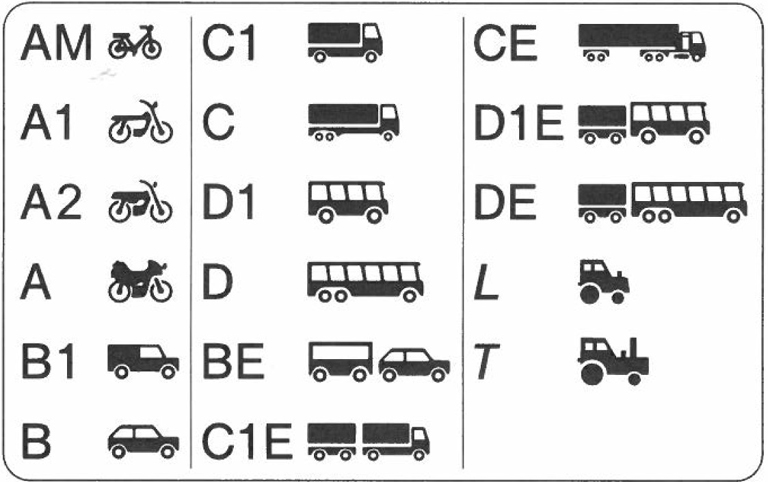
For a first-time Class B applicant, the standard test contains 30 questions with 110 possible points. Generally, up to 10 error points are permitted, but two incorrect five-point questions result in failure.
Yes. English is one of the foreign languages officially permitted for the theory examination.
It can be challenging because it covers a wide range of subjects. Thorough preparation and understanding the underlying traffic rules can make it considerably easier.
You can prepare online, but the official driving-licence theory examination is conducted through the authorised examination system rather than as an ordinary at-home online test.
The failed theory examination must be repeated in full.
Not always. If you already have a foreign driving licence, recognition or exchange rules may mean that you do not need the German theory examination.
A valid EU/EEA licence is generally subject to European recognition rules, so a new German theory test is not automatically required simply because you live in Germany. Specific circumstances can affect this.
Focus on traffic regulations, road signs, right-of-way, speed, hazards, parking, overtaking, motorways, vehicle technology and environmentally conscious driving. These areas correspond to the subjects specified for the theoretical examination.
The German theory test is a fundamental part of the German driving-licence process. It is designed to ensure that applicants understand the rules, hazards and technical principles necessary for safe driving.
For a typical first-time Class B applicant, the examination consists of 30 questions worth a total of 110 points, with generally no more than 10 error points permitted. Two incorrect five-point questions, however, result in failure.
International applicants can also benefit from the option to take the theory examination in English and several other permitted languages.
The most effective preparation strategy is simple:
Learn the rules → Understand the scenarios → Practise regularly → Analyse mistakes → Take practice tests → Sit the official examination when ready.
If you are preparing for the German theory test, researching German driving licence requirements, or looking for information about the practical examination, explore the related resources available at FahrenExperten.
Driving Licence in Germany: Everything You Need to Know A driving licence is an important...
Weiterlesen
Rijbewijs kosten in Duitsland: een compleet overzicht Wie in Duitsland zijn rijbewijs wil halen, vraagt...
Weiterlesen