Driving Licence in Germany: Everything You Need to Know A driving licence is an important...
Weiterlesen

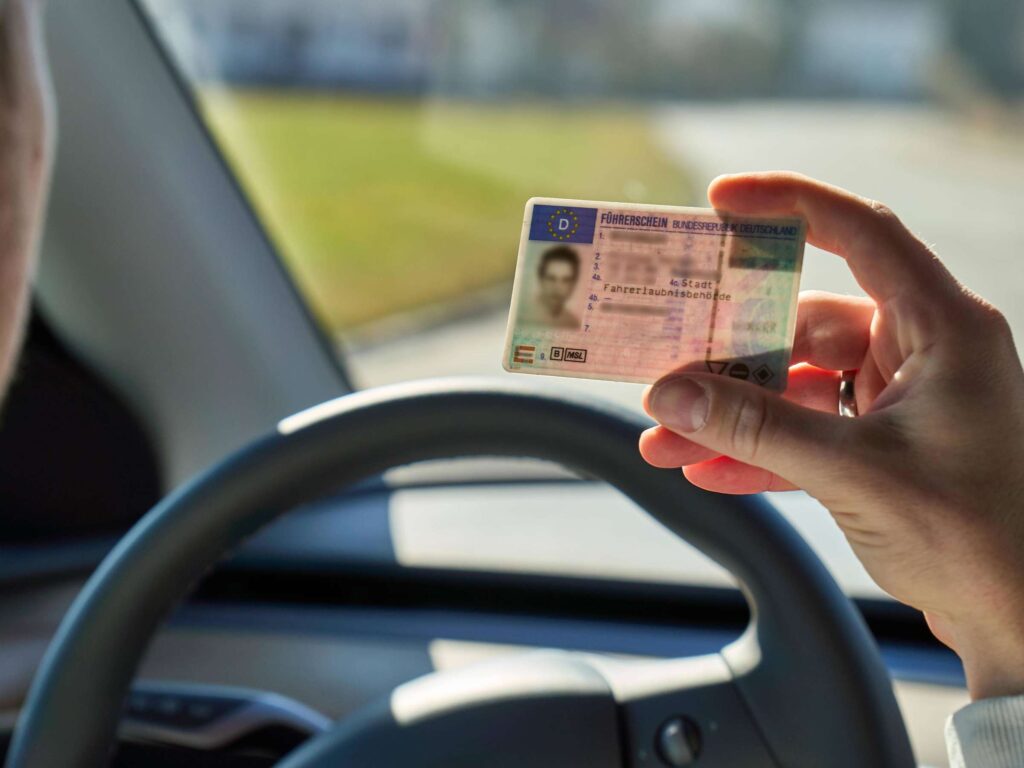

Driving Licence in Germany: Everything You Need to Know A driving licence is an important...
Weiterlesen
Rijbewijs kosten in Duitsland: een compleet overzicht Wie in Duitsland zijn rijbewijs wil halen, vraagt...
WeiterlesenIf you are planning to drive legally in Germany, understanding the German driving licence application process is an important first step. Whether you are applying for your first driving licence, moving to Germany from another country, or considering exchanging a foreign licence, the procedure involves several administrative and practical requirements.
Germany has a structured licensing system covering residence, minimum age, fitness to drive, eyesight, first-aid training, driver education and examinations.
For a first-time applicant, the process normally involves applying to the competent driving-licence authority, registering with a driving school, completing the required training and successfully passing the theory and practical examinations. The German Fahrerlaubnis-Verordnung (FeV) specifically regulates the application procedure and required documents.
In this guide, we explain how the German driving licence application works, what documents you may need, how the examination process works and what foreign residents should know before applying.
For more information about German and European driving licences, visit FahrenExperten.
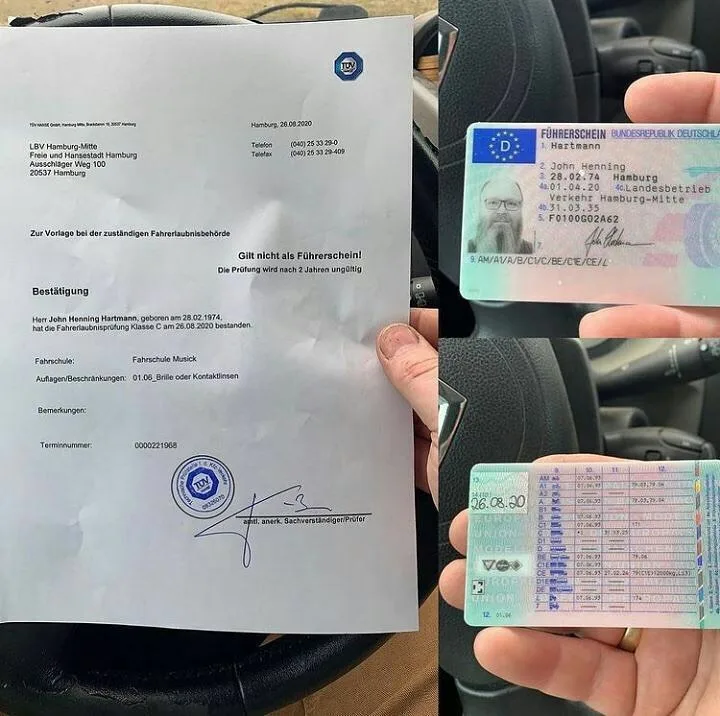
A German driving licence application is the formal request submitted to the competent German driving-licence authority (Fahrerlaubnisbehörde) to obtain permission to drive a particular category of motor vehicle.
The application is separate from your driving-school training.
Your Fahrschule provides driver education and practical training, while the relevant authority processes the official application and determines whether the legal requirements have been met.
Under Section 21 of the FeV, an application can be submitted in writing or electronically to the competent authority or office. The applicant may also be required to appear personally.
You generally need to make an application if you are seeking your first German driving licence.
This can include:
However, not everyone moving to Germany needs to start a new application from scratch.
If you already have an EU/EEA driving licence or a licence issued by another country, different recognition and exchange rules may apply.
This is why checking your existing licence situation should be one of the first steps.
For more information, see our resources on Foreign Driving Licence Germany.
Before submitting your application, you should understand the basic eligibility requirements.
For a standard car licence, applicants generally need to satisfy requirements concerning:
The German Road Traffic Act also states that a driving licence is issued when the applicant meets requirements including ordinary residence in Germany, the required minimum age, fitness to drive and the prescribed driver training.
For a detailed overview, read our guide to German Driving Licence Requirements.
One of the most important steps before submitting a German driving licence application is determining whether you satisfy the residence requirement.
German law generally requires an applicant to have their ordinary residence in Germany.
The FeV generally considers ordinary residence to exist when a person normally lives in Germany for at least 185 days per year, taking relevant personal and professional connections into account.
This is particularly important for:
You should therefore establish whether Germany is your ordinary residence before applying.
Germany has several driving-licence categories.
The category you apply for determines the applicable requirements and examinations.
Common categories include:
| Category | General purpose |
|---|---|
| AM | Mopeds and certain light vehicles |
| A1 | Light motorcycles |
| A2 | Medium motorcycles |
| A | Motorcycles |
| B | Cars and certain light vehicles |
| BE | Cars with certain trailers |
| C1 | Medium goods vehicles |
| C | Heavy goods vehicles |
| D1 | Certain smaller buses |
| D | Buses |
For most people wanting to drive a normal passenger car, Category B is the relevant category.
Germany’s FeV sets out the different driving-licence categories and associated requirements.
You can also explore our Führerschein Klasse B resources.
Your minimum age depends on the licence category.
For example, the standard minimum age for a Category B licence is 18, while Germany also has an accompanied-driving system allowing qualifying drivers to begin driving at 17 under specified conditions.
Other categories have different minimum-age rules.
An important detail is that German regulations allow a driving-licence application to be submitted up to six months before reaching the prescribed minimum age for the relevant category.
Therefore, applicants should not assume that they have to wait until their birthday to begin the administrative process.
After confirming that you can apply, the next step is normally to choose a German driving school (Fahrschule).
Your driving school will provide the required driver education.
When submitting a German driving licence application, the applicant is required to provide information about the driving school providing the training.
When comparing driving schools, consider:
Do not compare schools solely by the price of one driving lesson. The total cost depends substantially on the number of lessons you ultimately need.
For more information, visit our Driving School Germany content.
Preparing the correct documentation can make the German driving licence application much easier.
For a standard application, the FeV specifies documents including:
Additional medical and eyesight documentation is required for certain higher vehicle categories.
Depending on your circumstances, the authority may also require identity and residence documentation.
Before applying, prepare:
Always check the exact requirements of your responsible local authority because individual circumstances can affect the documentation required.
Applicants for categories such as AM, A1, A2, A, B, BE, L and T generally need to provide an appropriate eyesight-test certificate or qualifying vision documentation with the application.
The eyesight requirement exists because safe driving depends heavily on adequate vision.
If you require glasses or contact lenses, an appropriate restriction may be recorded on your licence.
For higher categories such as C and D, the medical and eyesight requirements are more extensive.
Another important part of the German driving licence application is providing evidence of the required first-aid training.
The FeV specifically lists proof of first-aid training among the documents that must accompany relevant licence applications.
The training is designed to prepare drivers to respond appropriately when an accident or medical emergency occurs.
Topics can include:
Keep your certificate after completing the course because it may need to be submitted with your application.
Once you have the necessary documents, the formal application can be submitted to the responsible Fahrerlaubnisbehörde.
Under Section 21 FeV, the application can be made:
The authority may require you to appear personally.
The application contains information such as:
Importantly, applicants must declare whether they already hold or have previously held a driving licence issued by another country.
This part of the German driving licence application is especially important for international residents.
If you already have a foreign licence, do not omit it from your application.
The German authority needs to know whether you:
German regulations specifically require applicants to provide this information.
Your existing licence can affect whether you need to complete the entire German training and examination process.
If you already have a foreign driving licence, your application may be substantially different from that of someone obtaining their first licence.
The relevant rules depend on:
Valid EU/EEA licences are generally recognised within the European driving-licence system.
Different rules apply to licences issued outside the EU/EEA.
Depending on the country, you may be able to exchange the licence under certain conditions, while in other cases theory and/or practical examinations may be required.
Before starting a completely new driving course, investigate whether your licence can be exchanged.
Read our related guide to Führerschein Umschreiben Deutschland.
Foreign nationals can apply for a German driving licence if they meet the applicable legal requirements.
The application process can be particularly relevant for:
Students should check their residence situation and whether an existing foreign licence is recognised.
People moving to Germany for work should determine whether their existing driving licence can continue to be used or exchanged.
EU citizens holding valid EU/EEA licences generally benefit from European recognition rules.
Applicants from countries outside the EU/EEA should investigate the specific rules applicable to their existing licence.
For more information, visit our German Driving Licence for Foreigners resources.
Submitting the application does not mean that you immediately receive your driving licence.
The authority processes your application and checks the relevant information.
The FeV states that the licensing authority investigates whether there are concerns regarding the applicant’s fitness to drive and whether the applicant already possesses or previously possessed a driving licence.
Once the necessary administrative steps have been completed, you can proceed toward the required examinations through the driving-school process.
For a first German driving licence, the theory examination is an important part of the process.
The theory examination assesses whether you have sufficient knowledge of:
These requirements are established in Section 16 FeV.
For applicants who are more comfortable in English, the German theory examination can also be taken in several permitted foreign languages, including English.
For preparation, explore our Führerschein Theorie Lernen content.
After passing the theory examination and completing the required practical training, you can take the practical driving examination.
The practical examination assesses whether you have the technical knowledge and practical ability necessary to drive safely and, where applicable, economically and environmentally responsibly.
The practical test cannot normally be taken before the theory examination has been passed.
During your preparation, you should practise:
Read our related Practical Driving Test guide.
For a standard first driving licence, applicants generally have to demonstrate their competence through both theory and practical examinations.
Section 15 FeV states that applicants must demonstrate their competence through a theoretical and practical examination, although there are specific exceptions for certain licence categories and licence extensions.
This distinction is important because someone exchanging a foreign licence may not necessarily be treated in the same way as someone applying for a first licence.
There is no single nationwide total cost for obtaining a German driving licence.
Your total expenses may include:
The largest variable is often the amount of practical training required.
For a detailed discussion, visit our guides on Führerschein Kosten and Führerschein Kosten 2026.
There is no single processing time that applies to every applicant.
The overall timeline can depend on:
A complete application with all required documents can help prevent avoidable delays.
Use this checklist before submitting your application.
If you already have a foreign licence, determine whether it can be recognised or exchanged first.
Missing documents can cause delays.
The ordinary-residence requirement is fundamental to the German licensing system.
German regulations require applicants to disclose relevant existing or previous foreign licences.
The cheapest lesson does not necessarily mean the cheapest overall licence.
The theory examination tests actual knowledge of German traffic rules and hazards.
You should be capable of driving safely and independently before attempting the examination.
For people interested in driving ordinary passenger cars, Category B is usually the most relevant licence.
The general journey looks like this:
Check eligibility → Prepare documents → Apply → Register with driving school → Complete theory training → Complete practical training → Pass theory test → Pass practical test → Receive licence
Category B applicants need appropriate eyesight documentation and proof of first-aid training as part of the application documentation.
For more information, explore our Führerschein Klasse B guide.
German law allows the application to be submitted electronically or in writing, but the availability of a fully digital application process depends on the responsible authority and the services available in your locality.
Therefore, do not assume that every German city or municipality provides exactly the same online process.
Check the website of your local Fahrerlaubnisbehörde for its current application procedure.
You generally submit an application to the competent Fahrerlaubnisbehörde, provide the required documents, identify your driving school and complete the prescribed training and examinations.
For a standard application, required documents can include proof of birth, a compliant photograph, eyesight documentation and proof of first-aid training. Additional documents may apply depending on the licence category and your circumstances.
Yes. Foreign residents can apply if they meet the relevant German legal requirements.
The application may be submitted electronically where the responsible authority provides this option. German law also permits written applications.
Ordinary residence in Germany is generally required for issuing a German driving licence, subject to specific statutory provisions.
Yes, but you must disclose the existing or previous foreign licence. Whether you need a new licence, an exchange or examinations depends on the country and circumstances.
Yes. English is among the foreign languages permitted for the German theory examination.
For a standard first licence, a practical examination is generally required after passing the theory examination.
The total cost varies according to the driving school, lessons required, administrative and examination fees and whether you need additional training or repeat an examination.
The German driving licence application is an important administrative step, but it is only one part of the overall process.
For a first-time applicant, the journey generally looks like:
The most important thing for international residents is to determine their existing licence status before starting.
If you already hold an EU/EEA or other foreign driving licence, you may have different options from someone applying for a licence for the first time.
German regulations specifically require applicants to disclose existing or previous foreign licences, while the competent authority assesses the relevant eligibility and fitness requirements.
If you are researching the German driving licence application, German driving licence requirements, driving tests, foreign licence exchange, licence costs or European driving licences, explore the related resources available on FahrenExperten.
Driving Licence in Germany: Everything You Need to Know A driving licence is an important...
Weiterlesen
Rijbewijs kosten in Duitsland: een compleet overzicht Wie in Duitsland zijn rijbewijs wil halen, vraagt...
Weiterlesen