Driving Licence in Germany: Everything You Need to Know A driving licence is an important...
Weiterlesen

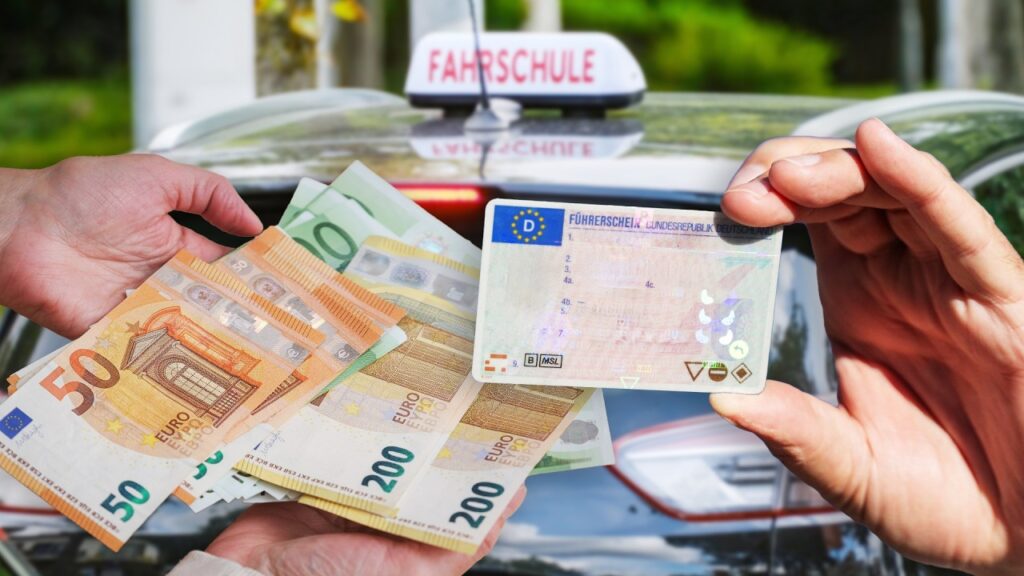

Driving Licence in Germany: Everything You Need to Know A driving licence is an important...
Weiterlesen
Rijbewijs kosten in Duitsland: een compleet overzicht Wie in Duitsland zijn rijbewijs wil halen, vraagt...
WeiterlesenMoving to Germany with a foreign driving licence can make everyday life much easier, especially if you need a car for work, family responsibilities or travel. However, foreign driving licences are subject to specific German recognition and conversion rules.
If you are searching for information about how to exchange foreign driving licence Germany, the most important thing to understand is that the procedure depends on the country that issued your licence.
EU and EEA driving licences generally have broader recognition in Germany, while licences from countries outside the European Union and European Economic Area are generally subject to a six-month recognition period after establishing normal residence. After that period, a German driving licence is normally required to continue driving.
The good news is that exchanging a foreign licence does not necessarily mean taking the complete German driving course from the beginning. Depending on your country and licence category, you may be exempt from the theory examination, practical examination or both.
In this guide, we explain the foreign driving licence Germany exchange process, requirements, documents, examinations, costs, deadlines and common mistakes.
For more information about obtaining and using a German driving licence, visit FahrenExperten.

The term exchange foreign driving licence Germany generally refers to the process of obtaining a German driving licence based on an existing foreign licence.
In German, this process is commonly referred to as Umschreibung einer ausländischen Fahrerlaubnis.
The application is handled by the competent local Fahrerlaubnisbehörde, or driving licence authority.
Depending on your circumstances, the process can involve:
The process is therefore not identical for everyone.
Whether you need to exchange your licence depends primarily on whether it was issued by an EU/EEA country or a third country.
A valid EU/EEA driving licence is generally recognised in Germany. For ordinary harmonised categories, immediate exchange is normally not necessary simply because you move to Germany.
If your driving licence was issued outside the EU/EEA and you establish normal residence in Germany, it is generally recognised for six months. After those six months, you need a German driving licence to continue driving.
This six-month period makes early preparation especially important for people planning to live in Germany permanently.
If you have a driving licence issued by an EU or EEA country, you generally benefit from relatively straightforward recognition rules.
For harmonised categories, your licence normally remains valid in Germany and does not have to be exchanged immediately after moving to Germany. You generally exchange it when it reaches the applicable renewal point.
There are exceptions and special rules for certain categories.
For example, C and D categories are subject to German validity periods in relevant circumstances. German rules can therefore apply even where the foreign licence displays a longer validity period or no expiry date.
If you hold an EU licence, our EU Driving Licence Germany guide provides additional information.
The procedure is more important for people who hold a licence from outside the EU/EEA.
If you establish normal residence in Germany, your legally obtained foreign licence generally remains valid for six months. After this period, you must have a German driving licence if you want to continue driving in Germany.
The six months should not be interpreted as six months from the date you received your German residence permit. The relevant issue is generally when your normal residence in Germany was established.
German authorities generally consider normal residence in terms of living in Germany for at least 185 days per year for personal and/or professional reasons.
If you are uncertain about the date your normal residence began, ask your local driving licence authority.
The six-month rule is one of the most important things to understand before you exchange foreign driving licence Germany.
The general process for a non-EU/EEA licence is:
Once the six-month period expires, you cannot normally continue driving in Germany solely on the basis of your foreign non-EU/EEA licence.
For this reason, do not wait until the final weeks before beginning the exchange process.
In specific circumstances, an extension can be possible.
German law provides for the possibility of extending the recognition period where it can be established that the holder will not have their normal residence in Germany for more than twelve months.
However, this is not something you should assume will happen automatically.
If you are moving to Germany permanently, the safest approach is to start the exchange process as early as possible.
This depends on your country of licence issue and the licence category.
For many non-EU/EEA licences, both a theory examination and practical driving examination are required.
However, there is an important exception.
Germany has special provisions for countries listed in Annex 11 of the Driving Licence Regulation (FeV). Depending on the country and licence category, you may need:
The official Annex 11 table specifies the requirements for individual countries and categories.
Therefore, you should never assume that every foreign licence holder has to take both German driving tests.
Annex 11 (Anlage 11 FeV) contains a list of countries whose driving licences receive special treatment when they are exchanged for German licences.
The current official list includes countries and territories such as:
The exact exemption depends on the licence category and country.
For example, the official table currently states that certain B-category licences from Albania, Bosnia and Herzegovina, Israel, Japan, Kosovo and North Macedonia can be exchanged without a theory or practical examination, subject to the specific conditions in the regulation.
Other countries have different requirements. For example, certain Moldovan licence categories are exempt from the theory examination but require a practical examination.
This is why checking the exact country and licence category is essential.
The exact requirements can vary according to your situation and the local authority.
However, common documents include:
The Federal Portal lists an official identity document, registration certificate, current photograph and the original foreign driving licence among the relevant documents.
For non-EU/EEA licences, a German translation can also be required unless the relevant authority waives that requirement.
No.
An International Driving Permit does not replace your original national driving licence for the exchange procedure.
German government guidance specifically states that the original foreign driving licence is required and that an international driving licence alone is not sufficient.
If you want to learn more about international driving permits, read our International Driving Licence guide.
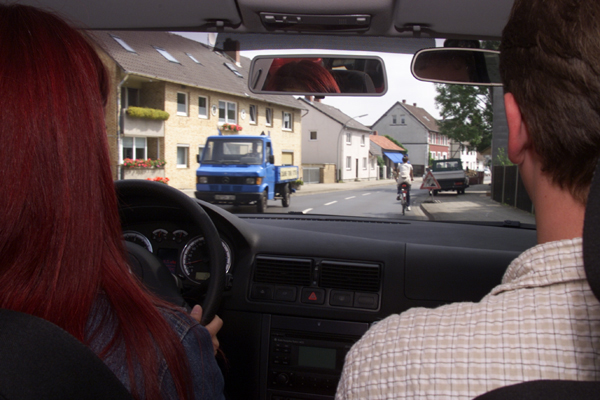
Start by identifying the country that actually issued your driving licence.
The country of issue determines which German recognition rules apply.
If your licence was issued by an EU/EEA country, it will generally be recognised in Germany for harmonised categories.
If your licence was issued outside the EU/EEA, continue by checking the six-month rule and Annex 11.
Search the official Annex 11 list for your country.
Then check your specific licence category.
This is important because one category can be exempt from examinations while another category from the same country may require a practical test.
If you have a non-EU/EEA licence, determine when you established normal residence in Germany.
Your foreign licence is generally recognised for six months from that point.
Start preparing well before this deadline.
The responsible driving licence authority can tell you exactly what documents and examinations apply to your case.
You should ask about:
Make sure your documents are complete before your appointment.
A missing translation, photograph or supporting certificate can delay the application.
Submit the application to the competent driving licence authority.
Some municipalities require appointments, while the exact procedure varies by location.
If you need examinations, you can prepare with a German driving school.
You may not have to complete the entire training programme required for someone obtaining a licence for the first time.
Nevertheless, lessons can be valuable because German traffic rules, road signs and examination procedures may differ substantially from those in your home country.
Read our Driving School Germany guide.
Depending on your country and category, you may need:
Theory test
and/or
Practical driving test
If a theory examination is required, see our German Theory Test guide.
For practical examination preparation, visit our German Driving Exam guide.
Once the requirements have been satisfied, the German authority issues your driving licence.
The foreign licence is generally handed over to the authority. Depending on the country and applicable arrangements, it may be returned to the issuing authority or retained by the German authority.
There is no single nationwide total cost because expenses depend on your circumstances.
Potential costs include:
The government fee is based on the applicable German fee schedule, while examination and driving-school costs depend on your individual situation.
If your licence can be exchanged without examinations, the overall cost may be significantly lower than for someone who needs extensive practical preparation.
For a detailed overview, visit our Driving Licence Cost Germany guide.
Yes, in certain cases.
If your licence is covered by the relevant Annex 11 provisions, you may be exempt from one or both examinations.
For example, certain licence categories from countries including Japan, Israel, Switzerland and North Macedonia are listed as requiring neither a theory nor practical test.
But the exemption is not universal.
Always check your country and licence category against the current official Annex 11 table.
Possibly.
If your licence qualifies for an exchange without examinations, you may not need conventional driver training.
If you have to take an examination, however, preparation with a German driving school can be very useful.
This is especially true for the practical examination.
A driver who has been driving for ten or twenty years in another country may still be unfamiliar with:
The objective is not simply to demonstrate that you can operate a vehicle. You must demonstrate that you can drive according to German traffic rules and standards.
For a non-EU/EEA licence holder who has established normal residence in Germany, the six-month recognition period is critical.
After the period expires, you generally need a German driving licence to continue driving legally.
Do not assume that simply having submitted an application automatically means you can continue driving after the six-month deadline.
If your deadline is approaching, speak directly with your competent authority.
Special circumstances can apply.
The Federal Portal notes that certain people whose normal residence is not in Germany, including commuters, students and pupils, can fall under different rules.
Therefore, do not automatically apply the six-month rule to every foreign national who spends time in Germany.
Your actual residence situation matters.
This can be more complicated.
Suppose you originally obtained a driving licence outside the EU and later exchanged it for an EU driving licence in another Member State.
Germany may examine how the EU licence was obtained.
The German Driving Licence Regulation contains specific provisions concerning EU/EEA licences that were based on third-country licences.
For example, German recognition rules can be affected where an EU/EEA licence was issued on the basis of a licence from a third country that is not listed in Annex 11 and the exchange occurred without the required driving examination.
If this describes your situation, ask the German driving licence authority to assess the licence before assuming that ordinary EU recognition applies.
Starting early gives you time to obtain translations, documents and appointments.
Germany applies country-specific rules, particularly under Annex 11.
Some foreign licences can be exchanged without theory or practical examinations.
The opposite assumption can also cause problems. Some licences require one or both examinations.
An IDP is not a replacement for the original national licence.
The rules for a B licence can differ from those for C, D or other categories.
The circumstances under which the EU licence was issued can matter.
| Requirement | EU/EEA Licence | Non-EU/EEA Licence |
|---|---|---|
| Immediate exchange after moving to Germany | Generally no for harmonised categories | Generally required after six months |
| Six-month rule | Generally not applicable in the same way | Generally applicable |
| Theory test | Normally not required for ordinary recognition | Depends on country/category |
| Practical test | Normally not required for ordinary recognition | Depends on country/category |
| Annex 11 | Generally not applicable | Very important |
| Translation | Usually not necessary | May be required |
| Local driving authority | Yes where an exchange is needed | Yes |
| New German licence | Depends on category and renewal | Generally required for long-term residents |
These are general rules. Your specific licence, category, residence circumstances and country of issue can change the result.
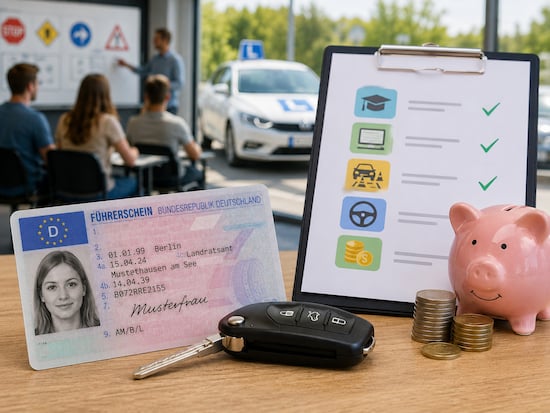
For most non-EU/EEA licence holders who establish normal residence in Germany, the licence is generally recognised for six months.
Usually not immediately for ordinary harmonised categories. A valid EU/EEA licence is generally recognised in Germany, although specific categories and renewal periods can be subject to German rules.
Yes, in certain cases. Annex 11 provides exemptions for specified countries and categories.
No. Annex 11 countries can benefit from exemption from one or both examinations depending on the licence category.
No. You generally need the original national foreign driving licence for the exchange process.
You normally apply to the local Fahrerlaubnisbehörde responsible for your place of residence.
Costs depend on the procedure. Administrative fees, translation, photographs, examinations and driving-school training can all contribute to the final cost.
Generally, the foreign licence is handed to the German authority. Depending on the circumstances and agreements with the issuing country, it may be returned to that country’s authority or retained.
If you are planning to exchange foreign driving licence Germany, do not assume that the same rules apply to every foreign driver.
The most important factors are:
1. Country of issue
2. EU/EEA or non-EU/EEA status
3. Licence category
4. Date you established normal residence in Germany
5. Whether your country is covered by Annex 11
6. Whether theory and/or practical examinations are required
For most non-EU/EEA residents, the six-month recognition period is one of the most important deadlines to understand.
If your licence is covered by Annex 11, the exchange can be considerably easier because certain licences and categories can be converted without examinations.
The best strategy is to start early, prepare the required documentation and confirm your individual requirements with the responsible Fahrerlaubnisbehörde.
For more information about German driving licences, foreign licence conversion, examinations, costs and driving requirements, explore FahrenExperten.
Driving Licence in Germany: Everything You Need to Know A driving licence is an important...
Weiterlesen
Rijbewijs kosten in Duitsland: een compleet overzicht Wie in Duitsland zijn rijbewijs wil halen, vraagt...
Weiterlesen