Driving Licence in Germany: Everything You Need to Know A driving licence is an important...
Weiterlesen


Driving Licence in Germany: Everything You Need to Know A driving licence is an important...
Weiterlesen
Rijbewijs kosten in Duitsland: een compleet overzicht Wie in Duitsland zijn rijbewijs wil halen, vraagt...
WeiterlesenUnderstanding driving licence validity Germany is essential if you hold a German driving licence, have recently moved to Germany, or are planning to obtain a German licence.
One of the most common misunderstandings is that every German driving licence is valid for the same period. In reality, the rules depend on when the licence was issued, which category you hold, and whether you are referring to the physical licence document or the underlying legal entitlement to drive.
Modern German driving licence cards issued from 19 January 2013 are generally valid for 15 years. Importantly, this 15-year limitation applies to the physical licence document and not generally to the underlying driving entitlement.
Older German licences are subject to a separate mandatory exchange programme, while professional categories such as C, CE, D and DE have additional validity and renewal requirements.
In this guide, we explain everything you need to know about driving licence validity in Germany, including expiry dates, renewal, old licence exchange deadlines, professional licences and foreign driving licences.
For more information about German driving licences, visit FahrenExperten.
The first thing to understand is that Germany distinguishes between the driving licence document (Führerschein) and the driving entitlement (Fahrerlaubnis).
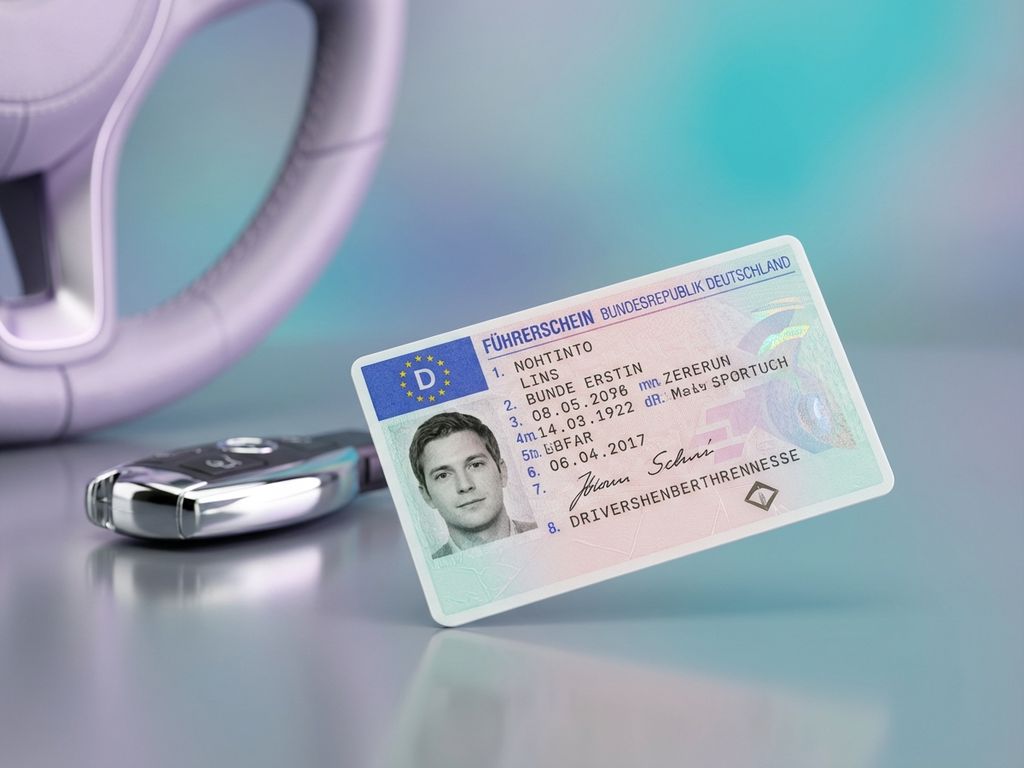
The physical licence is the card you carry with you as evidence of your entitlement.
The driving entitlement is the legal permission that allows you to drive a particular category of vehicle.
For modern German licences issued from 19 January 2013, the physical document is generally valid for 15 years. German law expressly states that this limitation applies to the licence document.
This means that when the 15-year period ends, you generally need a new licence card rather than having to start the entire driving licence process again.
For modern German EU-format driving licence cards issued on or after 19 January 2013, the document is generally valid for:
The expiry date is shown on the licence.
The 15-year validity period is intended to ensure that licence documents are periodically updated, including their security features and personal information.
The German Federal Portal confirms that the 15-year limitation applies to the document and not to the underlying driving entitlement.
Therefore, a standard Category B driver does not normally have to repeat the theory or practical examination simply because the 15-year licence card has expired.
This distinction is extremely important when researching driving licence validity Germany.
This is your physical document.
It contains information such as:
This is your legal authorisation to operate vehicles belonging to particular categories.
For a normal modern Category B licence, expiry of the physical 15-year document does not generally mean that the underlying driving entitlement has automatically disappeared.
This is why renewing or replacing an expired licence card is usually an administrative process rather than a new driving test.
Yes, the modern physical driving licence card generally expires after 15 years.
However, it is important to phrase this correctly.
The document expires after 15 years; this does not generally mean that the underlying Category B driving entitlement itself expires after 15 years.
The German Federal Ministry of Justice’s FeV states that licences issued from 19 January 2013 are limited to 15 years.
Once the card reaches its expiry date, the holder generally needs to obtain a new licence document.
For an ordinary modern Category B licence, no.
The 15-year period is a validity period for the licence document.
You do not normally have to:
simply because the licence card has reached the end of its 15-year validity.
The Federal Portal explains that the document exchange does not normally change the underlying driving entitlement and that medical examinations or other checks are generally not part of the ordinary document exchange.
However, professional driving categories are different.
The validity rules depend significantly on the category.
| Licence category | General situation |
|---|---|
| AM | Modern licence document generally 15 years |
| A1 | Modern licence document generally 15 years |
| A2 | Modern licence document generally 15 years |
| A | Modern licence document generally 15 years |
| B | Modern licence document generally 15 years |
| BE | Modern licence document generally 15 years |
| C1 | Driving entitlement subject to specific validity rules |
| C1E | Driving entitlement subject to specific validity rules |
| C | Driving entitlement subject to specific validity rules |
| CE | Driving entitlement subject to specific validity rules |
| D1 | Driving entitlement subject to specific validity rules |
| D1E | Driving entitlement subject to specific validity rules |
| D | Driving entitlement subject to specific validity rules |
| DE | Driving entitlement subject to specific validity rules |
The distinction between the card’s validity and the underlying entitlement is particularly important for the C and D categories.
Under §24 FeV, categories C, C1, CE, C1E, D, D1, DE and D1E have specific periods of validity and require evidence of suitability and eyesight requirements when extended.
Category B is the standard licence category used for passenger cars.
For modern Category B licences issued from 19 January 2013, the physical licence document is generally valid for 15 years.
Once the document reaches its expiry date, the holder normally needs to apply for a new licence card.
The underlying Category B driving entitlement is not normally limited to 15 years merely because the card has expired.
If you are researching the requirements for obtaining a Category B licence in Germany, see our guide to German Driving Licence Requirements.
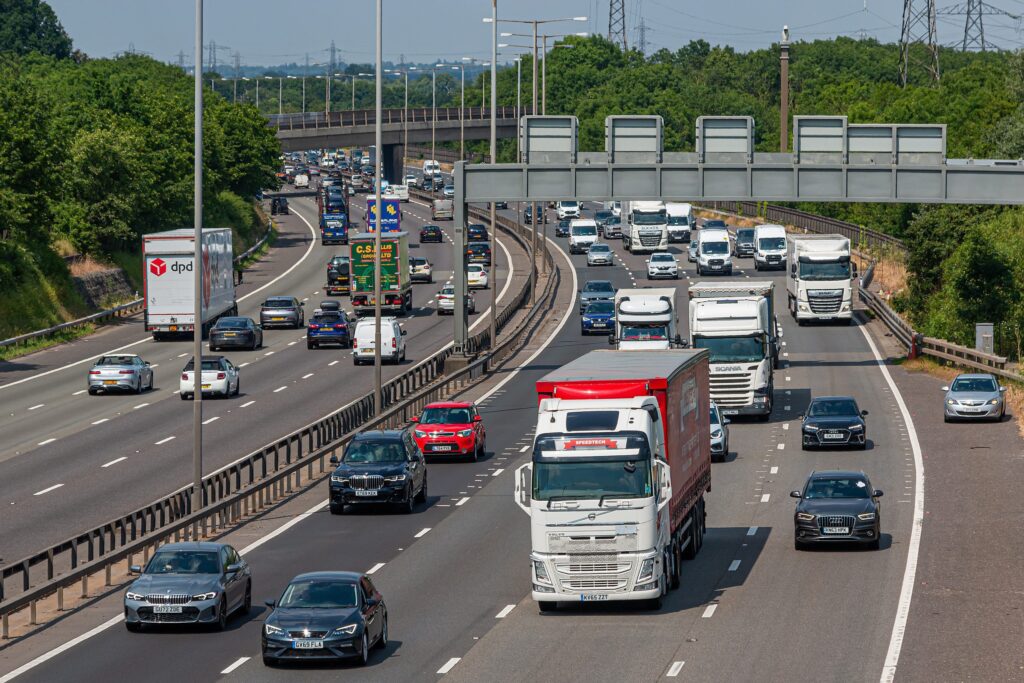
Professional drivers need to pay much closer attention to licence validity.
Under §24 FeV, driving entitlements in categories including:
must be extended when their relevant validity period ends.
Unlike an ordinary 15-year card renewal, extending these professional categories involves specific suitability and eyesight requirements.
For certain bus categories, additional requirements apply when the driver is over 50.
Professional drivers should therefore begin the renewal process early.
German law provides that an extension of a professional driving entitlement can generally be applied for no earlier than six months before the end of its validity period.
This is particularly important for:
If your professional licence is approaching its expiry date, do not wait until the final week to begin preparing the necessary documentation.
If your modern German licence card reaches its 15-year expiry date, you generally need to apply for a new licence document.
The procedure is usually much simpler than applying for a licence for the first time.
For a standard document renewal, you may need:
The exact requirements depend on your local Fahrerlaubnisbehörde.
For more information about expired licences, read our Driving Licence Expired Germany guide.
No.
German licences issued before 19 January 2013 are covered by the mandatory exchange programme.
Instead of simply applying a universal 15-year expiry period to all older licences, Germany introduced a staged exchange system.
The deadlines depend on:
The Federal Portal provides the official exchange schedule.
For older card licences issued between 1 January 1999 and 18 January 2013, the current schedule is:
| Licence issue year | Exchange deadline |
|---|---|
| 1999–2001 | 19 January 2026 |
| 2002–2004 | 19 January 2027 |
| 2005–2007 | 19 January 2028 |
| 2008 | 19 January 2029 |
| 2009 | 19 January 2030 |
| 2010 | 19 January 2031 |
| 2011 | 19 January 2032 |
| 2012–18 January 2013 | 19 January 2033 |
Because the current year is 2026, licences issued between 1999 and 2001 were due for exchange by 19 January 2026.
If you still have one of these licences, contact your responsible driving licence authority.
Older paper licences have a separate schedule.
For licences issued up to 31 December 1998, the exchange deadline generally depends on the driver’s year of birth.
The current schedule includes:
| Year of birth | Exchange deadline |
|---|---|
| Before 1953 | 19 January 2033 |
| 1953–1958 | 19 July 2022 |
| 1959–1964 | 19 January 2023 |
| 1965–1970 | 19 January 2024 |
| 1971 or later | 19 January 2025 |
If the relevant deadline has already passed, the old licence document loses its validity and should be exchanged.
No.
The mandatory exchange is primarily a document exchange.
The German Federal Portal explains that the underlying driving entitlement does not change merely because the old licence is exchanged for the modern EU card.
This means that a driver does not normally need to repeat the original driving school training or examinations merely because an old licence has to be exchanged.
If you have a modern EU-format licence, you can check its validity directly on the card.
The licence contains different fields for the individual categories.
The expiry information is particularly important for professional categories because different categories can have different validity periods.
For ordinary Category B holders, the document’s overall validity is generally 15 years.
Do not confuse the date of issue with the expiry date.
If you are uncertain about the information on your card, ask your local driving licence authority.
You can generally check your licence validity by examining the physical driving licence card.
Look for:
For example, the expiry information for the card is normally shown in field 4b on the EU-format driving licence.
The category-specific information appears in the relevant category rows.
If you hold several categories, make sure you check the appropriate category rather than assuming all categories have identical validity periods.
When your modern licence card is approaching its expiry date, the renewal process is generally straightforward.
Determine when the current card expires.
Contact your local Fahrerlaubnisbehörde or Führerscheinstelle.
Typically, you will need:
Professional drivers may need additional medical and eyesight documents.
Follow your local authority’s application procedure.
Administrative fees vary depending on the service and authority.
The new EU-format card will normally be issued with a new validity period.
For example, Hamburg states that standard processing can take up to approximately four weeks, while express processing may be considerably faster.
There is no single nationwide price for every renewal or exchange.
The final cost can depend on:
For example, Hamburg currently lists fees in the range of approximately €45.90 to €74.50 for certain driving licence application procedures.
Other authorities may have different fees.
For a broader overview, visit our Driving Licence Cost Germany guide.
For a standard 15-year document renewal, a medical examination is normally not required.
The Federal Portal states that the mandatory exchange of the document is generally not associated with medical examinations or other checks.
However, this does not apply universally.
Professional categories have specific fitness and eyesight requirements.
For C and D categories, for example, §24 FeV requires evidence of suitability and compliance with eyesight requirements.
If you hold a driving licence issued by another EU or EEA country, different rules apply.
EU/EEA driving licences are generally recognised in Germany under the applicable European and German regulations.
However, circumstances such as:
can affect what you need to do.
If you have an EU licence and live in Germany, see our guide to EU Driving Licence in Germany.
If your driving licence was issued outside the EU/EEA, the rules are different.
A foreign driving licence may be recognised for a limited period after you establish normal residence in Germany.
Depending on the issuing country and applicable agreements, you may need to convert the licence into a German licence.
This is generally referred to as Umschreibung.
The process can differ considerably depending on the country that issued your licence.
Learn more through our Foreign Driving Licence Germany guide.
For many non-EU/EEA licence holders who establish normal residence in Germany, the foreign licence is generally recognised for six months.
After this period, further driving may require a German driving licence. The precise rules can depend on the country of issue and the circumstances of the licence holder.
This is why people moving to Germany should investigate the conversion requirements early.
For further information, see:
Moving to Germany can raise several questions about driving licence validity.
If you already have a licence from:
Your licence will generally be recognised, subject to the applicable rules.
You may have a limited period during which your foreign licence can be used after establishing normal residence.
You may need to apply for a German driving licence and complete the required training and examinations.
If you are moving to Germany, it is therefore important to determine your licence status before relying on your existing document.
For a standard modern licence card, you should apply for a new document once the validity period ends.
The Federal Portal makes clear that the 15-year period concerns the licence document rather than the underlying driving entitlement.
Nevertheless, driving with an expired document can create practical and legal complications, especially when:
It is therefore best to renew your document before the expiry date.
If you plan to drive outside Germany, check the requirements of the destination country.
An EU-format German driving licence is widely recognised throughout the EU/EEA, but countries outside Europe can have additional requirements.
Depending on the destination, you may need an International Driving Permit (IDP) alongside your valid German licence.
Do not assume that an expired German licence will be accepted simply because you still have a valid underlying driving entitlement.
The physical document may be required for identification and proof of your entitlement.
For information about international driving requirements, see our International Driving Licence guide.
Checking driving licence validity Germany is particularly important before an international trip.
Before travelling, check:
This can prevent problems with car rental companies, insurers and foreign authorities.
The 15-year rule applies to modern licence documents issued from 19 January 2013. Older licences are subject to mandatory exchange deadlines.
The physical document and legal entitlement are not necessarily subject to the same validity period.
C and D categories have additional validity requirements.
Older licences are being exchanged progressively through 2033.
Renewing before expiry is generally more convenient.
Foreign licences are subject to recognition and conversion rules that depend on their country of issue.
| Situation | General rule |
|---|---|
| Modern German licence issued from 19 Jan 2013 | Document valid for 15 years |
| Standard Category B | 15-year document validity |
| Old paper licence | Mandatory exchange according to deadline |
| Old card licence | Mandatory exchange according to issue year |
| C/CE professional categories | Specific entitlement validity and renewal requirements |
| D/DE bus categories | Specific validity and additional suitability requirements |
| EU/EEA foreign licence | Generally recognised under applicable rules |
| Non-EU/EEA foreign licence | Generally limited recognition after establishing residence |
| Expired modern licence card | New document normally required |
| Ordinary 15-year renewal | Normally no new theory/practical test |
The precise legal position always depends on the individual licence and circumstances.

Modern German driving licence cards issued from 19 January 2013 are generally valid for 15 years. This limitation applies to the physical document rather than generally to the underlying driving entitlement.
The physical licence document generally expires after 15 years. You normally need to obtain a new card, but this does not generally mean that your underlying Category B driving entitlement expires.
No. A normal renewal of the modern licence document does not generally require you to retake the theory or practical examination.
Check the expiry information printed on your EU-format driving licence. Pay particular attention to the document expiry date and the individual category information.
You normally need to apply for a new licence document. The exact procedure depends on the licence type and whether you hold standard or professional categories.
Older licences are subject to Germany’s mandatory exchange programme. Once the applicable exchange deadline has passed, the old document loses its validity.
The exchange deadline was 19 January 2026.
The exchange deadline is 19 January 2027.
No. Categories such as C, C1, CE and C1E have specific driving entitlement validity periods and extension requirements.
No. D, D1, DE and D1E categories have additional requirements, including suitability and eyesight requirements.
It depends on where the licence was issued and your residence status. EU/EEA licences are generally recognised, while non-EU/EEA licences can be subject to limited recognition and conversion requirements.
Understanding driving licence validity Germany becomes much easier once you distinguish between the physical licence document and the underlying driving entitlement.
For modern German driving licence cards issued from 19 January 2013, the document is generally valid for 15 years. This does not normally mean that a standard Category B driving entitlement expires after 15 years.
Older licences are subject to a mandatory exchange programme, with the remaining deadlines extending to 19 January 2033. Licences issued between 1999 and 2001, for example, had to be exchanged by 19 January 2026, while those issued between 2002 and 2004 must be exchanged by 19 January 2027.
Professional drivers should pay particular attention to their licence validity because categories such as C, CE, D and DE have separate validity and extension requirements, including fitness and eyesight documentation.
If you are a foreign licence holder, do not automatically apply the German 15-year rule to your licence. Recognition and conversion depend on the country that issued the licence and your circumstances in Germany.
For more information, explore the related resources on FahrenExperten, including German Driving Licence, German Driving Licence Requirements, German Driving Licence Application, Driving Licence Cost Germany, Renew Driving Licence Germany, Driving Licence Expired Germany, Foreign Driving Licence Germany, EU Driving Licence Exchange Germany and Convert Foreign Driving Licence Germany.
Driving Licence in Germany: Everything You Need to Know A driving licence is an important...
Weiterlesen
Rijbewijs kosten in Duitsland: een compleet overzicht Wie in Duitsland zijn rijbewijs wil halen, vraagt...
Weiterlesen