Driving Licence in Germany: Everything You Need to Know A driving licence is an important...
Weiterlesen



Driving Licence in Germany: Everything You Need to Know A driving licence is an important...
Weiterlesen
Rijbewijs kosten in Duitsland: een compleet overzicht Wie in Duitsland zijn rijbewijs wil halen, vraagt...
WeiterlesenUnderstanding the driving licence Germany requirements is essential if you want to legally drive in Germany. Whether you are a German citizen, an EU resident, an international student, an expatriate or someone moving to Germany for work, knowing the rules before starting your application can save you time, money and unnecessary delays.
Germany has a structured driving-licence system. Applicants must satisfy requirements relating to age, ordinary residence, fitness to drive, eyesight, first-aid training, driver education and examinations. The exact requirements depend on the licence category and the applicant’s individual circumstances.
For someone applying for a first German car licence, the process normally includes an official application, driving-school training, a theory examination and a practical driving examination. German law establishes the general conditions for obtaining a driving licence and the Fahrerlaubnis-Verordnung (FeV) contains detailed rules on the application and examination process.
If you are looking for additional information about driving licences in Germany, visit FahrenExperten.

The main driving licence Germany requirements depend on the category you want and your personal situation.
For a standard Category B car licence, the process generally involves:
German law requires applicants to satisfy specific conditions before a driving licence can be issued.
For a broader overview, read our German Driving Licence Requirements guide.
One of the most important driving licence Germany requirements is the residence requirement.
German law generally requires applicants to have their ordinary residence in Germany. The FeV generally uses a 185-day principle when determining ordinary residence, taking personal and professional connections into account.
This matters particularly for:
If you live in Germany temporarily, your circumstances may require additional consideration.
You should therefore establish whether Germany is your ordinary residence before starting a new licence application.
Age is another fundamental requirement.
The minimum age depends on the licence category.
For a standard Category B driving licence, the normal minimum age is 18. Germany also operates an accompanied-driving programme under which qualifying drivers can drive from age 17 subject to the applicable conditions.
Other categories have different age requirements.
For example, motorcycle and commercial-vehicle categories can have different minimum ages and additional conditions.
Applicants should therefore identify the correct licence category before beginning their training.
Germany has several driving licence categories.
Some of the most common include:
| Category | General Vehicle Type |
|---|---|
| AM | Mopeds and certain light vehicles |
| A1 | Light motorcycles |
| A2 | Medium motorcycles |
| A | Motorcycles |
| B | Cars and certain light vehicles |
| BE | Cars with certain trailers |
| C1 | Medium goods vehicles |
| C | Heavy goods vehicles |
| D1 | Certain smaller buses |
| D | Buses |
If your goal is to drive a normal passenger car, Category B will generally be the relevant licence.
You can learn more about Category B in our Führerschein Klasse B guide.
Another major part of the driving licence Germany requirements concerns your physical and mental fitness.
Drivers need to be capable of operating a vehicle safely.
The German licensing regulations contain provisions dealing with fitness to drive and circumstances in which medical or psychological assessment may become necessary.
Additional assessment can become relevant in certain circumstances involving:
For ordinary Category B applicants, this does not automatically mean that everyone must undergo a comprehensive medical examination.
However, higher licence categories can have significantly stricter medical and eyesight requirements.
Adequate eyesight is essential for safe driving.
Applicants must meet the relevant visual requirements for their licence category.
For an ordinary car licence, an eyesight test is normally required as part of the application process. If you need glasses or contact lenses to meet the requirements, an appropriate restriction may be recorded on your driving licence.
The German licensing regulations specify eyesight requirements for different licence categories.
If you are uncertain about your vision, completing the required eyesight test early can help avoid delays.
First-aid training is another important requirement for many first-time applicants.
The purpose of the course is to teach prospective drivers how to respond appropriately when an accident or medical emergency occurs.
Topics can include:
Proof of first-aid training forms part of the documentation requirements for relevant driving-licence applications.
Make sure you receive and keep your certificate after completing the course.
A compliant biometric photograph is normally required when applying for a German driving licence.
The photograph must meet the applicable German biometric requirements.
Do not assume that any ordinary passport photograph will be accepted. Using a photograph that satisfies the official specifications helps prevent documentation problems.
Preparing your documents before submitting your application is one of the easiest ways to make the process smoother.
Depending on your circumstances and licence category, documents can include:
The exact list can vary depending on the applicant and local administrative procedure.
For additional information, read our German Driving Licence Application guide.
The formal application is generally submitted to the competent Fahrerlaubnisbehörde.
Under German regulations, an application can be submitted in writing or electronically where the relevant procedure is available. The authority may also require the applicant to appear personally.
The application can contain information such as:
This is an important administrative stage and should not be confused with registering at a driving school.
For a first German driving licence, professional training at a Fahrschule is a central part of the process.
Your driving school will help you prepare for both the theoretical and practical aspects of driving.
When comparing driving schools, consider:
Do not choose a driving school solely because it advertises the lowest lesson price.
Your final cost depends heavily on how many practical lessons you need.
Explore our Driving School Germany resources for more information.
Before taking the theory examination, you need to acquire the required knowledge of German traffic rules.
Theory training can cover:
German law specifies that the theory examination tests knowledge of traffic regulations, traffic hazards, environmentally conscious and energy-efficient driving, and basic technical relationships relevant to road safety.
The best approach is to understand the rules rather than simply memorise answers.
For more preparation advice, visit our Führerschein Theorie Lernen page.
The theory examination is a mandatory stage for most first-time applicants.
The examination tests knowledge of the rules and principles necessary for safe driving.
Questions can involve:
Germany also permits the theory examination to be taken in several foreign languages, including English, which can be useful for international residents.
You can learn more about examination preparation through our Führerschein Test resources.
Theory knowledge alone does not make someone a safe driver.
You must also develop practical driving skills.
During your training, your instructor can teach you:
The aim is to develop the ability to drive safely and independently.
German driver training includes prescribed special training drives.
For Category B, this includes driving under different road and traffic conditions, including country roads, motorways and at night.
These drives are intended to provide experience beyond ordinary urban driving.
Your driving instructor will determine when you are ready to complete the required training.
The practical examination is one of the most important driving licence Germany requirements.
The applicant must demonstrate that they possess the necessary technical knowledge and practical driving ability.
The examination can assess:
For a standard licence, the practical examination follows the theory examination.
Read our Practical Driving Test guide for additional preparation information.
Failing your driving test does not mean that you can never obtain a German driving licence.
You can normally prepare for another attempt and repeat the examination in accordance with the applicable rules.
German regulations generally require a minimum waiting period before a failed examination can be repeated.
Instead of immediately booking another test, identify the reasons for the failure.
For example:
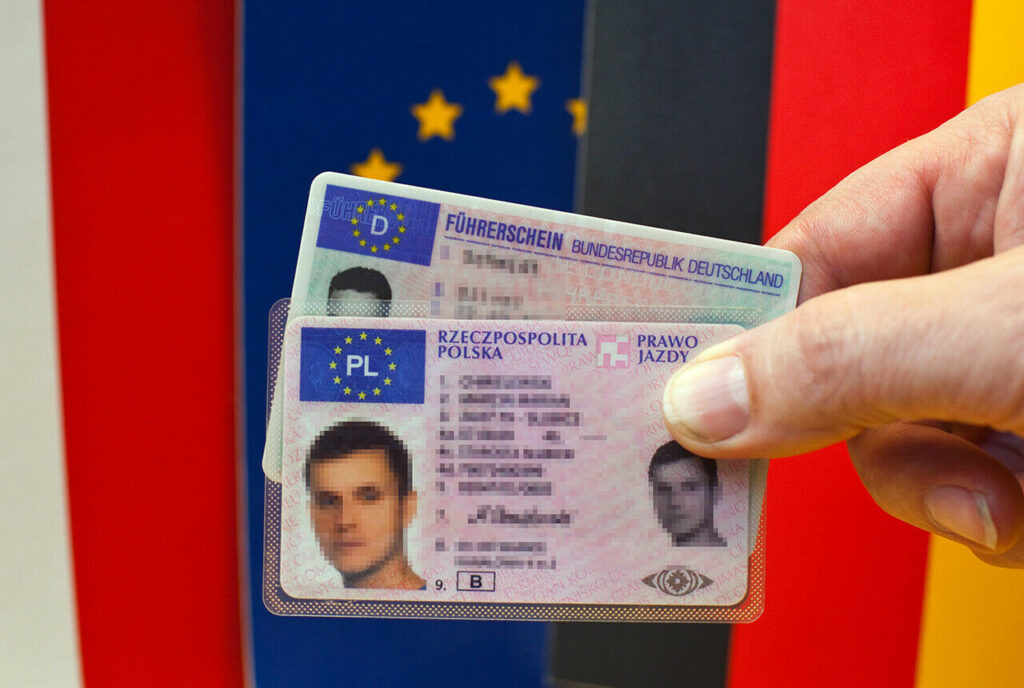
Foreign residents can obtain German driving licences if they satisfy the applicable requirements.
However, the process can be different if you already have a licence from another country.
Valid EU/EEA driving licences generally benefit from the European recognition system.
Different rules can apply depending on the country that issued the licence.
You may be able to exchange your licence under certain conditions, while some applicants may have to pass German theory and/or practical examinations.
For this reason, do not automatically assume that you need to complete the entire German driving-school process.
First determine whether your existing licence can be recognised or exchanged.
Read our Foreign Driving Licence Germany resources for more information.
In certain circumstances, yes.
The applicable rules can depend on:
Some foreign licences can be exchanged with limited additional requirements, while others may require one or both German examinations.
If you already have a foreign licence, read our Führerschein Umschreiben Deutschland guide before beginning a new application.
EU citizens who hold a valid EU/EEA driving licence generally benefit from European recognition rules.
Moving to Germany does not automatically mean that you have to exchange a valid EU/EEA licence for a German one.
However, special rules can apply depending on the licence category, validity period and circumstances.
The ordinary-residence principle is also important when obtaining a new driving licence.
For more information, visit our EU Driving Licence guide.
Non-EU residents should pay particular attention to their existing driving licence.
Germany has specific rules concerning foreign licences issued outside the EU and EEA.
Depending on the issuing country and the circumstances, a foreign licence may only be used in Germany for a limited period after establishing ordinary residence, after which additional steps may be necessary.
The German Federal Ministry of Transport provides information on the use of foreign driving licences issued outside the EU/EEA. (bmv.de)
International students should check their residence circumstances before applying.
The rules can differ depending on whether Germany is considered the student’s ordinary residence and whether the student already has a foreign driving licence.
German law contains specific provisions relating to students and certain residence situations.
If you already hold a foreign licence, investigate recognition or exchange before paying for a complete driving course.
There is no single fixed nationwide price for obtaining a German driving licence.
Your overall cost can include:
The number of practical lessons you need is one of the biggest factors influencing the final cost.
For more information, read our guides on Führerschein Kosten and Führerschein Kosten 2026.
There is no universal timeframe.
Your timeline may depend on:
Regular lessons can help maintain continuity and improve skill development.
Before starting your application, use this checklist:
If you already hold a foreign driving licence, determine whether it can be recognised or exchanged first.
The requirements for a motorcycle, car, truck or bus licence are not the same.
Missing certificates or identification documents can delay your application.
Ordinary residence is a fundamental part of the German licensing system.
The theory examination covers much more than basic road signs.
You should be capable of driving safely and independently before attempting the examination.
The lowest lesson price does not necessarily result in the lowest total cost.
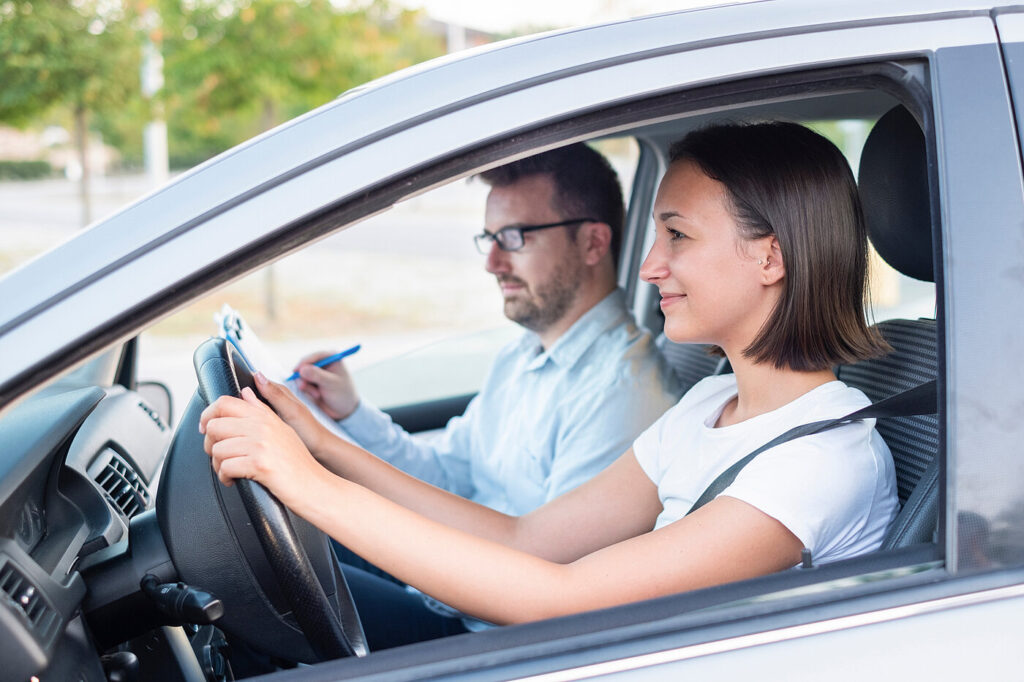
The main requirements can include ordinary residence, minimum age, fitness to drive, eyesight requirements, first-aid training, driver education and successful theory and practical examinations.
Generally, ordinary residence in Germany is required, subject to specific legal provisions and exceptions. The FeV generally uses the 185-day principle when determining ordinary residence.
Yes. Foreign residents can apply if they satisfy the applicable German requirements.
It depends on where the licence was issued, your residence situation and the applicable recognition rules.
For a standard first licence, applicants generally need to pass both examinations. However, different rules can apply to certain licence exchanges and categories.
Yes. English is one of the foreign languages permitted for the German theory examination.
The total cost depends on administrative fees, driving-school prices, the number of lessons required and examination results.
There is no fixed nationwide timeframe. It depends on your application, local authority, driving-school availability, training progress and examination appointments.
Understanding the driving licence Germany requirements before starting the process can make obtaining your licence considerably easier.
For a first-time applicant, the typical route is:
Check eligibility → Prepare documents → Submit application → Register with a driving school → Complete theory training → Complete practical training → Pass theory test → Pass practical test → Receive your licence
For foreign residents, there is an additional question that should be answered before beginning: Do you actually need a new German driving licence?
If you already hold an EU/EEA or other foreign licence, recognition or exchange may provide a different route.
The German licensing system has detailed rules governing residence, age, fitness, eyesight, applications and examinations. Understanding these requirements in advance can help you avoid unnecessary costs and delays.
For more information about driving licence Germany requirements, German driving licences, foreign licence exchange, driving tests, licence costs and European driving licences, visit FahrenExperten.
Driving Licence in Germany: Everything You Need to Know A driving licence is an important...
Weiterlesen
Rijbewijs kosten in Duitsland: een compleet overzicht Wie in Duitsland zijn rijbewijs wil halen, vraagt...
Weiterlesen