Driving Licence in Germany: Everything You Need to Know A driving licence is an important...
Weiterlesen


Driving Licence in Germany: Everything You Need to Know A driving licence is an important...
Weiterlesen
Rijbewijs kosten in Duitsland: een compleet overzicht Wie in Duitsland zijn rijbewijs wil halen, vraagt...
WeiterlesenIf you are searching for information about driving licence expired Germany, you may be wondering whether you can still drive, whether you need to retake your driving test, how to obtain a new licence and how much the process will cost.
The good news is that an expired German driving licence does not always mean that your underlying legal entitlement to drive has disappeared. One of the most important distinctions in German driving law is between the physical driving licence document (Führerschein) and the underlying driving entitlement (Fahrerlaubnis).
For modern German driving licence cards issued from 19 January 2013, the document is generally valid for 15 years. German law states that this time limit applies to the licence document, while the underlying rules governing the driving entitlement remain unaffected.
However, professional driving categories and certain foreign licences can be subject to different rules.
This guide explains what to do if your driving licence expired in Germany, whether you need another test, what documents you may need, the applicable exchange deadlines and how the renewal process works.
For additional German driving licence information, visit FahrenExperten.
The first question is what exactly has expired.
A modern German driving licence card issued from 19 January 2013 normally has a validity period of 15 years. Under §24a of the German Driving Licence Ordinance (Fahrerlaubnis-Verordnung, FeV), this expiry relates to the physical licence document.
That is different from an expiry of the underlying driving entitlement.
For an ordinary Category B licence, an expired card therefore does not normally mean that you have to start the entire licensing process again.
Instead, you generally need to apply for a new driving licence document.
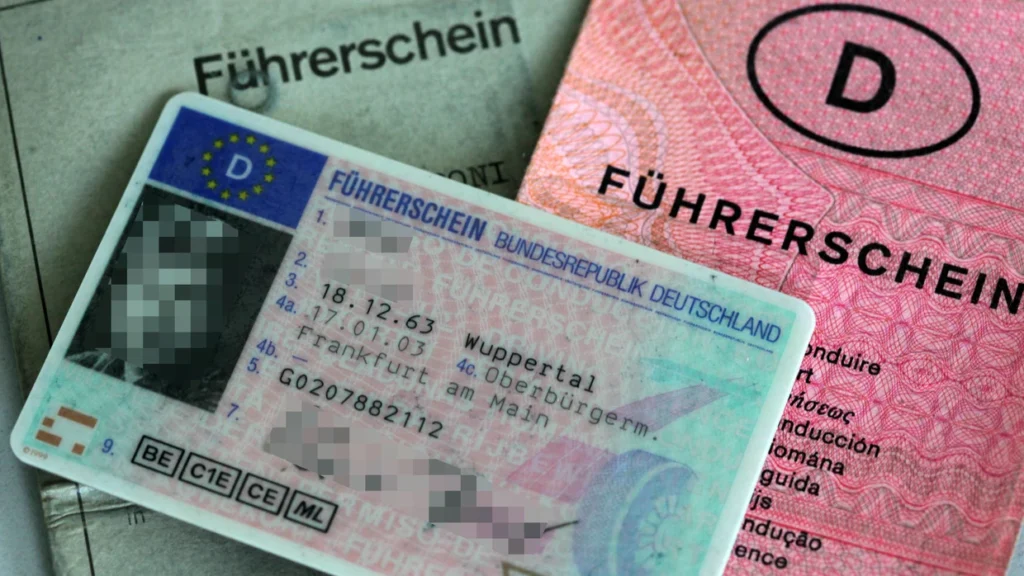
Führerschein: The physical document you carry with you.
Fahrerlaubnis: The legal authorisation to drive.
Understanding this distinction can prevent unnecessary confusion if your driving licence expired in Germany.
For a normal administrative renewal or mandatory exchange of the licence document, you generally do not have to retake your theory or practical driving test simply because the document has expired.
The Federal Portal confirms that the exchange deadlines for older licences affect the driving licence document rather than the underlying driving entitlement. It also states that medical examinations or other assessments are not normally associated with the ordinary document exchange.
This is particularly relevant for holders of standard Category B licences.
However, this should not be confused with situations involving:
Those situations can involve additional requirements.
If you are preparing for a German driving examination, see our related guide to the German Driving Test.
If your German driving licence has expired, the appropriate procedure depends on the type and age of your licence.
A straightforward case generally involves these steps:
Look at your physical licence and determine whether the date printed on it has passed.
Ask yourself:
This is usually your local Fahrerlaubnisbehörde, often operating through a local administrative office.
You will generally need identification, a biometric photograph and your existing driving licence. Additional documentation can apply depending on the category.
The authority will process your application for the appropriate renewal or exchange procedure.
The amount depends on the local authority and the type of application.
This is an important distinction.
If the physical document has expired but your underlying driving entitlement remains valid, German rules distinguish the expired document from the entitlement itself.
For older licences subject to mandatory exchange, official German guidance specifically states that the relevant deadline affects the licence document and not the underlying driving entitlement.
Nevertheless, you should not simply assume that every expired licence is safe to use.
If you are uncertain whether only the document has expired or whether your actual driving entitlement has expired, contact your local driving licence authority before driving.
This distinction is particularly important for professional driving licences, because categories such as C, CE, D and DE have separate validity requirements.
If your German driving licence was issued on or after 19 January 2013, it is generally valid for 15 years.
This rule is established in §24a FeV.
The 15-year period is primarily an administrative validity period for the card.
The reason for periodically replacing the card includes keeping identification information and security features up to date.
Imagine you received your German Category B driving licence in June 2015.
The card will normally have a validity period of 15 years.
When that period ends, you need to obtain a new licence card.
You generally do not have to repeat the entire driving school programme merely because the card has reached its expiry date.
Older German driving licences are subject to a separate mandatory exchange programme.
This applies to:
The exchange programme is being implemented in stages.
Official German government information confirms that licences issued before 19 January 2013 must be exchanged according to specific deadlines.
If your licence was issued between 1 January 1999 and 18 January 2013, the deadline depends on the year of issue.
| Year of issue | Exchange deadline |
|---|---|
| 1999–2001 | 19 January 2026 |
| 2002–2004 | 19 January 2027 |
| 2005–2007 | 19 January 2028 |
| 2008 | 19 January 2029 |
| 2009 | 19 January 2030 |
| 2010 | 19 January 2031 |
| 2011 | 19 January 2032 |
| 2012–18 January 2013 | 19 January 2033 |
These deadlines are provided by the German Federal Portal.
Since it is now 2026, licences issued between 1999 and 2001 were due for exchange on 19 January 2026.
If your licence falls within this group and you have not yet exchanged it, you should contact your responsible driving licence authority.
For old paper licences issued up to 31 December 1998, the deadline is generally determined by the holder’s year of birth.
The current schedule includes:
| Year of birth | Exchange deadline |
|---|---|
| Before 1953 | 19 January 2033 |
| 1953–1958 | 19 July 2022 |
| 1959–1964 | 19 January 2023 |
| 1965–1970 | 19 January 2024 |
| 1971 or later | 19 January 2025 |
If you still possess an old paper licence whose exchange deadline has passed, contact the relevant authority as soon as possible.
For a standard document exchange, normally no.
The German Federal Portal explains that the exchange concerns the licence document and does not change the underlying driving entitlement.
Therefore, an ordinary expired Category B document should not automatically be treated as a new driving licence application.
You should not normally have to:
However, special circumstances can change the requirements.
The situation is different for certain professional driving categories.
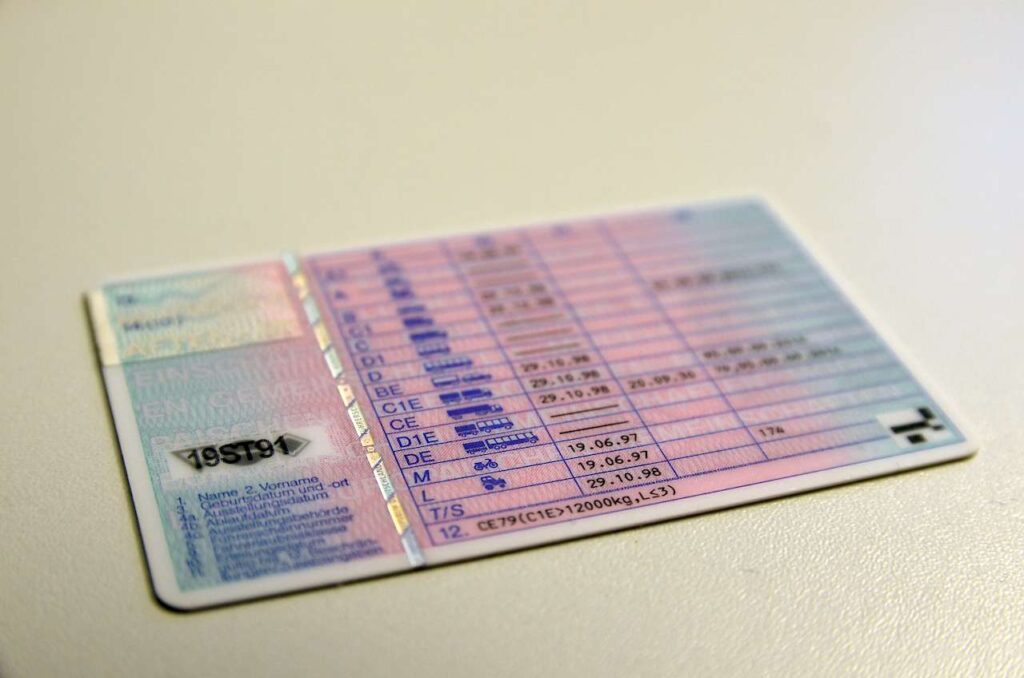
German law regulates the extension of categories including:
Under §24 FeV, extending these driving entitlements requires evidence of fitness and compliance with eyesight requirements. Additional requirements apply to certain bus categories, particularly for extensions beyond age 50.
Therefore, if your professional driving licence expired in Germany, you should contact the competent authority promptly rather than treating it like an ordinary Category B document renewal.
The process can vary by municipality, but a typical application involves the following.
Your local driving licence authority is responsible for processing the application.
Depending on where you live, the authority may be called:
Check your municipality’s official website for the correct office.
You will generally need a valid:
A current biometric photograph is generally required for the new licence card.
If you still have the expired or old licence, take it with you.
Official German guidance lists the previous licence among the documents commonly required for the exchange procedure.
Depending on your licence category and circumstances, you may need additional documents.
Professional drivers may need medical and eyesight evidence.
The fee depends on the authority and procedure.
For example, Bavaria currently lists approximately €25 for exchanging an old German driving licence for an EU-standard card, although additional charges can apply.
This should be treated as an example rather than a nationwide fixed price.
For a broader explanation of German licence expenses, read our Driving Licence Cost Germany guide.
For a standard licence document exchange or renewal, you may need:
Official government guidance lists identity documentation, a biometric photograph and the original old licence among the standard documents for the exchange procedure.
Always verify the exact requirements with your local authority before attending.
There is no single nationwide price for every situation.
Costs can depend on:
For example, Bavaria currently lists an exchange fee of approximately €25 for an EU card licence.
For more information about licence expenses, visit our Driving Licence Cost Germany resource.
Processing times vary between local authorities.
Some municipalities offer standard and express services.
For example, Hamburg’s official information indicates that a standard application can take up to approximately four weeks, while express production can take around three working days.
Because processing times vary, you should avoid waiting until the final days before your licence expires.
If you hold a driving licence issued by another EU or EEA country, the rules are different from those applying to a German licence.
EU driving licences are generally recognised within the EU under applicable European rules.
However, questions can arise when:
If you hold an EU licence and live in Germany, read our guide to EU Driving Licence Exchange Germany for more information.
A non-EU/EEA licence requires particular attention.
If you move to Germany with a foreign driving licence from a country outside the EU/EEA, the licence is generally recognised for a limited period after establishing normal residence.
German government guidance generally refers to a six-month period after establishing normal residence in Germany for many non-EU/EEA licences.
After that period, you may need to obtain a German licence or convert the foreign licence according to the applicable rules.
This is not simply a case of renewing the foreign licence.
It may be a foreign driving licence conversion procedure.
Learn more through our Convert Foreign Driving Licence Germany guide.
These two situations should not be confused.
You may simply need a new German licence document.
You may need to determine whether the foreign licence can still be recognised in Germany and whether conversion is possible.
You may have to follow German licensing requirements rather than simply renew the foreign document.
If you are unsure which situation applies, read our Foreign Driving Licence Germany guide.
Digital services are increasingly available in German municipalities, but the exact process depends on where you live.
Some authorities offer online applications or appointment systems, while others require an in-person visit.
You should check the website of your local Fahrerlaubnisbehörde to determine whether online processing is available.
Even when an application can be initiated online, requirements such as identity verification, photographs or submission of the old licence may still apply.
If your licence has both expired and been lost, tell the authority about both circumstances.
The procedure may involve:
Do not confuse this with a normal renewal.
For more information, see our Lost Driving Licence Germany guide.
A damaged licence can also require replacement.
If the information on the card is difficult to read or the document has been physically damaged, contact your local driving licence authority.
If the licence has also expired, the authority will determine the appropriate replacement or renewal procedure.
A Category B card licence and a professional Category D entitlement can have very different rules.
This is perhaps the most common misunderstanding.
The expiry of a modern licence document does not automatically mean the underlying entitlement has expired.
Older licences have specific exchange deadlines.
Administrative processing can take several weeks.
For an ordinary document exchange, a new theory or practical test is generally not required.
Foreign licence recognition and conversion involve separate rules.
If your licence has expired, use this checklist:
Contact your local driving licence authority and determine whether you need a new licence document, an exchange or an extension of the underlying driving entitlement.
Not necessarily. For modern licences and the mandatory exchange of older documents, the expiry/exchange deadline generally concerns the physical document rather than the underlying driving entitlement.
Normally not for an ordinary renewal or document exchange. Special circumstances, including some professional or foreign licence cases, can have additional requirements.
Driving licence cards issued from 19 January 2013 are generally valid for 15 years.
You should contact the responsible authority and apply for the required exchange. The official exchange programme distinguishes the validity of the document from the underlying driving entitlement.
The cost depends on the procedure and local authority. For example, Bavaria currently lists approximately €25 for exchanging an old licence for the EU-standard card, before any applicable additional charges.
In many ordinary document-expiry situations, yes, you can apply for a new licence document. The applicable procedure depends on the licence category and circumstances. German law expressly provides for certain professional licence extensions even where the previous entitlement’s validity has already expired.
Professional categories have separate validity and fitness requirements. Categories such as C, CE, D and DE may require medical and eyesight evidence when extended.
Not necessarily. Depending on the issuing country and your residence status, you may need a German recognition or conversion procedure rather than simply renewing the foreign document.
If you discover that your driving licence expired in Germany, do not immediately assume that you have to start the licensing process from the beginning.
For modern German licence cards issued from 19 January 2013, the card is generally valid for 15 years. The expiry of this document is different from the expiry of the underlying driving entitlement.
Older licences are subject to Germany’s mandatory exchange programme, with deadlines extending through 2033. In particular, licences issued from 1999 to 2001 had an exchange deadline of 19 January 2026, while licences issued from 2002 to 2004 have a deadline of 19 January 2027.
Professional drivers need to be especially careful because categories such as C, CE, D and DE have additional validity, medical and eyesight requirements.
If your licence is foreign rather than German, the situation can be different again. You may need recognition, exchange or conversion depending on where the licence was issued and how long you have been resident in Germany.
For more information, explore the related FahrenExperten resources on German Driving Licence, German Driving Licence Requirements, German Driving Licence Application, Renew Driving Licence Germany, Replace Driving Licence Germany, Lost Driving Licence Germany, Foreign Driving Licence Germany, Convert Foreign Driving Licence Germany and EU Driving Licence Exchange Germany.
Driving Licence in Germany: Everything You Need to Know A driving licence is an important...
Weiterlesen
Rijbewijs kosten in Duitsland: een compleet overzicht Wie in Duitsland zijn rijbewijs wil halen, vraagt...
Weiterlesen