Driving Licence in Germany: Everything You Need to Know A driving licence is an important...
Weiterlesen


Driving Licence in Germany: Everything You Need to Know A driving licence is an important...
Weiterlesen
Rijbewijs kosten in Duitsland: een compleet overzicht Wie in Duitsland zijn rijbewijs wil halen, vraagt...
WeiterlesenIf you are moving to Germany with a foreign driving licence, you may be searching for information about how to convert international driving licence documents into a German driving licence.
However, there is an important distinction that every foreign driver should understand: an International Driving Permit (IDP) is not the same thing as a national driving licence. An international driving permit is essentially a multilingual document used alongside the underlying national driving licence. It does not normally replace the original licence and is not itself a standalone German driving licence. German government information explicitly states that an international driving licence is only a translation of the national licence and is valid only together with it.
Therefore, if your goal is to obtain a German driving licence, you generally need to deal with the underlying foreign national driving licence, not simply attempt to convert an International Driving Permit.
In this comprehensive guide, we explain what an international driving licence is, whether it can be converted in Germany, how foreign licence conversion works, which documents may be required, and how EU/EEA and non-EU/EEA licences are treated.
For more information about driving licences in Germany, visit FahrenExperten.
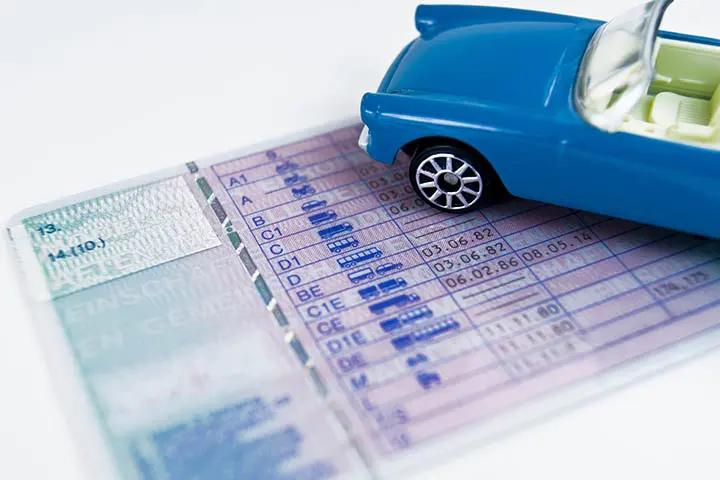
The short answer is:
You generally do not convert an International Driving Permit itself into a German driving licence.
Instead, German authorities deal with the national driving licence on which the international permit is based.
An international driving permit is primarily a translation or accompanying document. German regulations require an international driving permit to be used in connection with the underlying national driving licence.
For example, imagine that you have:
National driving licence: issued by Canada
International Driving Permit: issued based on that Canadian licence
If you move to Germany, the relevant document for determining your German conversion options is the Canadian national driving licence.
The IDP does not transform the Canadian licence into an EU or German licence.
The term international driving licence is often used interchangeably with International Driving Permit (IDP).
An IDP is designed to make a national driving licence easier to understand when driving abroad.
It can provide translated information about:
However, the IDP does not normally create a completely independent driving entitlement.
The German Federal Portal describes the international driving licence as a translation of the national driving licence and states that it is valid only together with the national licence.
This distinction is particularly important when researching convert international driving licence.
These two documents serve different purposes.
| International Driving Permit | German Driving Licence |
|---|---|
| Accompanies a national licence | Is a national driving licence |
| Mainly provides translated information | Provides German driving entitlement |
| Not normally a standalone licence | Standalone national licence document |
| Used for international driving situations | Used to drive in Germany |
| Does not automatically become a German licence | Issued by German authorities |
| Must generally be accompanied by the underlying licence | Can serve as the primary licence |
Therefore, if you have an international driving permit and want to drive permanently in Germany, you need to determine the status of your original national driving licence.
Yes, under certain circumstances.
Germany has specific procedures for converting foreign driving licences.
The rules depend primarily on whether the original licence was issued by:
This distinction is extremely important.
For EU/EEA licences, German authorities generally recognise valid licences, and conversion is usually not immediately required for harmonised categories.
For licences issued outside the EU/EEA, different rules apply. In general, a person who establishes normal residence in Germany can use a valid third-country licence for a limited period before conversion becomes necessary.
If your national driving licence was issued by an EU or EEA country, the process is generally straightforward.
EU/EEA countries include the EU Member States as well as:
For harmonised licence categories, an EU/EEA driving licence generally does not have to be converted immediately after moving to Germany.
An exchange generally becomes relevant when the licence document or particular categories need renewal.
Suppose you have a valid French, Italian, Spanish, Polish or Austrian driving licence.
Moving to Germany does not normally mean that you immediately need to exchange it.
The German Federal Portal explains that EU/EEA driving licences are generally valid in Germany and normally only need to be exchanged when they are due for renewal.
There are special considerations for categories such as C and D, which have limited validity periods in Germany.
Read our detailed EU Driving Licence Exchange Germany guide for more information.
The rules are different if your national licence was issued outside the EU or EEA.
If you move to Germany with a non-EU/EEA driving licence, you generally have a limited period during which the foreign licence is recognised for driving in Germany.
The Federal Portal explains that a third-country licence is generally valid for six months after establishing residence in Germany.
After that period, you generally need to have the foreign licence converted if you want to continue driving in Germany.
This makes it important to start the conversion process early.
Read our Non-EU Driving Licence Germany guide for a detailed explanation.
The six-month rule is one of the most important concepts for anyone moving to Germany with a non-EU/EEA licence.
Once you establish normal residence in Germany, your foreign third-country driving licence is generally recognised for up to six months.
After this period, you generally need a German driving licence to continue driving legally.
The Federal Portal currently describes this period as six months, or 185 days, from the establishment of residence in Germany.
Imagine you move from the United States to Germany and have a valid US driving licence.
You arrive in Germany and establish normal residence.
Your foreign licence can generally be used during the applicable six-month recognition period.
If you intend to remain in Germany, you should begin the conversion process well before the deadline.
This depends on the country that issued the original national licence.
Germany has special arrangements with certain countries.
Annex 11 of the German Driving Licence Regulation lists countries whose licences can benefit from simplified conversion procedures.
Depending on the country and licence category, an applicant may:
Therefore, you should not assume that every foreign licence requires the full German driving examination process.
Annex 11 (Anlage 11) of the German Driving Licence Regulation (FeV) is particularly important for people converting licences from certain countries outside the EU/EEA.
Germany has agreements with certain states that simplify licence conversion.
The Federal Portal explains that Annex 11 contains the countries whose licences are subject to special conversion arrangements.
The exact exemption depends on the issuing country and, in some cases, the specific driving licence category.
This means that checking only the country is not always enough.
Not necessarily.
If your licence qualifies for conversion without examinations, you may not need the same driving-school process as someone applying for a licence from scratch.
However, if a theory or practical examination is required, attending a German driving school can be very useful.
A driving school can help you prepare for:
For more information, visit our Driving School Germany guide.
The exact documentation depends on your circumstances and the issuing country.
Common documents may include:
The Federal Portal notes that applicants may need the original foreign licence, a German translation where applicable and a declaration that the foreign licence remains valid.
No.
This is one of the most important points in this entire guide.
An international driving permit does not replace your original national driving licence when applying for a German licence.
German government guidance specifically states that an international driving licence is not sufficient and that the original foreign driving licence is required.
Therefore:
International Driving Permit + no national licence = not sufficient for German conversion
You should keep the original national driving licence available.
Possibly.
German law provides that certain foreign national driving licences that are not issued in German or by specified European/EEA/Swiss authorities must be accompanied by a translation, unless an exception applies.
The need for a translation can depend on:
Therefore, check with the relevant Fahrerlaubnisbehörde before ordering a translation.
The process can generally be approached in the following steps.
Find the national driving licence on which your international driving permit is based.
Record:
This determines which legal framework applies.
Your licence is generally recognised in Germany.
The six-month recognition rule generally becomes relevant after establishing residence.
The rules can vary depending on whether you have:
Category B is the most common licence for private car drivers.
Professional categories can involve additional medical and validity requirements.
If the licence is from a non-EU/EEA country, check whether the country is covered by Annex 11.
This can determine whether examinations are required.
Your local driving licence authority is responsible for processing the conversion.
Ask about:
Make sure that all required documents are complete before your appointment.
Missing documentation can delay your application.
Submit the conversion application according to your local authority’s procedure.
Some authorities require applicants to appear personally.
If your country does not qualify for an examination exemption, you may need to complete the relevant German theory and/or practical examination.
For theory preparation, read our German Theory Test guide.
For practical examination preparation, visit our German Driving Exam guide.
After satisfying the applicable requirements, the German authority issues the German driving licence.
When a foreign licence is exchanged, the handling of the original licence depends on the country and applicable legal arrangements. German law contains specific provisions for the retention or return of foreign licences.
There is no single price that applies to every applicant.
Costs can include:
For example, Bavaria currently lists approximate administrative fees of around €38 for an EU/EEA or Annex 11 licence conversion and around €45 for a third-country licence conversion, although additional expenses may apply.
If examinations and driving lessons are required, the overall cost can be substantially higher.
For a detailed overview, visit our Driving Licence Cost Germany guide.
The answer depends on what you mean by „international driving licence.“
If you mean an International Driving Permit, you do not normally convert the permit itself.
Instead, the conversion requirements are determined by the underlying national licence.
If that national licence comes from a country with simplified conversion arrangements, you may not have to take both German examinations.
If it does not qualify for an exemption, you may need to pass the required tests.
You should not wait until the six-month period has expired.
For third-country licences, German authorities generally require conversion for continued driving after the recognition period.
Some authorities state that the foreign licence must be converted within the applicable period and that an extension may be possible in limited circumstances. For example, Bremen explains that an extension of up to six additional months can be granted where the applicant can credibly demonstrate that normal residence in Germany will not last more than twelve months.
An extension is not automatic.
If your deadline is approaching, contact your local Fahrerlaubnisbehörde.
Do not assume that an expired national driving licence remains valid simply because you also have an international permit.
The International Driving Permit depends on the underlying national licence.
If the national licence has expired, the international document does not normally create an independent right to drive.
For German conversion, authorities may also require evidence that the foreign licence remains valid.
This is different from converting a licence after moving to Germany.
An International Driving Permit can be useful for visitors driving abroad, but it should be understood as a document accompanying the national driving licence.
German law provides rules concerning foreign driving licences and the documentation required to demonstrate the driving entitlement.
If you are simply visiting Germany, you should carry the relevant national driving licence together with the international permit where one is required or recommended for your circumstances.
If you are moving to Germany, however, you need to examine the residence and conversion rules rather than relying indefinitely on an IDP.
It is not.
An IDP is primarily a translation/accompanying document.
Your national licence is the underlying document.
Keep it available.
The examination requirements depend on the issuing country and licence category.
This is especially important for non-EU/EEA licences.
The application process can involve appointments, documents, translations and examinations.
Start early.
An IDP does not automatically extend the period during which a foreign national licence can be used in Germany.
Search engines and websites often use the phrases international driving licence, international driver’s licence and international driving permit interchangeably.
For clarity, the more precise term is generally International Driving Permit (IDP).
Germany’s official rules refer to an Internationaler Führerschein.
The important practical point is that an international driving permit should not be confused with a national driving licence.
The German Federal Portal explicitly describes it as a translation of the national licence and says that it is valid only together with that licence.
If you are moving to Germany, use this checklist:

You generally convert the underlying national foreign driving licence, not the International Driving Permit itself.
No. An IDP is essentially an accompanying translation/document and is valid together with the national licence.
An IDP can support the use of a valid foreign national licence in appropriate circumstances, but it does not replace the underlying licence.
Usually not immediately. Valid EU/EEA licences are generally recognised in Germany, although exchange can become necessary when the licence or certain categories require renewal.
Yes, subject to German requirements. Non-EU/EEA licence holders generally need conversion after the applicable six-month recognition period if they remain resident in Germany.
It depends on the country that issued your original national licence and the applicable German rules. Some countries have simplified conversion arrangements under Annex 11.
Yes. German government guidance states that an international driving licence alone is not sufficient for the conversion process.
A translation can be required for certain foreign national licences. The exact requirement depends on the licence and applicable rules.
Administrative fees vary. Additional costs may arise from translations, examinations, medical certificates and driving lessons. Bavaria, for example, currently gives approximate administrative fees of €38 for EU/EEA or Annex 11 conversions and €45 for third-country conversions.
If you are searching for convert international driving licence, the most important thing to understand is that an International Driving Permit is not normally the document that gets converted into a German driving licence.
Instead, Germany looks at the national driving licence behind the international permit.
The process then depends on whether that licence was issued in:
For EU/EEA licences, recognition is generally straightforward and immediate exchange is usually unnecessary for harmonised categories.
For non-EU/EEA licences, the six-month rule is particularly important, and conversion requirements can depend on the issuing country, licence category and any applicable Annex 11 arrangements.
Most importantly, do not rely on an International Driving Permit as a substitute for your national licence. Keep the original licence and determine the German requirements before your right to drive under the foreign licence expires.
For additional information, explore the related driving licence guides on FahrenExperten.
Driving Licence in Germany: Everything You Need to Know A driving licence is an important...
Weiterlesen
Rijbewijs kosten in Duitsland: een compleet overzicht Wie in Duitsland zijn rijbewijs wil halen, vraagt...
Weiterlesen