Driving Licence in Germany: Everything You Need to Know A driving licence is an important...
Weiterlesen

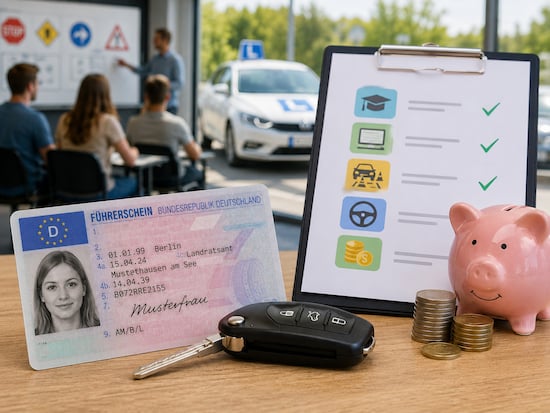

Driving Licence in Germany: Everything You Need to Know A driving licence is an important...
Weiterlesen
Rijbewijs kosten in Duitsland: een compleet overzicht Wie in Duitsland zijn rijbewijs wil halen, vraagt...
WeiterlesenA European driver’s license is one of the most widely recognised driving documents in Europe. If you live, work, study or travel within the European Union, understanding how European driving licences work can help you avoid problems when driving across borders.
Although people often use the expressions European driver’s license, European driving licence, and EU driver’s license interchangeably, there is an important distinction: individual EU and EEA countries issue their own national driving licences under a harmonised European framework.
The European Commission states that valid driving licences in use throughout the European Economic Area (EEA) are mutually recognised. A common European licence model was introduced in 2013, although different valid licence models remain in circulation.
This guide explains how a European driver’s license works, whether you can use one in another European country, how long licences are valid, what happens when you move, and how licence exchange and recognition work.
For more information about European and German driving licences, visit FahrenExperten.
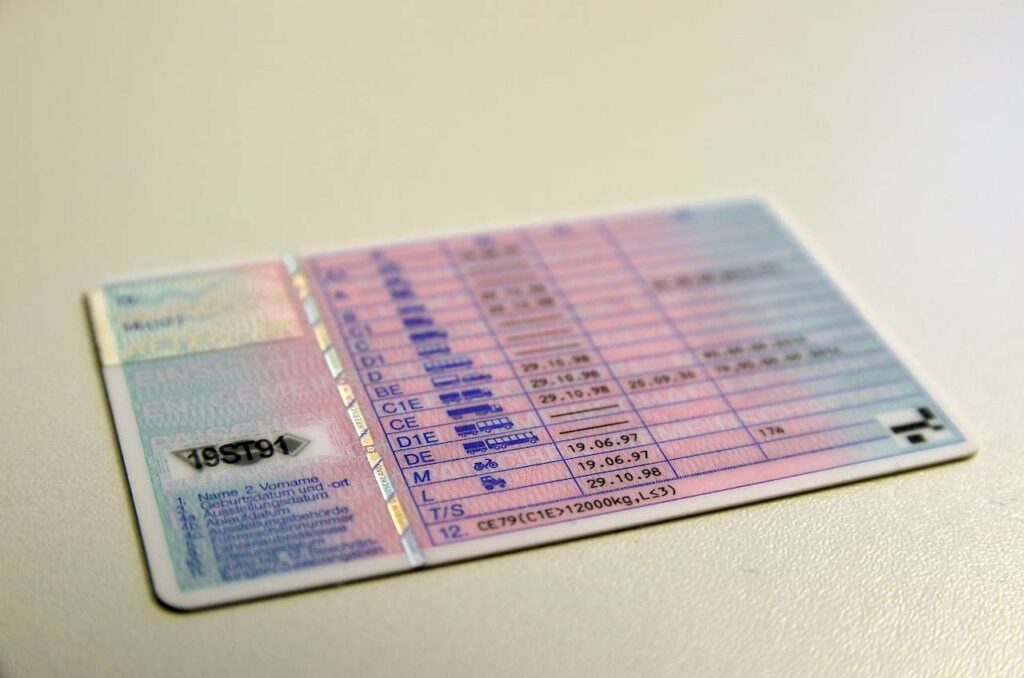
A European driver’s license is generally understood to mean a driving licence issued by an EU or EEA member state under the European driving-licence framework.
There is not one single licence literally issued by a central „European driving licence authority.“ Instead, each country remains responsible for issuing its own driving licences. The European Commission confirms that individual countries issue their licences while European rules facilitate mutual recognition.
For example, a person may hold:
These licences operate within the common European framework.
This is why a valid driving licence issued in one EU/EEA country can generally be recognised when the holder drives in another participating country.
It is important not to confuse a European driver’s license with an International Driving Permit (IDP).
A European driver’s license is a national driving licence issued by an EU/EEA country under the applicable European framework.
An International Driving Permit is a supplementary document used in certain countries outside Europe.
An IDP does not replace your national driving licence.
If you are planning to drive outside Europe, check the requirements of your destination country before travelling.
You can also read our guide to the International Driving Licence.
The European driving-licence system is based on harmonisation.
The system helps standardise:
The European Commission explains that all valid driving licences in use in the EEA are mutually recognised.
This means that a person with a valid licence from one EEA country can generally drive in another EEA country without obtaining a completely new licence simply because they cross a national border.
The European driving-licence framework covers the EU member states and, through the EEA framework, Iceland, Liechtenstein and Norway.
European licences can therefore originate from countries such as:
The exact rules can differ depending on whether you are simply visiting another country or have established your normal residence there.
Generally, yes.
Valid driving licences issued by EEA member states are mutually recognised.
For example, if you have a valid German Category B driving licence, you can generally use it when driving in France, Spain, Italy or another EEA country, subject to the applicable rules.
Likewise, someone holding a valid French or Spanish driving licence can generally drive in Germany.
However, recognition is not the same thing as permanent exemption from local administrative rules.
Your situation may change if you:
Germany is a popular destination for people moving from other European countries.
If you move to Germany while holding a valid EU/EEA driving licence, you generally do not need to immediately exchange it for a German licence.
The European system is specifically designed to facilitate the free movement of people with driving licences.
However, certain circumstances can trigger an exchange or renewal requirement.
If you are moving to Germany, our EU Driving Licence in Germany guide provides additional information.
A valid EU/EEA driving licence can generally be used in Germany.
This means an EU resident moving to Germany does not normally need to repeat:
simply because they have moved to Germany.
However, this assumes the licence is valid and was legitimately issued under the applicable rules.
German authorities can apply relevant national rules concerning matters such as driving restrictions, suspension and withdrawal of driving entitlement.
For information specifically about Germany, read our guide to the German Driver’s License.
One of the most important concepts in European driving-licence law is normal residence.
In general, a driving licence should be obtained in the country where the applicant normally lives, subject to specific exceptions.
European rules define normal residence around where a person usually lives for at least 185 days per calendar year, taking personal and occupational ties into account. There are special provisions for people whose personal and occupational ties are in different countries and for certain students.
This rule exists in part to prevent people from choosing a different EU country simply because they believe obtaining a licence there will be easier or cheaper.
If you are considering obtaining a European driver’s license, understanding the residence requirement is essential.
Not simply because you prefer that country.
The normal-residence principle generally means that you should apply in the country where you normally live.
There are exceptions, including certain students and particular circumstances recognised by EU law.
For example, EU rules recognise situations where applicants can provide evidence that they have been studying in a member state for at least six months.
Therefore, choosing a country solely because its driving lessons or examinations appear cheaper may not comply with the applicable residence rules.
European driving licences use harmonised categories.
Some of the most common categories include:
| Category | General vehicle type |
|---|---|
| AM | Mopeds and certain light vehicles |
| A1 | Light motorcycles |
| A2 | Medium-power motorcycles |
| A | Motorcycles |
| B | Cars and certain light vehicles |
| BE | Cars with certain trailers |
| C1 | Medium goods vehicles |
| C | Heavy goods vehicles |
| D1 | Smaller buses |
| D | Buses |
| CE | Heavy goods vehicles with trailers |
| DE | Buses with trailers |
Category B is by far one of the most relevant categories for ordinary drivers.
Read our detailed Führerschein Klasse B guide.
A European Category B licence generally allows the holder to drive qualifying passenger vehicles subject to the relevant national and European rules.
Category B is commonly used for:
If you are researching a European driver’s license primarily because you want to drive a car, Category B is likely to be the most relevant category.
Learn more about driving licence Category B.
Licence validity is an important consideration when moving between European countries.
Under the EU framework, administrative validity periods depend on the licence category and the issuing country’s rules.
The newer EU rules provide a 15-year administrative validity period for categories such as AM, A1, A2, A, B, B1 and BE, although member states may apply certain national variations.
The important point is that administrative validity is not necessarily the same as the underlying right to drive.
For example, the European Commission notes that the validity period shown for a German licence refers to the administrative validity of the document and does not necessarily determine the holder’s underlying driving entitlement.
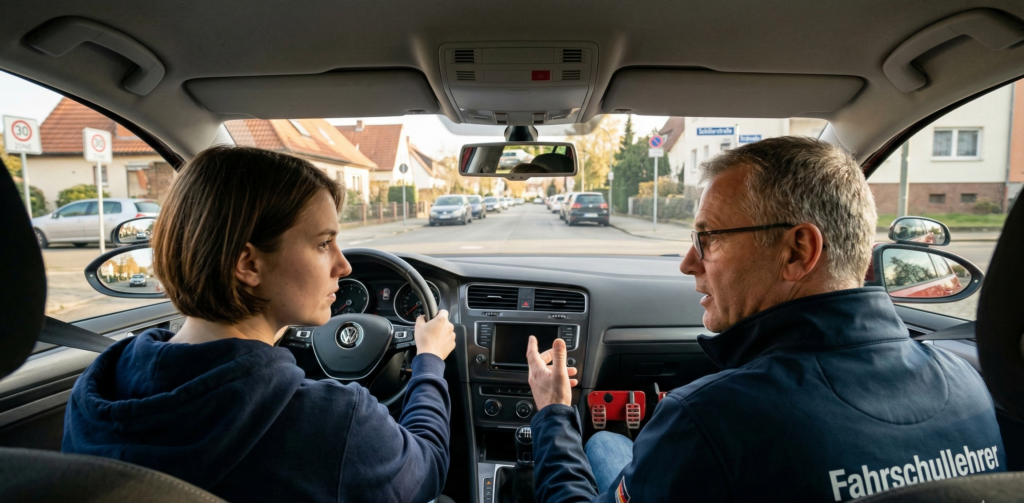
If you move to another EU country and your licence expires while that country is your normal residence, you generally renew the licence in your country of normal residence.
For example:
You hold a French licence → move permanently to Germany → licence expires → Germany may become the country where you renew it.
The replacement licence will be issued according to the rules applicable in the country handling the renewal.
This can affect:
Usually, not immediately.
EU guidance explains that you generally do not have to exchange a valid driving licence simply because you move to another EU country.
However, exchange can become necessary in certain circumstances, including:
EU guidance specifically identifies circumstances in which exchange can become obligatory.
For German-specific information, visit our Führerschein Umschreiben Deutschland guide.
If you decide or are required to exchange your licence, the new country generally issues an equivalent local licence.
When a licence is exchanged, the original licence is normally surrendered through the relevant process rather than allowing a person to maintain multiple EU driving licences.
EU rules also state that a person may generally hold only one EU driving licence at a time.
This is an important consideration for anyone moving permanently between European countries.
If you have a European driving licence and move to Germany, an exchange may be possible where appropriate.
Depending on the situation, you may need:
For a straightforward valid EU/EEA licence, the process is generally very different from obtaining a German licence for the first time.
Read our guide about exchanging a driving licence in Germany.
Not every licence that looks like a European document is necessarily an EU-issued licence.
This distinction is particularly important for licences that were originally issued by countries outside the EU/EEA and subsequently exchanged for an EU licence.
EU guidance warns that a licence exchanged from a non-EU country may not always receive the same recognition when the holder later moves to another EU country.
Therefore, if your European driver’s license was obtained through an exchange of a third-country licence, investigate the history of the licence before relying on automatic recognition after moving.
For more information, see our foreign driver’s license guide.
You do not necessarily have to be an EU citizen to hold an EU/EEA driving licence.
Driving-licence rules generally focus on factors such as:
Therefore, a non-EU national who legally resides in Germany may potentially obtain a German driving licence if the applicable requirements are satisfied.
Similarly, an eligible resident in another EU country may obtain a licence there under that country’s rules.
Citizenship and driving-licence residence are not the same concept.
If you are simply visiting another EU country, you generally do not need to obtain a local licence.
A valid EU/EEA driving licence can generally be used throughout the EEA because of mutual recognition.
For example, a person visiting Germany with a valid French driving licence can generally drive legally without obtaining a German driver’s license.
The same principle applies to many other cross-border trips within Europe.
Yes, in general.
A valid EU/EEA licence is generally recognised in Germany.
However, make sure:
Recognition of the licence does not mean that you are exempt from German road traffic laws.
Holding a European driver’s license does not prevent another EU country from applying its traffic laws.
EU rules recognise that the country where a person normally resides can apply its national provisions concerning restrictions, suspension, withdrawal or cancellation of driving entitlement in relevant circumstances.
Therefore, crossing a border does not necessarily protect a driver from the consequences of serious traffic violations.
If your European driver’s license is lost or stolen while you are living in another EU country, you should contact the relevant authority.
EU rules generally provide that replacement of a lost or stolen driving licence is handled by the competent authority in the country of normal residence, using information from the original issuing authority where necessary.
The precise procedure can vary by country.
For Germany-specific information, see our lost driving licence guide.
A European driver’s license is highly useful within Europe, but you should not assume it automatically satisfies every requirement worldwide.
Before driving outside the EU/EEA, check:
Requirements outside Europe can be significantly different.
A German driver’s license is itself a European driving licence.
The distinction is therefore mainly about where the licence was issued, rather than whether Germany has a completely separate European system.
For example:
German licence → European framework
French licence → European framework
Spanish licence → European framework
Italian licence → European framework
The individual countries issue the licences, while EU/EEA rules establish mechanisms for mutual recognition.
You can learn more in our comprehensive German Driver’s License article.
There is no single price for obtaining a European driver’s license.
Each country has its own:
Even within the same country, the final price can vary depending on how many practical lessons an applicant requires.
For Germany, read our Führerschein Kosten guide and our article on Führerschein Kosten 2026.
If you want to obtain your first licence within Europe, the general process may involve:
Establish which country is responsible for your driving-licence application.
For cars, this is normally Category B.
Complete the required training.
This can include eyesight and first-aid requirements depending on the country.
Demonstrate sufficient knowledge of road rules and safe driving.
Develop the required driving skills.
Demonstrate that you can drive safely.
The competent national authority issues the driving licence.
The exact procedure varies between countries.
Do not assume that you can simply choose whichever European country has the lowest driving-school prices.
Look beyond registration fees.
Regular preparation is more effective than last-minute memorisation.
Develop real-world driving skills rather than focusing solely on passing the examination.
Make sure you apply for the category appropriate to the vehicle you want to drive.
If you already hold a licence, you may not need to start the entire process again.
Pay attention to the expiry date and renewal requirements.
Individual countries issue their own licences within the European framework.
Validity can vary according to category and national rules.
Residence is a central principle in European driving-licence rules.
An EU licence that originated through an exchange of a non-EU licence can raise additional recognition issues.
A European licence does not exempt the driver from the road laws of the country where they are driving.
It generally refers to a driving licence issued by an EU/EEA country under the European driving-licence framework. There is no single central licence issued by the European Union.
A valid EU/EEA driving licence is generally recognised in Germany.
Generally yes, provided the licence is valid and your circumstances do not trigger specific exchange, renewal or recognition rules.
Usually not immediately. Certain situations can make exchange necessary, however.
EU rules generally provide for one EU driving licence per person.
It generally refers to where you normally live, with EU rules using a 185-day framework and specific exceptions.
Generally, you should apply in the country where you have normal residence, subject to specific exceptions.
Yes. A German driving licence is a national licence issued within the European driving-licence framework.
It generally allows driving throughout the EEA through mutual recognition, but you must still comply with the laws of the country where you drive.
If another EU country is your normal residence when the licence expires, you generally renew it there.
A European driver’s license provides significant advantages for people who live, work and travel across Europe. The European framework facilitates mutual recognition of valid licences, making cross-border driving much simpler than it would be without common rules.
However, European driving-licence law is not simply a system where every country operates identical rules. Individual countries remain responsible for issuing licences, while European legislation establishes common principles concerning categories, recognition, validity and exchange.
If you are moving to Germany, the most important things to understand are normal residence, licence validity, recognition and exchange requirements.
If you already hold an EU/EEA licence, you will often be able to drive in Germany without taking the German driving test again. If your licence originated outside the EU/EEA, however, additional rules may apply.
For more information, visit FahrenExperten and explore our related resources on German Driver’s License, Driving Licence Germany, Führerschein Klasse B, Führerschein Kosten, Führerscheinprüfung, Führerschein Umschreiben, Foreign Driving Licence and International Driving Licence.
Driving Licence in Germany: Everything You Need to Know A driving licence is an important...
Weiterlesen
Rijbewijs kosten in Duitsland: een compleet overzicht Wie in Duitsland zijn rijbewijs wil halen, vraagt...
Weiterlesen