Driving Licence in Germany: Everything You Need to Know A driving licence is an important...
Weiterlesen



Driving Licence in Germany: Everything You Need to Know A driving licence is an important...
Weiterlesen
Rijbewijs kosten in Duitsland: een compleet overzicht Wie in Duitsland zijn rijbewijs wil halen, vraagt...
WeiterlesenAn EU driving licence makes driving across Europe considerably easier because EU Member States operate within a common framework for driving licences and mutual recognition.
For someone moving to Germany with a driving licence issued by another EU Member State, an important question is whether the licence remains valid in Germany, whether it needs to be exchanged and whether another driving test is necessary.
In most ordinary situations, a valid EU or EEA driving licence can be used in Germany without obtaining a completely new German driving licence. German law specifically provides for the recognition of valid EU and EEA driving licences, subject to certain restrictions and exceptions.
This guide explains the most important aspects of an EU driving licence in Germany, including recognition, validity, exchanging your licence, residence requirements and common questions.
For more information about driving licences in Germany, visit FahrenExperten.
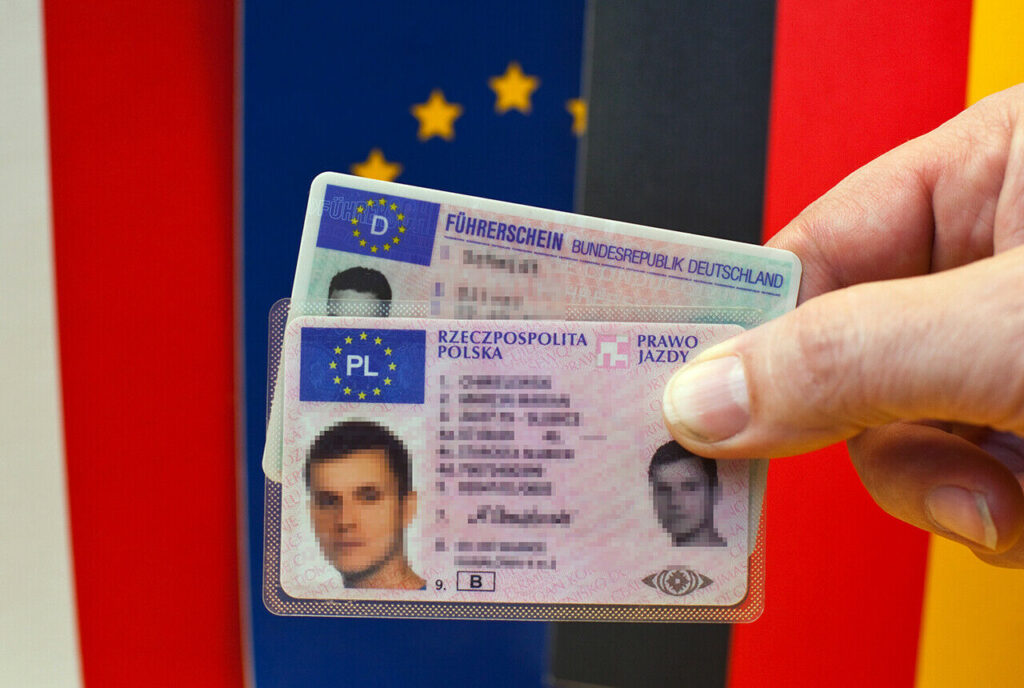
An EU driving licence is a driving licence issued by a Member State of the European Union under the common European driving-licence framework.
EU countries use standardised driving licence categories and a common format. The European Commission’s information on German licences, for example, identifies categories such as AM, A1, A2, A, B and BE, as well as heavier vehicle categories.
The system is designed to make driving entitlements easier to recognise between Member States.
This is particularly important for people who:
Yes, in general, a valid EU or EEA driving licence is recognised in Germany.
Section 28 of the German Driving Licence Regulation (FeV) states that holders of a valid EU or EEA driving licence who have their normal residence in Germany may drive motor vehicles in Germany within the scope of their entitlement, subject to specified restrictions.
This means that moving to Germany does not normally require you to immediately take German driving lessons or repeat your driving test simply because your licence was issued by another EU country.
However, there are important exceptions and special situations, which should be considered before driving.
An EU driving licence issued by another Member State is not necessarily the same thing as a German-issued driving licence.
For example, you might hold:
If the licence is valid and recognised, you can generally use it in Germany according to the entitlements shown on the licence.
You do not normally need to exchange it immediately simply because you have moved to Germany.
For information about the German system generally, see our guide to the German driving licence.
One of the most important points is that recognition and administrative validity are not necessarily the same thing.
A driving licence issued by another EU Member State remains subject to the validity rules applicable to the licence and its categories.
For German licences, the administrative validity of the physical document is generally 15 years for categories such as AM, A1, A2, A, B, BE, L and T, while many professional/heavy vehicle categories have shorter validity periods.
EU rules also establish common validity frameworks, while allowing certain national provisions and specific circumstances.
Therefore, if you live in Germany and have an EU driving licence, it is important to check:
Usually, no.
A valid EU driving licence does not generally have to be exchanged simply because you move to Germany.
German law recognises valid EU/EEA licences within the scope of the holder’s entitlement.
However, there are circumstances in which an exchange or renewal can become relevant.
For example, you may need to deal with the German authorities when:
EU guidance states that when a person moves to another EU country and their driving licence expires, renewal normally takes place in the country where they have their normal residence.
The concept of normal residence is particularly important in European driving-licence law.
EU rules generally define normal residence by reference to where a person normally lives for at least 185 days in a year, taking personal and occupational connections into account. Special provisions can apply to people whose personal and professional ties are in different countries, as well as certain students.
This is important because a person generally cannot simply choose any EU country as the place where they obtain a driving licence without regard to residence requirements.
The rules are intended to prevent so-called driving licence tourism, where someone attempts to obtain a licence in a country where they do not actually meet the residence requirements.
EU law establishes residence requirements for obtaining a driving licence.
As a general principle, an applicant must have their normal residence in the country issuing the licence or meet certain exceptions, such as specific study-related circumstances.
This means that someone who normally lives in Germany should not assume that they can simply travel to another EU country, obtain a driving licence there without meeting that country’s requirements and then automatically use it as a substitute for the German licensing process.
The circumstances surrounding the original issuance of the licence can be relevant.
If you move from another EU country to Germany, your existing valid EU driving licence will generally continue to be recognised.
For example, imagine that you previously lived in France and obtained a valid French driving licence. You later move to Germany and establish your normal residence there.
In the ordinary case, you can continue driving in Germany using the valid EU licence.
You do not normally have to:
simply because you moved to Germany.
The German FeV expressly provides for the recognition of valid EU/EEA driving licences.
One of the biggest advantages of the EU recognition system is that you generally do not need to repeat the entire licensing process after moving between EU countries.
If you already have a valid EU driving entitlement, German authorities generally do not require you to start again with:
The FeV specifically provides that certain requirements applicable to a new German licence, including the competence examination and training provisions, do not apply in the same way when an EU/EEA licence holder applies for the corresponding German entitlement.
For people obtaining their first German licence, however, the situation is different. Read our guide to the driving licence theory test and practical driving test.
Recognition does not necessarily mean that every condition attached to the original licence disappears.
German law provides that conditions and restrictions attached to an EU/EEA driving licence must also be observed in Germany.
For example, if a licence contains an applicable restriction code, the driver must comply with that restriction.
This is one reason why the codes and categories printed on the physical driving licence are important.
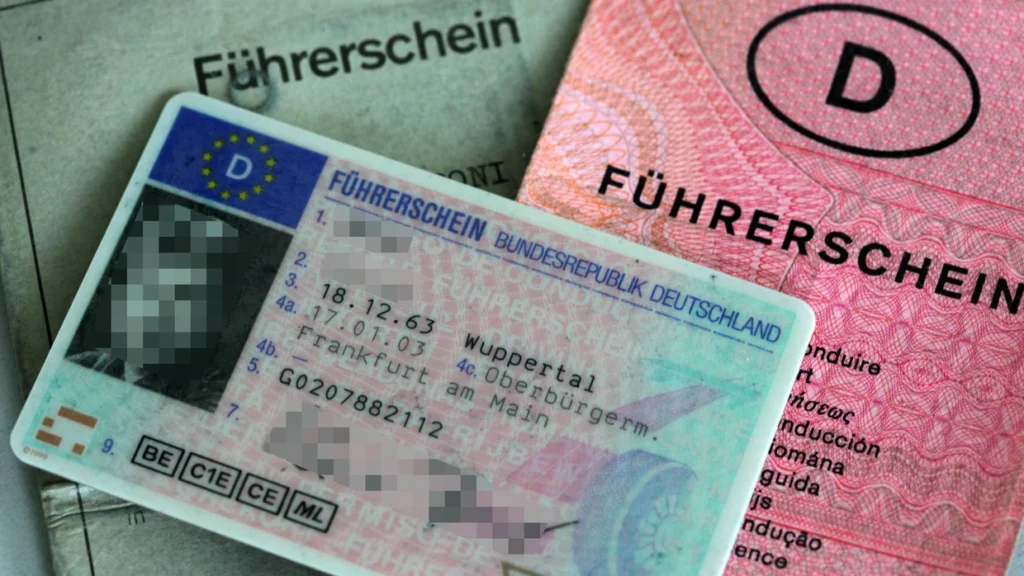
European driving licences use standardised categories.
Some of the most common include:
| Category | General vehicle type |
|---|---|
| AM | Mopeds and certain light vehicles |
| A1 | Light motorcycles |
| A2 | Motorcycles within specified power limits |
| A | Motorcycles |
| B | Cars and certain light vehicles |
| BE | Certain car-and-trailer combinations |
| C | Certain heavy vehicles |
| CE | Heavy vehicles with certain trailers |
| D | Buses |
| DE | Buses with certain trailers |
The exact entitlement depends on the applicable category, restrictions and national implementation.
For most private motorists, Category B is the most relevant.
Read our dedicated guide to Führerschein Klasse B.
A Category B EU driving licence is generally used for passenger cars and certain other vehicles within the applicable limits.
If you hold a valid Category B driving licence issued by another EU Member State and move to Germany, that licence is generally recognised for driving in Germany within the scope of the entitlement.
This is particularly useful for EU citizens who relocate for:
You should nevertheless check the licence’s validity and any restrictions before driving.
If you are living in Germany and your EU driving licence expires, the renewal procedure can become more important.
EU guidance explains that if you move to another EU country and your driving licence expires, you generally renew it in the country where you have your normal residence.
This means that someone who originally obtained their licence in Spain but now has normal residence in Germany may need to deal with the German authorities when the licence reaches its administrative expiry.
The exact procedure can depend on the category and circumstances.
EU driving licences are subject to mutual recognition, but recognition is not completely unconditional.
German law contains specific exceptions and restrictions concerning EU/EEA licences.
Issues can arise, for example, where:
European case law has also addressed circumstances involving licences issued by one Member State to people whose normal residence was elsewhere.
Therefore, an EU licence should not automatically be assumed to be valid in every possible situation.
Having an EU driving licence does not exempt a driver from German traffic laws.
If you commit a serious traffic offence in Germany, German authorities can impose measures affecting your ability to drive in Germany.
An EU driving licence does not provide immunity from:
Drivers with EU licences must comply with German road-traffic laws while driving in Germany.
If you lose an EU driving licence while living in Germany, the correct procedure depends on the country that issued it and your individual circumstances.
Do not assume that a German authority can simply issue a replacement for every EU licence.
Because the original licence was issued by another Member State, the issuing country may need to be involved.
If you lose your licence, you should:
If you are dealing with a German-issued licence instead, see our guide to lost driving licence.
An EU driving licence can sometimes be exchanged for a German licence.
An exchange may be useful if:
An exchange does not necessarily mean that you must retake your driving tests.
The German FeV contains specific provisions concerning holders of EU/EEA licences and the issuing of corresponding German driving entitlements.
For a broader explanation, see Führerschein umschreiben.
The rules for EU licences are generally more straightforward than those for licences issued outside the EU/EEA.
A valid licence is generally recognised in Germany within the scope of the entitlement.
Different rules can apply, including requirements concerning:
Therefore, you should always identify the country that issued your licence before deciding what procedure applies.
Read our guide to the foreign driving licence in Germany.
An EU driving licence should not be confused with an International Driving Permit.
An International Driving Permit is a supplementary document intended for certain international driving situations. It does not replace the underlying national driving licence.
German law provides for the issuance of International Driving Permits to eligible holders of EU/EEA driving licences and other qualifying licences.
If you plan to drive outside the EU, you should check the requirements of the destination country before travelling.
Learn more about the international driving licence.
When driving in Germany, it is sensible to ensure that your documents are valid and consistent.
Depending on your circumstances, you may need:
The driving licence itself contains important information, including the licence number, issue date, expiry date, issuing authority, categories and restrictions.
Validity periods matter. Check the date printed on the licence and the rules applicable to your category.
Restrictions and codes can remain relevant when driving in Germany.
The physical card and the underlying legal entitlement are related but not identical concepts.
It does not. Once you drive in Germany, you must comply with German road-traffic laws.
An EU licence and a non-EU licence can be subject to very different recognition and conversion procedures.
Generally, yes. A valid EU or EEA driving licence is recognised in Germany within the scope of the entitlement, subject to the applicable legal restrictions and exceptions.
Usually not immediately. A valid EU/EEA licence is generally recognised after moving to Germany. However, renewal, expiry, specific categories or other circumstances can make an exchange necessary or appropriate.
Generally yes, if the French driving licence is valid and the holder is entitled to drive in Germany under the applicable EU and German rules.
Generally yes. A valid Spanish EU driving licence is generally recognised in Germany, subject to the applicable rules.
Generally yes, provided the licence is valid and no restriction or other legal exception prevents recognition.
Normally not simply because you have moved to Germany. Valid EU/EEA licences are generally recognised.
In appropriate circumstances, yes. The German Driving Licence Regulation contains specific provisions concerning EU/EEA driving licence holders.
If Germany is your normal residence, you will generally deal with the German authorities for renewal when the licence expires, subject to the applicable category and circumstances. EU guidance confirms that renewal normally occurs in the country of normal residence when a person has moved to another EU country.
EU driving-licence rules generally use a 185-day threshold together with personal and occupational connections to determine normal residence, although special situations can apply.
An EU driving licence provides significant advantages for people who move between European countries. Thanks to the European framework and German recognition rules, a valid EU or EEA driving licence can generally be used in Germany without repeating the complete German driving-licence process.
However, drivers should still pay attention to:
If you are moving to Germany with an EU driving licence, the most important step is to determine exactly which licence you hold, where it was issued, which categories it covers and where your normal residence is.
For more information about German and European driving licences, explore the resources available on FahrenExperten, including Führerschein Klasse B, Führerscheinprüfung, Führerschein Kosten, Führerschein umschreiben, ausländischer Führerschein and internationaler Führerschein.
Driving Licence in Germany: Everything You Need to Know A driving licence is an important...
Weiterlesen
Rijbewijs kosten in Duitsland: een compleet overzicht Wie in Duitsland zijn rijbewijs wil halen, vraagt...
Weiterlesen