Driving Licence in Germany: Everything You Need to Know A driving licence is an important...
Weiterlesen


Driving Licence in Germany: Everything You Need to Know A driving licence is an important...
Weiterlesen
Rijbewijs kosten in Duitsland: een compleet overzicht Wie in Duitsland zijn rijbewijs wil halen, vraagt...
WeiterlesenA driving licence Europe search can refer to several different questions: how to obtain a driving licence in Europe, whether an EU driving licence is valid in another European country, how to exchange a licence after moving abroad, and what happens when a licence expires.
The European driving-licence system is designed to make it easier for people to drive and move between EU countries. Valid driving licences issued within the European Economic Area are mutually recognised, while EU rules establish common principles for licensing, categories and recognition.
This guide explains the most important aspects of driving licence Europe, with particular attention to people who live in or move to Germany.
For more driving-licence information, visit FahrenExperten.
A European driving licence is generally understood as a driving licence issued under the European Union or European Economic Area driving-licence framework.
Since 2013, EU driving licences have used a standard plastic, credit-card-sized format with security features. EU driving licences also use harmonised categories such as AM, A1, A2, A, B, BE, C, CE, D and DE.
Each country remains responsible for issuing its own driving licences, but common European rules make recognition between countries considerably easier.
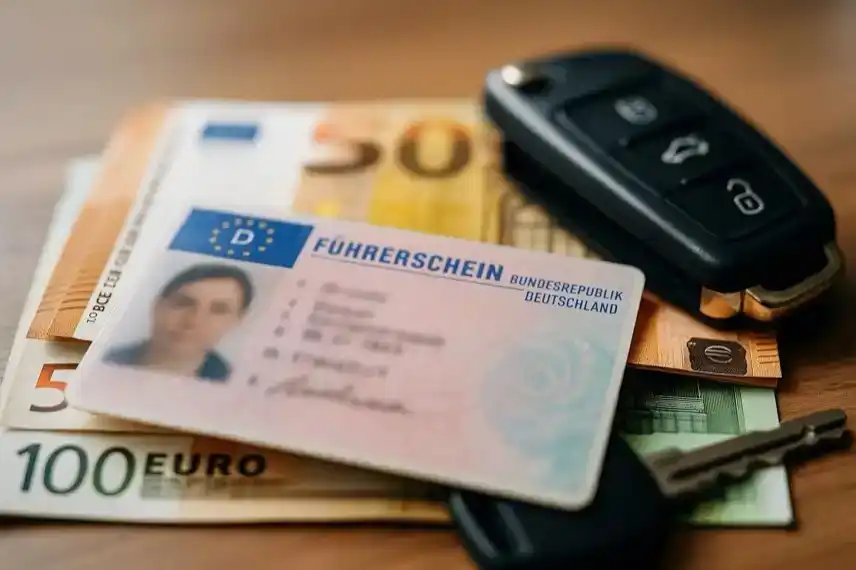
Generally, yes when the licence is a valid EU driving licence.
The European Commission states that if your driving licence was issued in an EU country, you can use it throughout the EU, provided it remains valid.
This is particularly useful for people who:
However, recognition does not mean that every possible licence or document is automatically accepted. Provisional and temporary licences, for example, are not regulated in the same way at EU level and may not be recognised in another country.
Germany is an important destination for people holding European driving licences.
Under Germany’s Driving Licence Regulation (Fahrerlaubnis-Verordnung, FeV), holders of valid EU or EEA driving licences who have their normal residence in Germany may generally drive in Germany within the scope of their entitlement. Restrictions or conditions attached to the foreign licence must also be observed.
This means that someone who moves to Germany with a valid EU driving licence will generally not have to start the German licensing process again simply because they have changed their country of residence.
For more information about driving licences in Germany, visit FahrenExperten.
Usually, no immediate exchange is required simply because you move to another EU country.
The EU’s official guidance states that when you move to another EU country, you do not usually have to exchange your driving licence for a local one. A voluntary exchange can be possible if you are resident in the new country and meet the relevant requirements.
However, certain circumstances can make an exchange necessary.
These can include:
The exact rules depend on the country where you live.
If you are specifically interested in Germany, read our guide to driving licence exchange.
There is no single validity period that applies identically to every European driving licence and every category.
The validity period can depend on:
Always check the expiry date printed on your driving licence.
If your licence expires while you live in another EU country, the country where you have your normal residence will generally handle the renewal.
This is especially important for people who obtained their licence in one country but have lived in another country for several years.
Normal residence is one of the most important concepts in European driving-licence law.
As a general rule, you should apply for a driving licence in the EU country where you normally live. EU guidance generally describes this as living there for at least 185 days per calendar year because of personal or work-related connections. Special provisions can apply in particular circumstances, including some students.
For example, if you permanently live and work in Germany, you generally cannot simply choose another EU country as the place where you obtain your first driving licence without satisfying the relevant residence requirements.
The residence principle helps prevent people from obtaining licences in countries where they do not actually meet the legal requirements.
Although individual procedures differ between countries, obtaining an EU driving licence generally involves meeting several basic requirements.
EU guidance states that applicants generally need to:
The precise process can include:
If you are interested in the German process, see our driving licence guide.
One of the major advantages of the European system is the use of harmonised driving categories.
Generally covers mopeds and certain light vehicles.
Covers certain light motorcycles.
Covers motorcycles within specified power limits.
Covers motorcycles subject to the applicable requirements.
The most common category for private cars.
Covers certain combinations involving a Category B vehicle and trailer.
Covers certain heavy vehicles.
Covers certain heavy vehicles with trailers.
Covers buses.
Covers buses with certain trailers.
The European Commission identifies these categories as part of the recognised European driving-licence framework.
For more information about the most common passenger-car category, read our guide to Führerschein Klasse B.
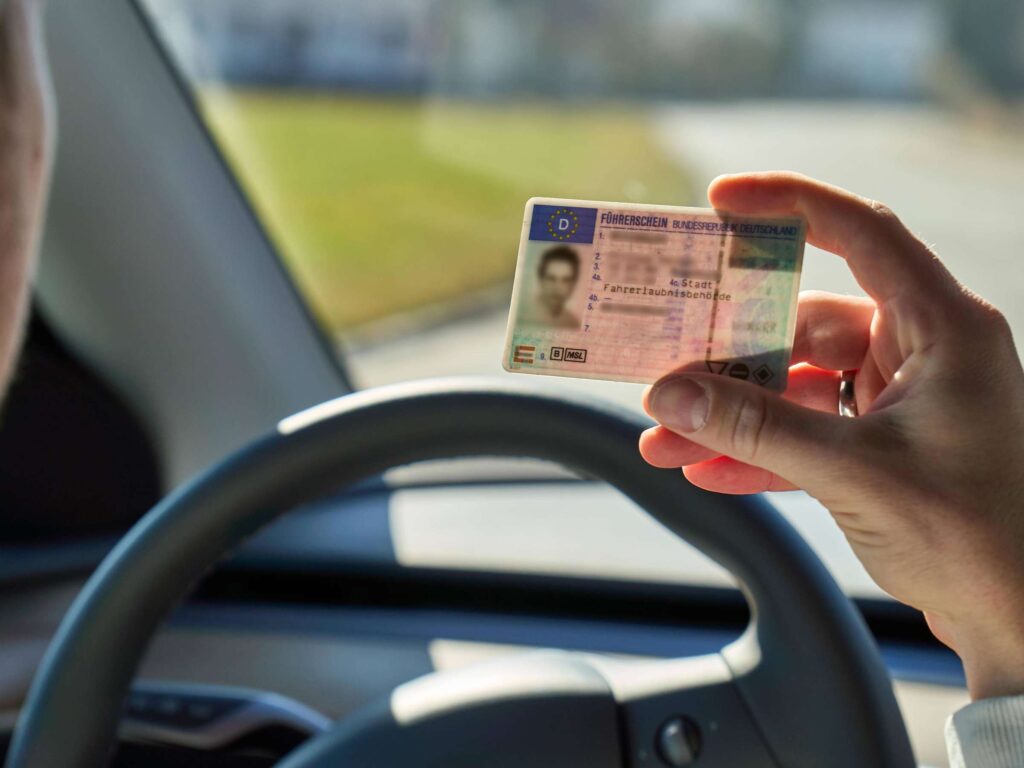
For most motorists searching for driving licence Europe, Category B is the most relevant.
A Category B licence generally allows the holder to drive qualifying passenger cars and other vehicles within the category’s applicable limits.
A valid Category B licence issued by an EU Member State is generally recognised across the EU.
For example, a valid Category B licence issued in:
can generally be used in other EU countries, subject to the applicable rules.
The driver must still comply with the traffic laws and restrictions of the country where they are driving.
Learn more about Führerschein Klasse B.
Moving from one EU country to Germany does not normally mean that you have to obtain a completely new driving licence.
Suppose you have a valid Spanish driving licence and move to Germany permanently.
In the ordinary situation, your Spanish EU driving licence remains recognised in Germany within the scope of your driving entitlement. German law expressly provides for recognition of valid EU/EEA licences, subject to specified exceptions.
You would not normally need to repeat:
simply because you moved to Germany.
For information about obtaining a German licence from the beginning, read our guide to making a driving licence.
Although EU driving licences benefit from mutual recognition, there are important exceptions.
German law excludes certain situations from ordinary recognition. These include some provisional licences, certain licences issued when the holder’s normal residence was already in Germany, and cases involving withdrawal, refusal, suspension or driving bans.
Problems can also arise where an EU licence was obtained by exchanging a third-country licence under circumstances that affect subsequent recognition.
EU guidance specifically warns that if an EU driving licence was issued in exchange for a non-EU licence, the licence may not necessarily be recognised in another EU country after the holder moves there.
This is an important distinction that people often overlook.
Imagine that someone originally obtained a driving licence in a country outside the EU.
They then move to an EU country and exchange that non-EU licence for an EU driving licence.
The resulting licence may be valid in the country that issued it, but recognition can become more complicated if the person later moves to another EU country. EU guidance specifically advises checking the rules in the new country of residence in such circumstances.
Therefore, when researching driving licence Europe, it is important to know not only where the current licence was issued but also, in some circumstances, where the original driving entitlement came from.
The European framework is designed around a single EU driving licence rather than allowing a person to maintain multiple licences issued by different EU Member States.
The EU’s official guidance states that you can have only one EU driving licence at a time.
This helps authorities prevent duplicate licences and makes it easier to monitor the status of a driver’s entitlement across countries.
If you move from one EU country to another and your driving licence expires, you generally renew it in the country where you have your normal residence.
For example:
Original licence: France
Current normal residence: Germany
Licence expires: While living in Germany
In this situation, German authorities would generally be involved in the renewal process.
The new licence may have a different validity period and will be subject to the rules applicable in the country of renewal.
For related information, visit our guide to renewing a driving licence.
Losing your driving licence while travelling or living abroad can create additional administrative work.
EU guidance states that if your licence is lost or stolen, you generally need to apply for a local replacement according to the rules applicable in the country where you are dealing with the matter.
You should contact the appropriate authority rather than assuming that a replacement can simply be printed by any authority.
Keep copies or records of your licence details where appropriate, including:
For information specifically about a lost licence in Germany, see our lost driving licence guide.
A European driving licence does not exempt its holder from the traffic laws of another country.
If you drive in Germany, for example, you must comply with German traffic regulations.
German law also contains provisions that can prevent holders of certain EU/EEA licences from exercising their driving entitlement in Germany following specific decisions such as withdrawal or driving restrictions.
Similarly, EU legislation provides for recognition consequences when a driving entitlement has been suspended, withdrawn or restricted in another Member State.
A European licence therefore provides mobility—not immunity from traffic laws.
Drivers with categories such as C, CE, D, D1 and related professional categories should pay particular attention to validity periods and medical requirements.
German rules contain specific provisions concerning the validity of certain heavy-vehicle and passenger-transport categories on EU/EEA licences when the holder establishes normal residence in Germany.
Professional drivers should therefore avoid relying solely on the rules applicable to ordinary Category B licences.
If you are considering obtaining or renewing a professional licence, check the requirements applicable to your specific category and country of residence.
A European driving licence is not the same as an International Driving Permit.
An EU driving licence is the underlying driving entitlement issued by a Member State.
An International Driving Permit is a supplementary document that can be relevant when driving in certain countries outside the European recognition framework.
If you are travelling outside Europe, always check the requirements of your destination country before travelling.
For more information, visit our international driving licence resource.
This distinction is essential.
Generally benefits from European mutual recognition.
Recognition depends on the country in which you want to drive and the applicable national or international rules.
If you move to Germany with a non-EU licence, you may have to deal with additional requirements such as:
For this reason, someone researching driving licence Europe should always identify the licence’s issuing country.
Read our article about foreign driving licences in Germany.
If you hold a European driving licence, keep these points in mind:
Do not wait until the licence expires before investigating renewal.
Make sure the category you intend to use is actually shown on your licence.
Codes on the licence can impose important conditions on your driving entitlement.
Residence can determine where you should obtain or renew your licence.
An expired licence may not be recognised when driving abroad.
Temporary or provisional licences may not be recognised across borders.
The rules governing renewal and exchange can change once your normal residence changes.
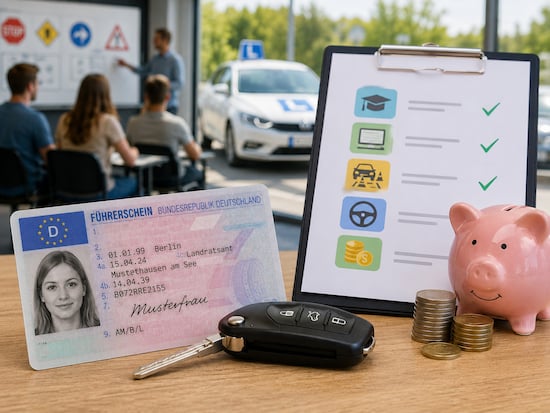
A European driving licence is generally a licence issued under the EU/EEA driving-licence framework. EU countries use harmonised categories and a standardised licence format.
A valid EU driving licence can generally be used throughout the EU, although specific restrictions and national rules can apply.
Generally yes. Germany recognises valid EU and EEA driving licences within the scope of the entitlement, subject to statutory exceptions.
Generally not immediately. EU guidance says you do not usually have to exchange your licence simply because you move to another EU country.
If you have moved to another EU country and that country is your normal residence, you will generally renew the licence there.
A genuine EU driving licence is an official government document. Obtaining one generally requires satisfying residence, age, medical and examination requirements.
Be cautious about websites claiming to issue genuine European driving licences without the legally required process.
Generally, no. EU guidance states that you can have only one EU driving licence at a time.
No. They are different documents. An International Driving Permit is generally a supplementary document and does not replace your underlying driving licence.
Understanding driving licence Europe rules is increasingly important as people travel, work, study and relocate across European countries.
The European system provides significant advantages through mutual recognition, standardised categories and common rules. A valid EU driving licence can generally be used throughout the EU, while people who move to another Member State usually do not have to exchange their licence immediately.
However, there are important exceptions.
Before driving in another European country, check:
For Germany-specific information, explore the resources at FahrenExperten, including our guides on German driving licences, Führerschein Klasse B, driving licence costs, driving licence examinations, foreign driving licences and driving licence exchange.
Driving Licence in Germany: Everything You Need to Know A driving licence is an important...
Weiterlesen
Rijbewijs kosten in Duitsland: een compleet overzicht Wie in Duitsland zijn rijbewijs wil halen, vraagt...
Weiterlesen