Driving Licence in Germany: Everything You Need to Know A driving licence is an important...
Weiterlesen



Driving Licence in Germany: Everything You Need to Know A driving licence is an important...
Weiterlesen
Rijbewijs kosten in Duitsland: een compleet overzicht Wie in Duitsland zijn rijbewijs wil halen, vraagt...
WeiterlesenA driving licence is an important document for anyone who wants to drive legally in Germany. Whether you are learning to drive for the first time, moving to Germany with a foreign licence, replacing a lost document or exchanging an existing licence, understanding the German system can save you time, money and unnecessary complications.
Germany uses a structured licensing system with different categories for cars, motorcycles, trucks, buses and other vehicles. The requirements depend on the category you want, your age, your previous driving experience and, in some situations, the country where your existing licence was issued.
The German driving licence system is primarily governed by the Fahrerlaubnis-Verordnung (FeV). For applicants obtaining a licence for the first time, the licensing process generally involves both theoretical and practical examinations.
In this comprehensive guide from FahrenExperten, we explain the most important things you need to know about a driving licence in Germany.
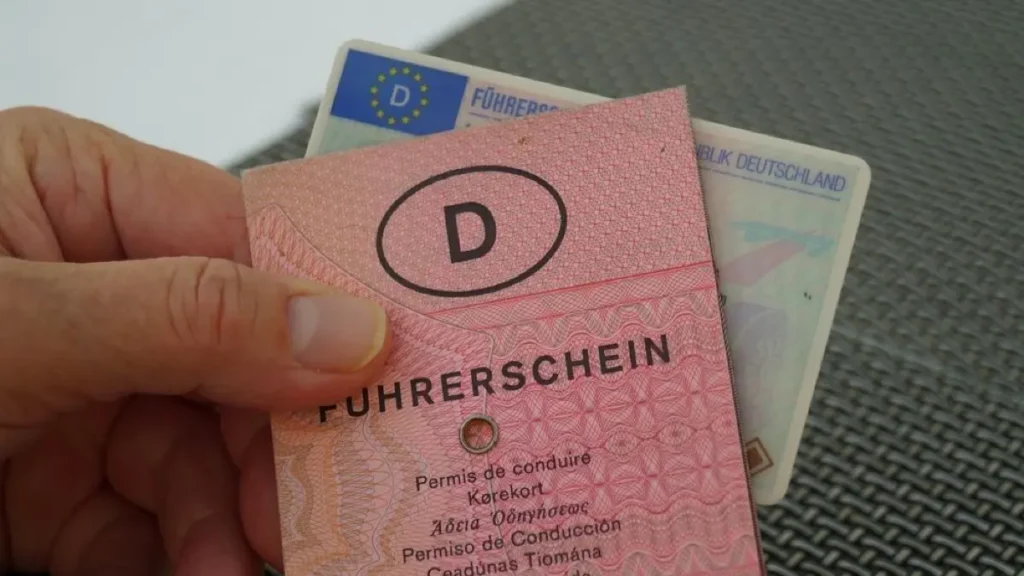
A German driving licence (Führerschein) is the official document confirming that a person has the legal authority to operate vehicles belonging to specific driving categories.
It is important to distinguish between:
The German system divides driving entitlements into different categories. These include passenger cars, motorcycles, trucks, buses and other vehicles. The exact category shown on your licence determines what you are legally permitted to drive.
If you are researching the German system for the first time, our German driving licence guide can provide additional information.
Germany has several driving licence categories. Choosing the correct category is one of the first steps when planning your driving education.
Class B is the standard category for people who want to drive ordinary passenger cars.
It is one of the most commonly requested driving licence categories in Germany.
Category BE extends the rights associated with category B and permits driving combinations involving larger trailers within the applicable legal limits.
Category A covers motorcycles and is part of Germany’s motorcycle licensing system.
There are also A1 and A2 categories with different requirements.
Categories C and C1 are intended for heavier vehicles, including different types of trucks.
Categories D and D1 apply to buses and passenger transportation vehicles.
Additional requirements can apply to professional drivers.
The German FeV contains the official classification of driving licence categories.
For a detailed explanation, see our information about driving licence categories in Germany.
If you are applying for your first German driving licence, the process generally involves several stages.
A typical process includes:
The exact requirements depend on the category and your individual circumstances.
The application for a German driving licence is handled through the competent licensing authority.
Depending on your circumstances, you may need documents such as:
The German federal administration specifically lists proof of a first-aid course and, for certain categories, medical documentation among the requirements.
It is advisable to check the requirements of the responsible authority in your place of residence because administrative procedures can differ.
The theory examination is an important part of obtaining a German driving licence.
German law requires applicants to demonstrate sufficient knowledge of traffic regulations, road safety, environmentally conscious and energy-efficient driving, and basic technical relationships relevant to road safety.
For a first-time Class B application, the official examination consists of 30 questions. The permitted error score is generally 10 points, although two incorrectly answered questions worth five points each will also result in failure.
This makes preparation particularly important.
You should study:
For additional preparation, visit our driving theory information.
Yes.
This is particularly useful for international residents.
Germany’s official examination rules allow the theory examination to be taken in several foreign languages, including English, French, Italian, Spanish, Polish, Portuguese, Romanian, Russian, Croatian, Turkish and Standard Arabic, in addition to German.
Therefore, if German is not your strongest language, you may have options for taking the theory examination in another permitted language.
Always confirm the currently available examination language with your examination provider before booking.
Passing the theory test is only one part of obtaining a driving licence.
You must also demonstrate that you can operate the vehicle safely in real traffic.
For Class B, the practical examination includes various driving tasks and road situations. German examination regulations specify basic driving tasks such as reversing, turning and parking-related manoeuvres.
Your driving lessons should therefore cover much more than simply controlling the vehicle.
You should develop skills in:
The cost of obtaining a driving licence varies significantly.
There is no single nationwide price because driving schools set their own fees and students require different numbers of lessons.
Your total expenses may include:
For many applicants, practical driving lessons represent one of the largest variable expenses.
Read our detailed guide to driving licence costs in Germany for more information about budgeting for your licence.
There is no single timeframe that applies to every learner.
The duration depends on:
Someone who takes regular lessons and passes both examinations without needing additional attempts can complete the process more quickly than someone who requires extensive additional training.
For a first German driving licence, professional driving-school training forms an important part of the licensing process.
Your driving school provides theoretical and practical instruction and prepares you for the examinations.
Choosing the right driving school is therefore an important decision.
Before registering, compare:
Do not automatically choose the cheapest school. A low price per lesson does not necessarily mean the lowest overall cost.
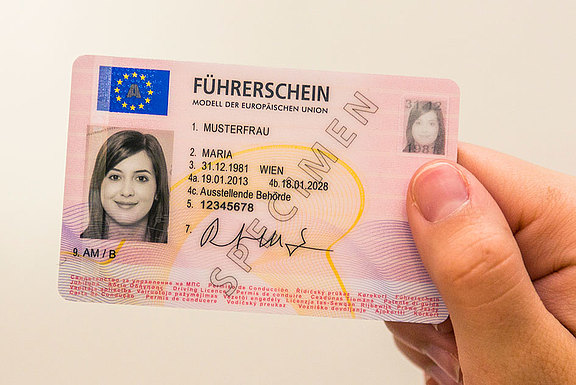
Germany has a large international population, so foreign driving licences are an important part of the German licensing system.
If you already have a driving licence from another country, you should not automatically assume that you need to start the German licensing process from zero.
The applicable procedure depends on where your licence was issued and your circumstances.
There are important differences between:
The German federal administration notes that, for certain applications involving foreign licences, the original foreign driving licence is relevant and an international driving licence by itself is not sufficient. A translation may also be required depending on the circumstances.
Read our guides about foreign driving licences in Germany and exchanging a foreign driving licence.
If you have an EU or EEA driving licence, the rules can be considerably different from those applying to a licence issued outside the EU/EEA.
EU driving licences are generally recognised within the EU framework, although specific rules can apply depending on the licence, residence situation, validity and circumstances.
If you are moving to Germany from another European country, you should therefore investigate recognition requirements before applying for a new German licence.
Learn more in our guide to the EU driving licence in Germany.
A non-EU driving licence can be subject to additional requirements.
Depending on the issuing country, you may be able to exchange the licence under specific arrangements, while in other cases you may need to take German theory and/or practical examinations.
Germany has specific rules concerning the recognition and conversion of foreign driving licences.
If you hold a licence from outside the EU or EEA, check the applicable rules before driving in Germany.
Our guide to non-EU driving licences in Germany explains the main considerations.
If you already have a foreign driving licence, you may be looking for information about driving licence exchange in Germany rather than applying for a completely new licence.
The process can depend on:
The German federal administration specifically states that applicants using a foreign licence may need to provide the original licence and, depending on the circumstances, a German translation.
Visit our page about foreign driving licence exchange for further information.
The physical German driving licence card has its own validity period.
For modern German driving licence documents, the validity period of the card is generally 15 years. This does not necessarily mean that the underlying driving entitlement expires after 15 years for ordinary categories.
Certain categories, particularly professional or heavier vehicle categories, are subject to different validity and medical requirements.
If you want to understand when your document needs to be replaced, see our guide to driving licence validity in Germany.
When a driving licence document reaches its expiry date, the appropriate procedure depends on the category and circumstances.
For ordinary categories, replacing the physical document is different from renewing a restricted driving entitlement.
For professional categories such as certain truck and bus licences, additional medical or eyesight requirements can apply.
If your licence is approaching its expiry date, start checking the requirements early.
Read our detailed guide to renewing a driving licence in Germany.
Losing your physical driving licence can be stressful, but it does not automatically mean that your driving entitlement has disappeared.
If you lose your German driving licence, you generally need to report the loss and apply for a replacement document.
If the document was stolen, you may also need police documentation.
For more information, read our guide about a lost driving licence in Germany.
A damaged or illegible driving licence may also need to be replaced.
If important information can no longer be read or the card is significantly damaged, contact the competent driving licence authority and ask about obtaining a replacement document.
Do not wait until you urgently need the document for travel or another purpose.
Your German driving licence contains several important pieces of information, including your driving licence number.
This number can be useful when dealing with:
If you have lost your licence and no longer know your licence number, the competent authority can generally access your official licensing information.
Learn more about the German driving licence number.
A German international driving permit/licence should not be confused with a German national driving licence.
An international driving permit is generally used as a supplementary document when driving in certain foreign countries. It does not replace the underlying national driving licence.
If you are planning to drive outside Germany, check the rules of the country you intend to visit.
Read our guide to the international driving licence.
The German system covers many vehicle types.
Category B is the standard category for passenger cars.
Categories A, A1 and A2 cover different motorcycle licensing situations.
Categories BE and other trailer-related categories provide additional driving entitlements.
C and related categories cover heavier vehicles.
D and related categories apply to buses.
The requirements become more extensive for professional and heavier categories, including medical and other suitability requirements in relevant cases. The federal administration lists medical certificates among the requirements for several C and D categories.
The cheapest lesson price does not necessarily produce the cheapest total licence.
The theory examination is a formal test with defined scoring rules.
If your instructor believes you need additional practice, rushing into the examination can result in additional costs.
If you already hold a foreign licence, you may not need to obtain a completely new German licence.
If you need to renew or replace your licence, start the process before the relevant deadline.
An international document is not automatically a substitute for the original national driving licence. The German federal administration explicitly notes that an international driving licence alone is not sufficient for certain procedures involving foreign licences.
If you are planning to obtain or manage a driving licence in Germany, use this checklist:
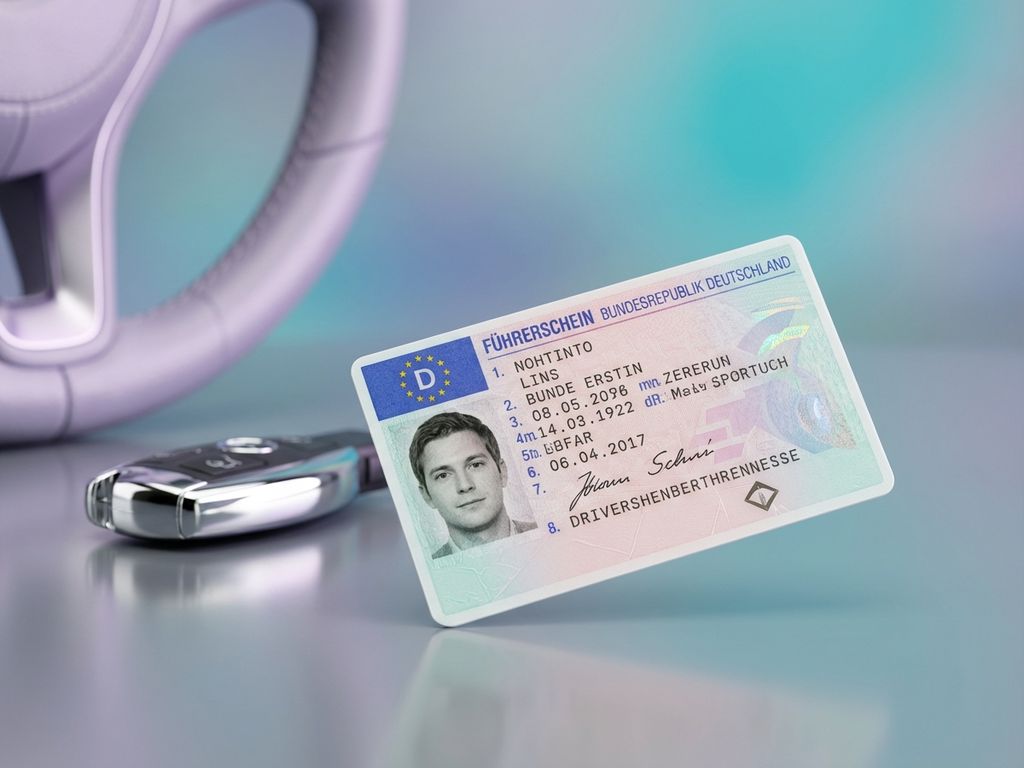
A driving licence is called a Führerschein in German. The legal driving entitlement is referred to as a Fahrerlaubnis.
For a first licence, you normally need to apply through the competent authority, complete the required training and pass the applicable theory and practical examinations. German law requires applicants for most categories to demonstrate their ability through examinations.
Yes. English is one of the foreign languages permitted for the German theory examination under the applicable examination rules.
For a first-time Class B application, the theory test contains 30 questions, with a maximum permitted error score of 10 points, subject to the special rule concerning two five-point questions.
It depends on the country that issued it, your residence status and the applicable German recognition rules. EU/EEA licences and non-EU licences can be treated differently.
In many circumstances, yes, but the exact procedure depends on the country of issue and other factors. Some foreign licences can be exchanged under specific conditions, while others may require examinations.
There is no single fixed price. The total depends heavily on driving-school fees, the number of lessons required, examinations and administrative costs.
You normally need to take the relevant examination again and may need additional training. This can increase the total cost of obtaining your licence.
The process cannot simply be completed entirely online in every case. Some administrative steps may be available digitally, but requirements depend on the responsible authority and the type of application.
Obtaining a driving licence in Germany involves more than simply passing a driving test. You need to choose the correct category, complete the required training, submit the necessary documentation and pass the applicable theoretical and practical examinations.
For international residents, an additional question is whether a new German licence is actually necessary. If you already have an EU, EEA or non-EU driving licence, recognition or exchange rules may apply.
German regulations provide a structured system for licensing, testing and recognising driving entitlements. For first-time applicants, both theory and practical examinations are generally required, while certain licence extensions have different examination requirements.
The best approach is to understand your specific situation before spending money on lessons or examinations.
For more information, visit FahrenExperten and explore our guides covering German driving licence, driving licence costs, driving licence application, foreign driving licence, EU driving licence, non-EU driving licence, driving licence exchange, lost driving licence and international driving licence.
Driving Licence in Germany: Everything You Need to Know A driving licence is an important...
Weiterlesen
Rijbewijs kosten in Duitsland: een compleet overzicht Wie in Duitsland zijn rijbewijs wil halen, vraagt...
Weiterlesen