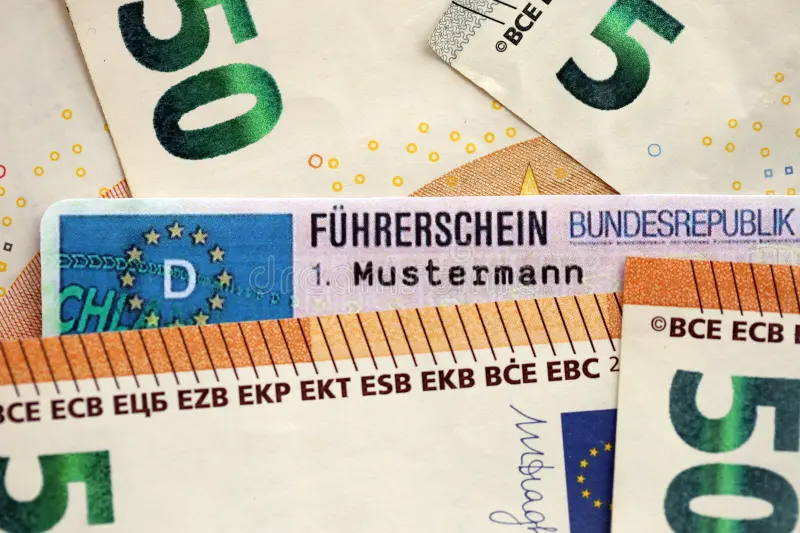
Driving Licence in Germany: Everything You Need to Know A driving licence is an important...
Weiterlesen


Driving Licence in Germany: Everything You Need to Know A driving licence is an important...
Weiterlesen
Rijbewijs kosten in Duitsland: een compleet overzicht Wie in Duitsland zijn rijbewijs wil halen, vraagt...
WeiterlesenIf you have an EU driving licence and have moved to Germany, you may be wondering whether you need to exchange your licence for a German one. The good news is that EU driving licence exchange Germany rules are generally much simpler than the rules applying to licences from countries outside the European Union and European Economic Area (EEA).
A valid EU or EEA driving licence for harmonised categories is generally recognised in Germany, meaning that you do not normally need to exchange it simply because you have moved to Germany. However, there are important exceptions involving licence validity, certain driving categories, older licences and specific circumstances.
Understanding these rules can help you avoid unnecessary paperwork while ensuring that your licence remains valid for driving in Germany.
In this guide, we explain EU driving licence exchange Germany rules in detail, including when an exchange is voluntary, when it becomes necessary, what documents you need, how much it costs and what happens to different licence categories.
For more information about driving licences in Germany, visit FahrenExperten.
Usually, no.
If you hold a valid driving licence issued by an EU member state or an EEA country, Germany generally recognises the licence for the categories for which it is valid.
German law specifically provides for the recognition of valid EU and EEA driving licences for people who have their normal residence in Germany.
This means that someone moving from France, Italy, Spain, Poland, Austria, Belgium or another EU country can generally continue driving in Germany with their valid EU licence.
The same basic recognition applies to licences issued by the EEA countries:
The German Federal Portal confirms that valid EU/EEA licences generally authorise their holders to drive in Germany within the scope of the licence.
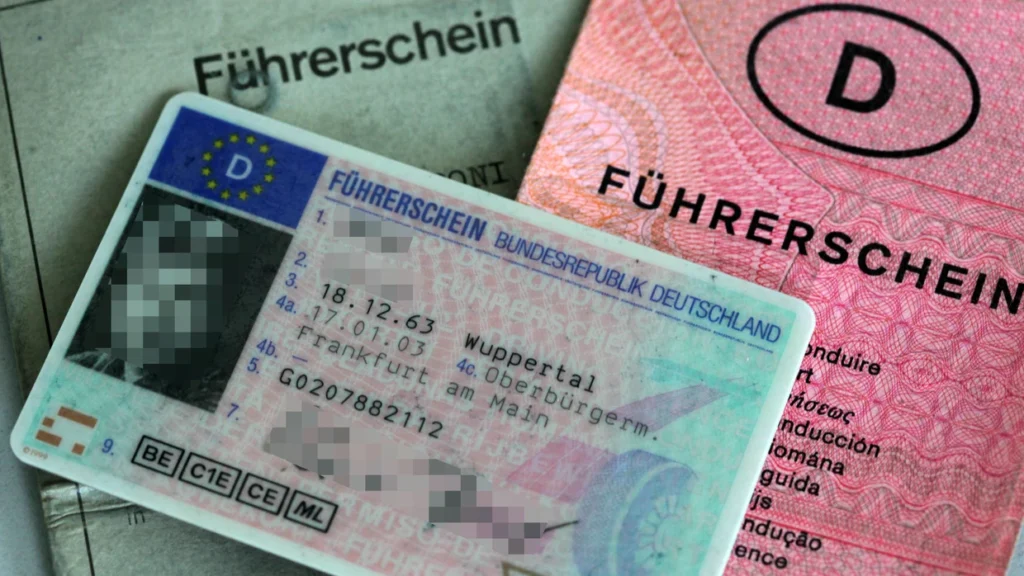
The term EU driving licence exchange Germany refers to replacing an EU or EEA driving licence with a German driving licence.
This is commonly called Umschreibung in German.
However, it is important to distinguish between:
Recognition – Germany accepts your existing EU/EEA driving licence.
and
Exchange – You voluntarily or mandatorily replace the foreign licence with a German licence.
For many holders of ordinary EU driving licences, exchange is not immediately necessary.
An EU driving licence is already part of a harmonised European driving licence system.
This is why Germany generally does not require a new driving test when an EU resident moves to Germany with a valid licence.
For harmonised categories, the existing licence can generally continue to be used in Germany.
The German Federal Portal states that EU/EEA licences for harmonised categories generally do not require conversion.
This is very different from the rules for many non-EU licences.
If you have a licence from outside the EU/EEA, read our guide to Non-EU Driving Licence Germany.
The harmonised European licence system covers categories including:
The German Federal Portal identifies these as harmonised EU/EEA licence categories.
For ordinary private motorists, Category B is particularly relevant because it covers standard passenger cars.
Although an EU driving licence generally remains valid after moving to Germany, there are circumstances in which an exchange becomes necessary.
These include situations involving:
For example, German authorities state that where an EU/EEA licence contains categories that are subject to German time limits, the German validity periods can apply.
One of the most common reasons for exchanging an EU driving licence is expiry.
If you live in Germany and your EU driving licence reaches the end of its validity period, you may need to obtain a German licence document.
The Federal Portal specifically states that holders of EU/EEA licences who have moved to Germany need to exchange the licence when its validity expires or when the validity of individual licence categories expires.
This is particularly relevant for licences issued under the modern EU card system.
The answer depends on the licence category and the date and format of the licence.
For modern card licences, the licence document is generally subject to a maximum administrative validity period.
German authorities explain that card driving licences issued from 19 January 2013 are generally limited to 15 years. This limitation concerns the document itself and does not mean that drivers must undergo regular medical examinations or driving tests simply because the document expires.
This distinction is important.
An expired licence document and an expired driving entitlement are not necessarily the same thing.
For ordinary categories, renewing the document does not normally mean retaking your driving test.
For a normal EU/EEA licence exchange, you generally do not need to take a German theory or practical driving test simply because you are exchanging the licence.
German regulations provide special rules for holders of EU/EEA licences. For example, the standard provisions concerning aptitude examinations, eyesight testing, first-aid training and driver training do not generally apply to the issuance of a German licence based on an eligible EU/EEA licence, subject to the applicable exceptions.
This is one of the biggest advantages of the EU driving licence system.
If you are preparing for a German driving test for another reason, see our German Driving Test guide.
Yes.
Even when an exchange is not mandatory, you may have practical reasons for wanting a German licence document.
For example, you may prefer to have a German document because you:
The exact procedure is handled by the local Fahrerlaubnisbehörde.
If you decide that an exchange is appropriate, the process is generally straightforward.
Before applying, check:
Make sure the licence is valid.
Ask yourself:
Is my EU licence still valid?
Is my licence category subject to a German validity period?
Is my licence document approaching expiry?
Do I have an older licence format?
If the answer to these questions is unclear, contact your local Fahrerlaubnisbehörde.
Applications are normally handled by the driving licence authority responsible for your place of residence.
This may be a local authority within your:
Requirements and appointment procedures can vary between local authorities.
Typical documents include:
The Federal Portal lists a valid EU/EEA licence, identity document and current biometric photograph among the documents that may be required.
Submit the application to the responsible authority.
Depending on the local authority, you may need an appointment.
Some authorities allow applications through designated administrative offices, while others have specific procedures.
The exchange fee is determined under the German fee regulations for road traffic measures.
The exact amount depends on the authority and circumstances.
For example, Bremen currently lists an EU/EEA licence exchange fee of approximately €37.50–€74.60.
Treat this as an example rather than a nationwide fixed price.
For a broader explanation of German licence expenses, see our Driving Licence Cost Germany guide.
Once the application has been processed, you receive your German EU-format driving licence.
The original foreign licence may be retained by the German authority and handled according to the applicable rules.
German law specifically regulates the handling and return of foreign EU/EEA licences during exchanges.
The exact requirements can differ between local authorities, but you should generally prepare:
You normally need the original valid licence.
This can generally be a passport or national identity card.
A current biometric photograph is normally required.
A registration certificate (Meldebescheinigung) may be requested depending on the authority.
Additional documents may be required depending on:
The Federal Portal advises applicants to obtain exact information from their competent driving licence authority.
Normally, an EU-format driving licence does not require the same type of translation procedure associated with many non-EU licences.
This is one of the advantages of the harmonised EU licence system.
The situation is different for many licences from outside the EU/EEA, where official translations can be required.
If you are dealing with a non-EU licence, see our Foreign Driving Licence Germany guide.
For most private car drivers, Category B is the most important licence category.
If you hold a valid EU/EEA Category B licence, you can generally drive in Germany without immediately exchanging the licence.
The German recognition system applies to harmonised categories, including B.
An exchange may become relevant when the licence document expires or in other circumstances requiring a German document.
The situation can be different for professional and heavy vehicle categories.
German authorities state that categories such as C and D, along with corresponding categories, are subject to German validity periods. These German periods can apply even when the foreign licence specifies a longer validity period or does not show an equivalent expiry date.
This means that drivers holding professional categories should pay particularly close attention to German deadlines.
If you hold a C, CE, D or similar category, contact the relevant driving licence authority well before the licence or category expires.
Older driving licences can have different exchange requirements.
Germany has a staged system for exchanging older German driving licences into the EU card format, with deadlines depending on the date of issue and, for certain older licences, the driver’s year of birth.
However, this particular German mandatory exchange schedule primarily concerns German-issued licences.
If you hold an older licence issued by another EU country, check its validity and the applicable rules with the German Fahrerlaubnisbehörde.
No.
Simply moving to Germany does not normally invalidate a valid EU/EEA driving licence.
German law expressly recognises valid EU/EEA licences for people whose normal residence is in Germany, subject to the relevant restrictions and exceptions.
This is an important difference from many non-EU/EEA licences.
A non-EU licence is generally subject to a six-month recognition period after establishing normal residence, whereas harmonised EU/EEA licences generally continue to be recognised.
Normal residence is relevant to German driving licence law.
Under §7 of the German Driving Licence Regulation, normal residence generally means living in Germany for at least 185 days per year because of personal and/or professional connections.
There are special rules for certain students and people whose personal or professional circumstances involve more than one country.
If your living situation is unusual, obtain advice from the appropriate authority before making assumptions about which country’s licence rules apply.
Students can have special circumstances.
German law provides specific provisions for people who normally reside in another EU/EEA country but are temporarily in Germany for education.
For example, a person whose previous normal residence was in another EU/EEA state and who is in Germany solely to attend a university or school does not necessarily establish normal residence in Germany under the ordinary rule.
Therefore, students should not automatically assume that moving into student accommodation means their EU driving licence must be exchanged.
If your EU driving licence expires while you are normally resident in Germany, you may need to renew or exchange it through the German authorities.
The Federal Portal specifically states that EU/EEA licence holders who have moved to Germany must exchange their licence when the validity of the licence or individual categories expires.
It is therefore advisable to monitor the expiry date rather than waiting until the final moment.
There is no single nationwide price that applies to every application.
The cost can depend on:
For example, Bremen currently lists a fee range of €37.50 to €74.60 for the relevant EU/EEA foreign licence service.
Additional costs may apply if you need photographs or other documentation.
For a detailed discussion of licence expenses, visit our Driving Licence Cost Germany article.
Understanding the difference between EU and non-EU licences is essential.
| Feature | EU/EEA Driving Licence | Non-EU/EEA Driving Licence |
|---|---|---|
| Recognition in Germany | Generally recognised | Generally recognised for six months after establishing residence |
| Immediate exchange | Usually not required | Required for continued driving after recognition period |
| Theory test | Generally not required for ordinary exchange | Depends on country |
| Practical test | Generally not required | Depends on country |
| Translation | Generally not required | May be required |
| Annex 11 | Generally not relevant | Important for certain countries |
| German licence | Exchange generally linked to expiry/specific circumstances | Required for continued driving after six months |
The different treatment is based on Germany’s legal framework for EU/EEA licences compared with third-country licences.
You generally do not need to exchange a valid EU/EEA licence simply because you moved to Germany.
Some licences and categories are subject to expiry and German validity rules.
C and D categories, for example, can have different validity requirements.
Start the process before the expiry date whenever possible.
A 15-year validity period for the physical card does not mean you need to retake your driving test every 15 years.
German authorities explain that the 15-year limitation for modern card licences concerns the document itself.
Use this checklist if you have moved to Germany.
Usually not immediately. Valid EU/EEA licences for harmonised categories are generally recognised in Germany. An exchange may become necessary when the licence or relevant category expires or in other specific circumstances.
Generally yes, provided the French licence is valid and covers the vehicle you are driving. EU/EEA licences are generally recognised in Germany.
Yes, a valid Italian EU driving licence is generally recognised in Germany within the scope of its authorisation.
Normally no for a standard EU/EEA licence exchange. German law provides special rules for EU/EEA licence holders.
Normally no for the ordinary exchange or recognition of a valid EU/EEA licence.
Fees vary by local authority. Current examples include approximately €37.50–€74.60 in Bremen.
Generally, yes, if you are normally resident in Germany and want to continue driving under the relevant licence category.
When an exchange takes place, the foreign licence may be retained and handled according to the applicable German and EU procedures.
Yes, a valid EU/EEA licence is generally recognised across Germany, subject to the applicable categories, conditions and restrictions.
For most people, EU driving licence exchange Germany is much simpler than exchanging a non-EU driving licence.
The key point is that a valid EU/EEA driving licence for a harmonised category is generally recognised in Germany without requiring an immediate exchange.
However, you should pay attention to:
For ordinary Category B drivers, there is generally no reason to exchange a valid EU licence simply because they have moved to Germany. When an exchange does become necessary, the procedure generally does not involve retaking the German theory and practical driving tests simply to replace a valid EU/EEA licence.
If you want to learn more about German driving licences, conversion, costs, examinations and requirements, explore the guides available at FahrenExperten.
Driving Licence in Germany: Everything You Need to Know A driving licence is an important...
Weiterlesen
Rijbewijs kosten in Duitsland: een compleet overzicht Wie in Duitsland zijn rijbewijs wil halen, vraagt...
Weiterlesen