Driving Licence in Germany: Everything You Need to Know A driving licence is an important...
Weiterlesen



Driving Licence in Germany: Everything You Need to Know A driving licence is an important...
Weiterlesen
Rijbewijs kosten in Duitsland: een compleet overzicht Wie in Duitsland zijn rijbewijs wil halen, vraagt...
WeiterlesenA German driving licence is an important document for anyone who wants to drive legally in Germany. Whether you are applying for your first licence, moving to Germany with a foreign driving licence, or looking to exchange an existing EU licence, understanding the German licensing system can make the process considerably easier.
Germany has a comprehensive driving-licence system covering cars, motorcycles, trucks, buses and other vehicles. Each category has its own requirements, minimum age, training provisions and examination rules.
For most private motorists, Category B is the most relevant because it is the standard category for passenger cars.
This guide explains how a German driving licence works, how to obtain one, what examinations are required, how much the process can cost, and what happens if you already have a foreign or European driving licence.
For more information about driving licences in Germany, visit FahrenExperten.
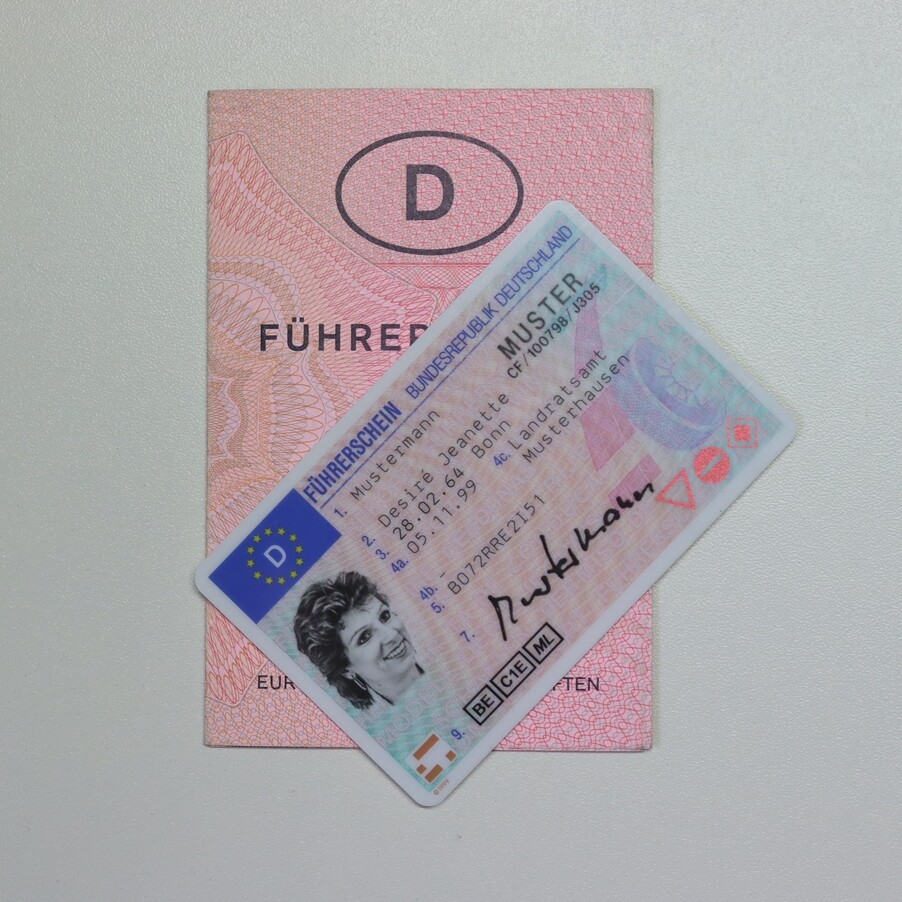
A German driving licence, known in German as a Führerschein, is the official document used to demonstrate a person’s entitlement to drive particular categories of motor vehicles.
German law distinguishes between the legal Fahrerlaubnis, meaning the driving entitlement, and the physical Führerschein, which serves as official evidence of that entitlement. The German Road Traffic Act states that a person driving a motor vehicle on public roads requires the appropriate permission from the competent authority.
The licence specifies important information such as:
The European Commission’s description of the German licence model confirms these standard fields.
To obtain a German driving licence, applicants must satisfy the applicable legal requirements.
Depending on the licence category, these can include:
German law generally requires an applicant to have their ordinary residence in Germany when applying for a German driving entitlement, subject to the relevant legal provisions.
This residence requirement is particularly important for international residents who are considering obtaining a German licence.
Germany follows the European system of harmonised driving categories.
The main categories include:
| Category | General purpose |
|---|---|
| AM | Mopeds and certain light vehicles |
| A1 | Light motorcycles |
| A2 | Motorcycles within specified power limits |
| A | Motorcycles |
| B | Cars and certain light vehicles |
| BE | Certain car and trailer combinations |
| C1 | Medium-sized goods vehicles |
| C | Heavy goods vehicles |
| CE | Heavy goods vehicles with trailers |
| D1 | Certain smaller buses |
| D | Buses |
| DE | Buses with trailers |
For most people looking for a German driving licence, Category B is the primary category of interest.
You can learn more about this category through our Führerschein Klasse B guide.
The Category B German driving licence is the standard licence for ordinary passenger cars.
It is the category most commonly associated with everyday driving, including:
German law sets the normal minimum age for Category B at 18, with 17 possible under specified accompanied-driving arrangements and certain vocational circumstances.
If you are preparing for your first car licence, our driving licence Germany resources can help you understand the process.
Getting a German driving licence for the first time involves several stages.
A typical Category B applicant can expect a process broadly involving:
The first practical step is usually selecting a recognised driving school.
Compare:
Our Fahrschule guide provides additional information about choosing driving-school services.
You must complete the training applicable to your licence category.
Your driving school will prepare you for both the theoretical and practical components.
Depending on your situation, you may need documentation such as:
Applicants generally need to demonstrate sufficient theoretical knowledge.
You then develop the driving skills necessary to operate the vehicle safely in real traffic.
The practical examination assesses your ability to operate the vehicle safely and appropriately.
After successfully completing the applicable requirements, the German driving licence can be issued.
The German driving licence theory test is an important part of the licensing process.
German regulations require applicants to demonstrate knowledge of:
The examination uses questions in different formats, with the examination content and evaluation governed by the applicable legal provisions.
This means that successful preparation involves more than memorising random answers.
You should understand why particular answers are correct and how the rules apply to real driving situations.
For additional preparation, visit our Führerschein Theorie Lernen resource.
Yes.
The German examination system permits the theory examination to be conducted in several languages in addition to German, including English.
This is particularly useful for international residents who are still learning German.
However, the practical driving examination remains a real-world assessment, so understanding German road signs, instructions and traffic situations remains important.
If English is your preferred examination language, confirm the current arrangements with the responsible examination authority or driving school before booking your test.
You can also explore our driving licence test resources.
Passing the theory test is not enough to obtain a standard German driving licence.
The practical driving examination assesses whether you can safely operate the vehicle in real traffic.
German regulations require applicants to demonstrate the technical knowledge and practical ability necessary for safe vehicle operation.
Depending on the licence category, practical driving skills can involve:
The purpose of the test is not simply to determine whether you can move a car. It is to determine whether you can drive safely and responsibly in real traffic.
Read our guide to the practical driving test for more information.

The requirements for a German driving licence depend on the category you are applying for.
For a typical passenger-car licence, applicants need to satisfy requirements relating to:
The minimum age depends on the category. Category B normally starts at 18, with specific provisions allowing driving from 17 under certain circumstances.
Applicants generally need their ordinary residence in Germany under the applicable rules.
Applicants must be suitable to operate a motor vehicle safely.
An appropriate eyesight assessment may be required.
Applicants must complete the required training.
For most first-time applicants, theory and practical examinations form part of the process.
One of the most popular searches related to a German driving licence is the total cost.
Unfortunately, there is no single nationwide price that applies to every applicant.
Your total expenditure can depend on:
The biggest variable for many learners is the number of practical lessons they need.
Two applicants attending the same driving school can therefore pay significantly different amounts.
For a detailed breakdown, read our guide to German driving licence costs.
Many people search for a cheap German driving licence, but focusing exclusively on the lowest advertised price can be misleading.
A driving school might advertise a low registration fee while charging more for individual lessons or additional services.
Instead, compare the likely total cost.
Consider:
A school with slightly higher initial fees may ultimately be less expensive if its lesson structure and training quality help you progress efficiently.
Read our guide to a cheap driving licence for more information.
There is no universal timeframe.
The process can take several months depending on:
Someone who already has extensive driving experience may progress differently from a complete beginner.
The goal should be to become a safe and competent driver rather than simply completing the process as quickly as possible.
Failing a German driving test does not mean that you cannot obtain a licence.
German regulations allow examinations to be repeated after an appropriate waiting period. As a general rule, a failed examination cannot be repeated before at least two weeks have passed, although specific circumstances can result in a longer period.
If you fail, use the result to identify the areas that need improvement.
For example, you may need additional practice with:
Taking additional lessons before your next examination can improve your chances of success.
This is an important detail for learners.
Under German regulations, the practical examination must generally be completed within 12 months after passing the theory examination. Otherwise, the theory examination loses its validity.
The rules also establish a maximum period for completing the overall examination process in the circumstances specified by law.
For this reason, it is sensible to plan your theory and practical preparation together.
You can learn more through our theory examination guide.
Modern German driving licence cards have an administrative validity period.
For licences issued under the current system, the physical document generally has a 15-year validity period for ordinary categories such as AM, A1, A2, A, B, BE, L and T. The European Commission notes that this is the validity of the document and does not necessarily mean that the underlying driving entitlement expires.
This distinction is important.
The physical card needs to be renewed when its administrative validity expires.
For several ordinary categories, the underlying entitlement is not automatically extinguished merely because the physical card reaches its administrative expiry.
Professional categories such as C, CE, D and DE are subject to specific validity periods and requirements.
For more information, visit our driving licence validity page.
Germany is home to millions of international residents, so foreign driving licences are an important part of the German licensing system.
If you already have a licence from another country, do not automatically assume that you need to obtain a new German driving licence.
The first question is:
Where was your existing licence issued?
The rules differ significantly depending on whether your licence comes from:
Valid EU/EEA driving licences benefit from European mutual-recognition rules.
The European Commission states that valid driving licences in use throughout the EEA are mutually recognised.
EU guidance also states that when you move to another EU country, you generally do not have to exchange your licence for a local one immediately.
Therefore, someone moving to Germany with a valid EU driving licence will generally not need to take the German theory and practical tests simply because they have moved.
However, important exceptions can apply.
These include situations involving:
Read our detailed EU driving licence guide.
If your licence was issued outside the EU/EEA, the rules can be different.
Depending on the issuing country and your circumstances, you may be able to use the foreign licence for a limited period and then need to exchange it for a German driving licence.
The conversion process can sometimes involve:
The precise requirements depend on the country that issued the original licence.
Our foreign driving licence Germany guide explains the subject in more detail.
There is no universal answer.
Some foreign licences can be exchanged under arrangements that do not require the applicant to repeat both German examinations.
Other licences may require:
Therefore, anyone searching for a German driving licence without test should first determine whether their existing licence is eligible for recognition or simplified exchange.
Do not rely on websites promising a German licence without examinations unless the procedure is supported by the competent German authorities.
Read our guide to foreign driving licence exchange for additional information.
European driving-licence rules place considerable importance on normal residence.
The general European principle is that people should obtain their driving licence in the country where they normally live, with specific exceptions.
If you permanently live in Germany, this can affect where you should apply for a first driving licence.
It can also affect where you renew an EU driving licence after it expires.
EU guidance states that if you move to another EU country and your driving licence expires while that country is your normal residence, you generally renew it there.
Generally, no.
EU rules state that a person can have only one EU driving licence at a time.
This is important for people who move between European countries.
If you exchange an existing EU licence for a German licence, the original licence is generally surrendered as part of the process rather than allowing the holder to maintain two separate EU licences.
A German driving licence can be used for driving in other countries subject to the laws of the destination country.
However, a German licence should not be confused with an International Driving Permit (IDP).
An IDP can serve as a supplementary document in countries where it is required or recommended.
Before travelling outside the EU, check the specific requirements of the country you are visiting.
For more information, see our international driving licence guide.
If you lose your German driving licence, you should arrange a replacement through the appropriate German authority.
Depending on the circumstances, you may need:
If the licence was stolen, you may also need to report the theft.
For more information, visit our lost driving licence guide.
Renewal depends on what exactly is expiring.
For ordinary modern German driving licence cards, the physical document generally has a 15-year administrative validity period.
Professional driving categories can have shorter validity periods and additional requirements.
When renewing a licence, you may need to provide updated identification and a current biometric photograph.
The renewal process is primarily an administrative replacement for ordinary categories rather than a complete repetition of driving school and examinations.
Read our guide to renewing a driving licence for more information.
Professional drivers should pay close attention to their specific licence categories.
Categories such as:
are subject to rules that differ from ordinary Category B licences.
The German system provides limited validity periods for many professional categories, and renewal can involve additional medical or fitness requirements.
If you plan to work professionally as a truck or bus driver, make sure you investigate the requirements for your specific category before applying.
Consistent practice is more effective than trying to learn everything immediately before the examination.
German road signs are fundamental to both theory and practical driving.
Understanding who has priority is essential for safe driving.
A strong driver anticipates hazards instead of reacting at the last second.
Your instructor should help you identify weaknesses and develop good driving habits.
Being legally eligible for the test does not necessarily mean you are ready.
Spend time on parking, reversing, turning and other areas where you lack confidence.
If you fail an examination, use the feedback to guide your next training sessions.
For additional preparation, visit our Führerscheinprüfung resource.
The lowest registration fee does not necessarily mean the lowest total cost.
The theory test covers legislation, road hazards, environmentally conscious driving and basic technical knowledge.
Additional lessons can be much cheaper than repeatedly paying examination-related costs.
If you already hold a foreign driving licence, check recognition and exchange requirements first.
The physical German driving licence card has a limited administrative validity period.
A legitimate German driving licence is issued through the competent authorities under German law. Be extremely cautious about anyone offering an authentic German licence without the required legal process.

For a first licence, you generally need to meet the applicable age, residence and fitness requirements, complete the required training and pass the relevant theory and practical examinations.
There is no single fixed total. Your cost depends largely on the driving school, number of lessons and examination expenses.
Category B is the standard licence category for ordinary passenger cars.
Yes. Foreign residents can obtain a German driving licence if they satisfy the applicable requirements.
Generally yes. Valid EU/EEA licences are generally recognised under the European framework.
In many cases, yes, but the requirements depend on the country that issued the licence and the circumstances.
Yes. English is among the languages available for the theory examination.
The physical card is not. Current German driving licence documents generally have a 15-year administrative validity period for ordinary categories, while the underlying entitlement for several ordinary categories does not simply expire with the card.
You can normally retake the examination after the applicable waiting period. German law generally provides for a minimum two-week interval after a failed examination.
The practical examination must generally be completed within 12 months of passing the theory test, otherwise the theory examination loses its validity.
Obtaining a German driving licence requires preparation, patience and compliance with Germany’s licensing requirements.
For a first-time driver, the process generally involves selecting a driving school, completing the required training, passing the theory examination and demonstrating practical driving competence. German law explicitly requires applicants to demonstrate their ability through the applicable examination process.
For people who already have a foreign driving licence, the process can be different. A valid EU/EEA licence is generally recognised, while non-EU/EEA licences can be subject to country-specific exchange and testing requirements.
The most important step is therefore to identify which rules apply to your licence, category and residence situation.
For more information, visit FahrenExperten and explore related resources covering Führerschein Klasse B, Führerschein Kosten, Führerscheinprüfung, Theorieprüfung Führerschein, Praktische Führerscheinprüfung, EU driving licence, foreign driving licence and driving licence exchange.
Driving Licence in Germany: Everything You Need to Know A driving licence is an important...
Weiterlesen
Rijbewijs kosten in Duitsland: een compleet overzicht Wie in Duitsland zijn rijbewijs wil halen, vraagt...
Weiterlesen