Driving Licence in Germany: Everything You Need to Know A driving licence is an important...
Weiterlesen

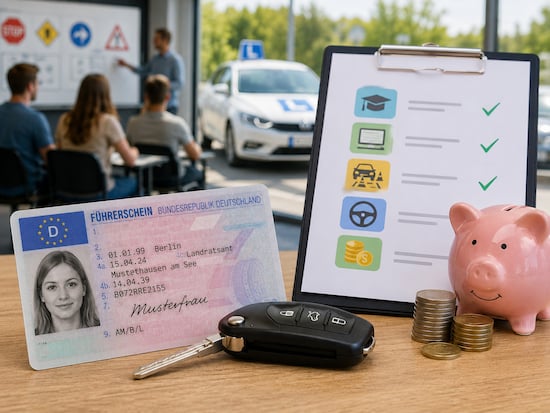

Driving Licence in Germany: Everything You Need to Know A driving licence is an important...
Weiterlesen
Rijbewijs kosten in Duitsland: een compleet overzicht Wie in Duitsland zijn rijbewijs wil halen, vraagt...
WeiterlesenA driving licence is an essential document for anyone who wants to drive a car, motorcycle or other motor vehicle on public roads in Germany.
For people moving to Germany, learning to drive for the first time or holding a foreign licence, understanding the German driving licence system is particularly important. The rules cover everything from minimum age and licence categories to theory and practical examinations, eligibility requirements and the recognition of foreign licences.
In Germany, the legal right to drive is called a Fahrerlaubnis, while the physical document used to prove that entitlement is the Führerschein. German law requires anyone driving a motor vehicle on public roads to have the appropriate driving entitlement for the vehicle category concerned.
Whether you are searching for driving licence Germany, German driving licence, or simply driving licence, this guide explains the most important information you need to know.
For more information about driving licences and driving-related topics, visit FahrenExperten.
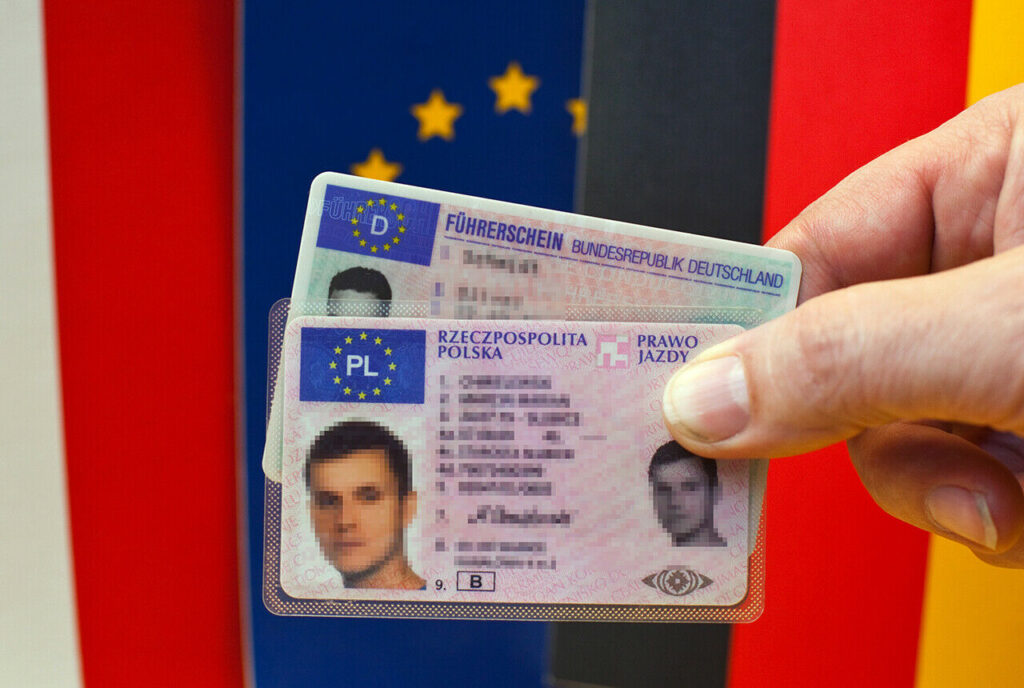
A driving licence is official evidence that a person has permission to drive particular categories of vehicles.
In Germany, it is useful to distinguish between two terms:
The German Road Traffic Act states that anyone driving a motor vehicle on public roads requires the relevant permission, which is issued for specific licence categories and documented by a driving licence.
This distinction becomes particularly important when discussing foreign driving licences, licence renewals and driving entitlement.
If you want to obtain your first German driving licence, you generally need to meet specific legal and practical requirements.
For the popular Category B passenger-car licence, the process normally involves:
German law provides that applicants generally demonstrate their ability through theoretical and practical examinations, subject to specific exceptions for certain categories and licence extensions.
If you are starting the process from the beginning, read our guide to getting a driving licence.
Germany has several different driving licence categories, each covering particular types of vehicles.
The main categories include:
This category covers certain light two-, three- and four-wheeled motor vehicles.
A1 is intended for certain light motorcycles within defined engine and power limits.
This category covers motorcycles subject to specific power restrictions.
Category A covers motorcycles without the restrictions applicable to A1 or A2, subject to the relevant requirements.
Category B is the standard passenger-car driving licence and is the category most people mean when they talk about obtaining a German driving licence.
BE extends Category B to certain car-and-trailer combinations.
These categories cover certain heavy vehicles and vehicle combinations.
These categories relate primarily to buses and certain passenger-transport vehicles.
The German Driving Licence Regulation (Fahrerlaubnis-Verordnung – FeV) sets out the various driving licence categories and the vehicles they cover.
Read more about Führerschein Klasse B on FahrenExperten.
For most people, the most relevant driving licence is Category B.
A Category B licence allows the holder to drive qualifying passenger cars and other vehicles within the legal weight and vehicle limitations.
Category B can also provide certain additional entitlements. For example, German regulations contain specific provisions concerning certain alternative-drive vehicles and certain three-wheeled vehicles.
There are also special extensions such as:
The B96 extension requires a driver training course rather than the standard practical examination, while B196 requires specific training and is valid only within Germany.
The minimum age depends on the licence category.
For example:
| Licence category | Standard minimum age |
|---|---|
| AM | 15 |
| A1 | 16 |
| A2 | 18 |
| A | 24 for direct access |
| B | 18 |
| BE | 18 |
| C1 | 18 |
| C | 21, subject to applicable exceptions |
For Category B, the standard minimum age is 18, while certain applicants can obtain the licence at 17 under the applicable rules, including accompanied driving arrangements.
Because age requirements can vary according to the exact category and circumstances, applicants should check the current requirements before applying.
The theory test is an important part of obtaining many German driving licences.
The purpose of the examination is to establish whether the applicant has sufficient knowledge of:
Under the German Driving Licence Regulation, applicants generally have to demonstrate their competence through the required theoretical and practical examinations.
Good preparation is essential because simply memorising questions without understanding German traffic rules can make real-world driving more difficult.
For more information, see our guide to learning driving licence theory.
The practical driving test evaluates whether an applicant can safely operate a vehicle and respond appropriately to real traffic situations.
Depending on the licence category, the test may involve:
German regulations provide separate rules concerning the practical examination. The examinations are conducted by an officially recognised technical expert or examiner.
You can learn more about the practical driving test through FahrenExperten.
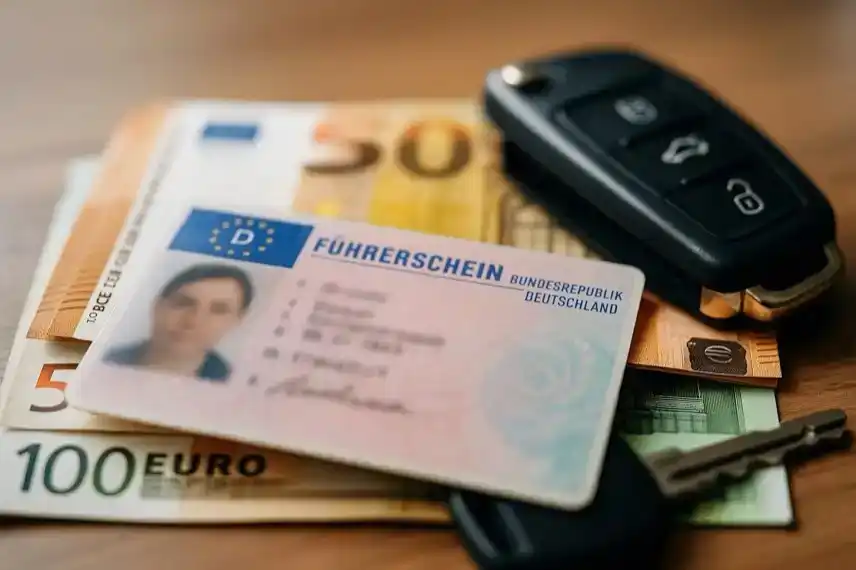
The cost of obtaining a driving licence varies considerably from one person to another.
Potential costs include:
| Cost | May apply? |
|---|---|
| Driving school registration | Yes |
| Theory lessons | Yes |
| Learning materials | Yes |
| Driving lessons | Yes |
| Special driving lessons | Yes |
| Administrative fees | Yes |
| Theory examination | Yes |
| Practical examination | Yes |
| First-aid course | Depending on circumstances |
| Vision test | Depending on circumstances |
| Passport photograph | Yes |
| Licence production | Yes |
One of the biggest variables is the number of practical driving lessons required.
A learner who needs additional training will normally spend more than someone who becomes competent with fewer lessons.
For a detailed discussion of expenses, visit our page about driving licence costs.
Looking for the cheapest driving licence is understandable, but the lowest advertised lesson price does not necessarily mean the lowest total cost.
When comparing driving schools, consider:
A school with a slightly higher lesson price may ultimately be more affordable if its overall fee structure is transparent and its training is efficient.
For more information, read our article on a cheap driving licence.
Germany is home to people from many different countries, making foreign driving licences an important topic.
If you already hold a driving licence issued outside Germany, you should determine:
The applicable rules depend heavily on the country of issue and the circumstances of the licence holder.
The German Driving Licence Regulation contains specific provisions governing driving licence categories and requirements.
Learn more about foreign driving licences in Germany.
A valid driving licence issued by an EU or EEA country is treated differently from many licences issued by countries outside Europe.
This means that moving to Germany with a valid EU/EEA driving licence does not automatically mean that you must obtain a completely new German driving licence.
However, validity periods, licence categories, restrictions and individual circumstances can matter.
Anyone considering exchanging an EU/EEA licence should therefore check the applicable rules before taking action.
Read our guide to EU driving licences in Germany for more information.
People holding a driving licence from a country outside the EU or EEA need to pay particular attention to German recognition rules.
Depending on the country of issue, the foreign licence may be:
The applicable requirements can depend on the country, licence category and other legal circumstances.
This is why it is important not to assume that every foreign licence follows the same procedure.
The process of exchanging or converting a foreign driving licence can involve several stages.
The country where the licence was issued is one of the most important factors.
The exact category shown on your licence can affect the procedure.
Determine whether your licence is directly recognised or whether conversion is required.
Some foreign licences can be converted without examinations, while others may require theoretical and/or practical testing.
You may need identification, proof of residence, photographs, the original licence and potentially translations or other documentation.
The application is normally handled by the competent driving licence authority.
If testing is required, complete the relevant theory and/or practical examination.
Once all requirements have been met, the German driving licence can be issued.
For more information, visit our detailed guide to exchanging a foreign driving licence.
The validity of a German driving licence depends on the category.
Under the current German regulations, licences for categories such as AM, A1, A2, A, B, BE, L and T are generally issued without a fixed validity period for the entitlement itself. Certain professional and heavy-vehicle categories, including C and D categories, are generally subject to time limits of up to five years.
It is important to distinguish between:
Driving entitlement: the legal permission to drive.
Driving licence document: the physical document proving that entitlement.
If you are unsure about the validity of your document, see our guide to driving licence validity.
An International Driving Permit (IDP) is different from a German driving licence.
It is generally used as a supplementary document when driving in certain foreign countries and does not replace the underlying national driving licence.
Germany has specific rules governing the issue and format of international driving permits. The FeV contains provisions connecting German licence categories with international categories for this purpose.
If you are planning to drive outside Germany, check the requirements of your destination country before travelling.
Read more about the international driving licence.
New drivers should approach the process as more than simply passing an examination.
The objective is to develop safe and responsible driving habits.
Important skills include:
A good driving school should help learners develop these skills progressively rather than simply preparing them to pass the test.
Do not wait until immediately before the examination.
Understanding why a traffic rule exists makes it easier to apply the rule in unfamiliar situations.
Consistent driving practice helps develop reliable habits.
Every driving error should become a learning opportunity.
Experience urban roads, rural roads, motorways and complex intersections where appropriate.
Knowing what the examiner expects can reduce unnecessary stress.
You can also explore our driving licence theory guide for additional preparation information.
Many learners encounter similar problems during their training.
Failing to check mirrors or blind spots properly can create dangerous situations.
Driving too fast for the conditions or unnecessarily slowly can both cause problems.
Understanding German priority rules is essential.
Indicators should communicate your intentions clearly and at the appropriate time.
Drivers should identify potential hazards before they become emergencies.
Parking should be controlled, deliberate and safe rather than rushed.
A good instructor can identify these problems early and help correct them before the practical test.

“Driving licence” is the British English spelling for the document that proves a person’s entitlement to drive. “Driving license” is commonly used in American English.
In German, the term is Führerschein.
A German driving licence is the official document used to prove the holder’s driving entitlement for specified vehicle categories. German law distinguishes the driving entitlement from the physical licence document.
For passenger cars, Category B is the standard and most widely relevant licence category.
The standard minimum age for Category B is 18. Certain provisions allow driving at 17 under specified conditions.
For a first-time driving entitlement, the general rule is that applicants must demonstrate competence through theory and practical examinations, although specific categories and extensions have different requirements.
For most first-time driving licence applications, a practical examination is required. However, German law contains exceptions for certain licence extensions and categories.
That depends on the country that issued the licence, its validity, your residence status and the applicable German recognition rules.
In some cases, yes. The exact procedure depends on the country of issue and licence category.
There is no single nationwide total price. Costs vary according to driving school fees, the number of lessons required, examination fees, administrative charges and other expenses.
Obtaining a driving licence in Germany involves more than simply passing a driving test. Applicants need to understand the relevant licence category, eligibility requirements, theory and practical examinations and administrative procedures.
For most people seeking a passenger-car licence, Category B is the key licence category. The standard route involves theoretical and practical examinations, although German law provides specific exceptions for some licence extensions and categories.
For international residents, foreign driving licences require additional consideration. The country of issue, licence category and individual circumstances can determine whether the licence can be used directly in Germany or must be converted.
If you are researching driving licence Germany, German driving licence, driving licence costs, driving licence tests or foreign driving licences, FahrenExperten provides a useful hub for related information.
Explore our related guides on Führerschein Klasse B, Führerscheinprüfung, Führerschein Kosten, Führerschein umschreiben, ausländischer Führerschein and internationaler Führerschein.
Driving Licence in Germany: Everything You Need to Know A driving licence is an important...
Weiterlesen
Rijbewijs kosten in Duitsland: een compleet overzicht Wie in Duitsland zijn rijbewijs wil halen, vraagt...
Weiterlesen